The EU Council appoints two new European prosecutors for France and Malta



Always see our news on Google
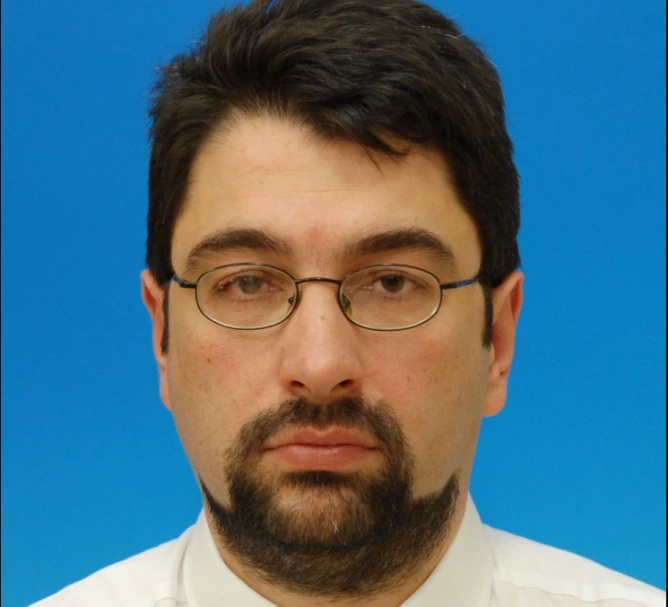
The Council of the European Union has appointed Philippe Jaeglé for France and Omar Caruana for Malta as European prosecutors within the European Public Prosecutor's Office. Their six-year mandates, without the possibility of renewal, will begin in July 2026 and are part of the partial renewal of the EPPO college, the institution that investigates fraud, corruption, and cross-border VAT cases affecting the budget of the European Union.
The Council of the European Union has appointed Philippe Jaeglé for France and Omar Caruana for Malta as European prosecutors within the European Public Prosecutor's Office. The two will have six-year mandates, without the possibility of renewal, starting from July 2026, in an institution that investigates fraud, corruption, and cross-border VAT fraud that directly impacts the budget of the European Union.
In short
Philippe Jaeglé has been appointed European prosecutor for France.
Omar Caruana has been appointed European prosecutor for Malta.
The mandates will begin in July 2026 and last for six years, without the possibility of renewal.
The appointments are part of a partial renewal of the EPPO college, where the mandates of seven European prosecutors are expiring.
At the end of 2025, the EPPO had 3,602 active investigations, with an estimated damage of over 67.27 billion euros.
European prosecutors oversee the investigations and prosecutions of the European Public Prosecutor's Office in relation to the participating member states. Together with the European Chief Prosecutor, they form the EPPO college, the structure that coordinates the institution's activities at the level of the European Union.
The appointment of the two prosecutors is part of a partial renewal of the EPPO college. In July 2026, the mandates of seven European prosecutors will expire, and the Council is gradually replacing these positions. Earlier this year, two new European prosecutors for Belgium and the Czech Republic were already appointed.
The procedure begins in the member states. Each state proposes three candidates for the position of European prosecutor. A selection committee analyzes the applications, formulates reasoned opinions, and ranks the nominated individuals who meet the requirements. The Council of the European Union then selects one of the candidates and appoints a European prosecutor for that respective state.
The European Public Prosecutor's Office is an independent body of the European Union, based in Luxembourg, which began operating at the end of 2020. The institution is competent for crimes that affect the financial interests of the European Union, including fraud with European funds, corruption, and cross-border VAT fraud exceeding 10 million euros.
The financial dimension of the EPPO's activity is significant. At the end of 2025, the institution had 3,602 active investigations, with a total estimated damage of over 67.27 billion euros. These cases show how much the European budget can lose through fraud schemes, rigged contracts, corruption, or VAT networks operating in multiple states.
The EPPO is not limited to administrative coordination. The institution conducts criminal prosecutions and exercises prosecutorial functions in the competent courts of the member states. This structure allows for the investigation of cases that cross national borders and that, before the establishment of the EPPO, could have been more difficult to pursue uniformly.
Laura Kövesi has been leading the European Public Prosecutor's Office since 2019, as the European Chief Prosecutor. The college of European prosecutors works together with the delegated European prosecutors from the participating states, who handle cases in the national judicial systems, but within the framework of the EPPO mandate.
Currently, 24 member states participate in the European Public Prosecutor's Office: Austria, Belgium, Bulgaria, Croatia, Cyprus, the Czech Republic, Estonia, Finland, France, Germany, Greece, Italy, Latvia, Lithuania, Luxembourg, Malta, the Netherlands, Poland, Portugal, Romania, Slovenia, Slovakia, Spain, and Sweden.
Hungary has formally notified the European Commission and the Council, at the end of May 2026, that it intends to join the EPPO. After Hungary's entry, all eligible member states will participate in enhanced cooperation, as Ireland and Denmark have exemptions in certain areas of European cooperation in justice and home affairs.
Expanding participation is important for cross-border cases. Frauds involving European funds or VAT can use companies, accounts, contracts, and transports from multiple jurisdictions, and the absence of a state from the system can create harder-to-cover areas. A complete college and a broader network of participating states give the EPPO greater capacity to track financial circuits and the individuals involved.
The new appointments for France and Malta come at a time when the European Public Prosecutor's Office is already one of the central institutions of the European Union in protecting European public money. The six-year mandates provide continuity, but the lack of the possibility of renewal aims to reduce political pressure on European prosecutors.
https://2eu.brussels/ro/stiri/consiliul-ue-numeste-doi-noi-procurori-europeni-pentru-franta-si-malta
Latest News
22:09
21:57
21:48
21:38
21:24
See more news
NEWS ON THE SAME TOPICS




.webp)