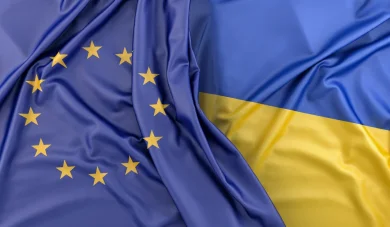
The EU accelerates expansion with Ukraine, Moldova, Albania, and Montenegro, and leaders will discuss possible intermediate forms of integration in October.



Always see our news on Google
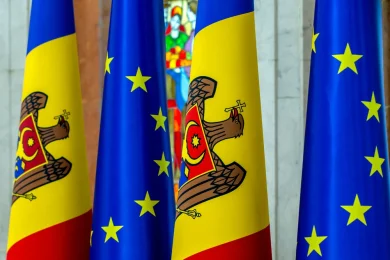
The European Union organized four intergovernmental conferences with Ukraine, Moldova, Albania, and Montenegro in a single day, the most extensive set of accession negotiations held simultaneously since 2002. The Irish presidency states that all 27 member states accepted the meetings and that the enlargement process has entered a phase of concrete progress. EU leaders are expected to discuss in October various options regarding the integration of candidate countries, but Ireland has specified that it continues to work based on the current accession procedure and mandatory criteria.
The European Union organized intergovernmental accession conferences with Ukraine, Moldova, Albania, and Montenegro in a single day, in a schedule described by the Irish presidency as the most extensive of its kind since 2002. All member states had to accept the meetings, and Ireland says that the moment confirms the existence of common support for advancing enlargement when candidate countries meet the criteria.
In short
1. The EU scheduled four intergovernmental conferences with Ukraine, Moldova, Albania, and Montenegro on the same day, the largest concentration of such accession meetings since 2002.
2. Organizing each conference required the agreement of all 27 member states. The Irish presidency stated that this consensus shows support for continuing the enlargement process.
3. Ukraine already had an intergovernmental conference in the first part of the day, and meetings with Moldova, Albania, and Montenegro were scheduled later.
4. EU leaders are set to discuss in October various options regarding the future integration of candidate countries, including ideas currently under political debate about stages or intermediate forms of participation.
5. Ireland has not confirmed the introduction of an associated membership status and has specified that negotiations continue within the current framework, based on reforms, criteria, chapters, and results specific to each country.
The Irish presidency of the EU Council dubbed the day of the meetings "Super Tuesday," following the organization of four intergovernmental conferences in the enlargement process.
These conferences are official meetings between member states and a candidate country. They are used to open or close negotiation stages, assess reforms, and establish the next steps of accession.
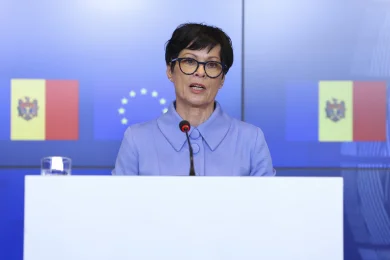
The Irish Minister of State for European Affairs, Thomas Byrne, stated that this is the largest number of intergovernmental conferences organized in a single day since 2002, when the Union was preparing for a significant expansion towards Central and Eastern Europe.
Ukraine participated in the first meeting of the day. Other conferences were scheduled with Montenegro, Moldova, and Albania.
For their organization, the agreement of all member states was necessary, as important decisions in the accession process are adopted by consensus.
"The credit goes to all member states of the European Union for allowing this day to take place," Byrne said.
He described the moment as one of "advantage" and "reality," showing that enlargement is no longer just a subject of political statements.
Ireland supports that candidate countries must advance based on their own results. The process remains conditioned by reforms regarding the rule of law, public administration, the economy, democratic institutions, and the adoption of European legislation.
Byrne stated that member states must respond with new negotiation steps when a country meets the agreed objectives and criteria.
"As they meet these requirements, we, as member states, must respond to the moment and advance the accession process," the minister declared.
Montenegro is the most advanced of the four countries in technical negotiations. Byrne said that approximately half of its chapters have already been provisionally closed.
In the case of Albania, the EU is beginning to close negotiation chapters, after the process advanced through the successive opening of thematic groups.
For Ukraine and Moldova, negotiations started more recently, and the pace depends on the assessment of reforms and the agreement of member states for each stage.
The conferences do not mean that accession is imminent nor do they set a date for entry into the EU. They mark formal progress in the process and allow the continuation of negotiations on remaining files.
In parallel with these procedures, there is a discussion in the EU about whether candidate countries could be gradually integrated into certain policies and programs before full membership.
A journalist asked whether ministers discussed granting Ukraine an associated country status and whether the subject could reach European leaders in October.
Thomas Byrne did not confirm the existence of a decision or a formal proposal for such a status. He stated that the Irish presidency has the mandate to continue the current accession structure.
"On our agenda, we have the existing process, the current accession structure, and the current merit-based approach," the minister stated.
Byrne specified that political discussions about other options do not eliminate the technical work necessary for accession. Regardless of the model being analyzed, candidate countries must meet the fundamental criteria and adopt EU norms.
He confirmed that European leaders will hold a discussion in October regarding existing options, but he refused to anticipate the conclusions of the European Council.
"There are many discussions on the table about options. The leaders of the European Council will have a discussion in October, but I cannot anticipate that discussion," Byrne said.
Therefore, an intermediate integration model remains a political possibility under debate, not an adopted decision.
Ideas discussed at the European level may include gradual access to some policies, funds, or components of the single market before obtaining membership status. The press conference did not specify, however, what concrete options will be presented to leaders and whether they will have a permanent or temporary character.
The Irish presidency states that its immediate priority is to advance the existing process. Technical teams will continue their work before and after the summer break, aiming to report significant progress at the European Council in October.
Byrne said that his previous experience, when he was Minister for European Affairs between 2020 and 2022, was dominated by general discussions about enlargement, while the current stage produces official and measurable results.
The Cypriot presidency in the first half of the year and the Irish presidency have accelerated conferences, the opening and closing of chapters, and consultations between states.
The European Commission welcomed the alignment between its priorities and the Irish presidency's program, indicating enlargement among the main files for the coming months.
The process remains vulnerable to blockages, as each member state can halt a stage that requires consensus. Support for organizing the four conferences shows that states accepted progress on that day, but it does not guarantee automatic agreement on all future stages.
The discussion in October will need to clarify whether the EU continues exclusively through the classic accession model or adds gradual forms of integration for countries advancing in reforms.
Until a possible decision, Ukraine, Moldova, Albania, and Montenegro remain in separate processes, evaluated according to their own results. The conferences organized simultaneously mark the acceleration of negotiations, without replacing the accession requirements or establishing a final timeline.
Latest News
20:00
19:54
19:25
19:19
19:10
See more news
NEWS ON THE SAME TOPICS