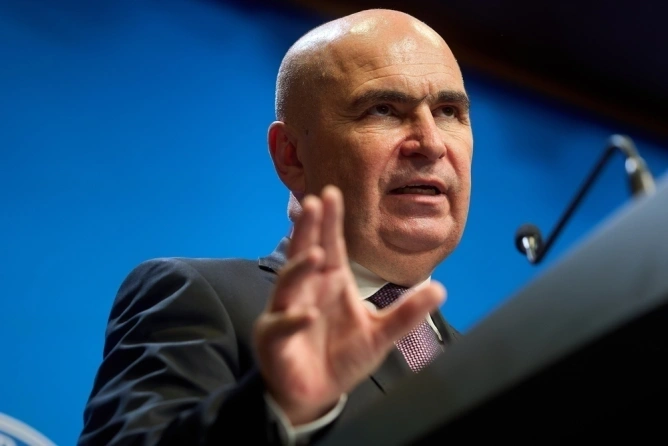
ESMA could become the central supervisor of capital markets in the European Union




Always see our news on Google
An explainer published by the European Capital Markets Institute, managed by CEPS, shows that the European package for the integration and supervision of capital markets could profoundly change the role of ESMA. The analysis signed by Karel Lannoo warns that the reform can aid the integration of capital markets but raises risks of complexity, institutional overlaps, and difficult implementation.
ESMA could receive a much stronger role in the supervision of capital markets in the European Union, according to an explainer published by the European Capital Markets Institute, managed by CEPS. The analysis signed by Karel Lannoo shows that the package for the integration and supervision of markets, known as MISP, aims to reduce the fragmentation of European markets but raises questions regarding the size, pace, and coherence of the reform.
In short
The MISP package, proposed by the European Commission in December 2025, modifies 19 European legislative acts regarding capital markets.
The ECMI analysis shows that the reform would extend ESMA's competencies over significant market infrastructures, trading platforms, central counterparties, central depositories, asset managers, and crypto service providers.
The package proposes a new governance structure for ESMA, with an executive board consisting of six members, following a model similar to the Anti-Money Laundering Authority.
ESMA could receive approximately 400 additional employees by 2030, nearly doubling its current size.
Karel Lannoo argues that a radical approach is justified by the urgent need for financing through capital markets but warns that the package is too important to be adopted hastily.
The MISP package is presented in the ECMI analysis as one of the most important recent reforms of capital market supervision in the European Union. It aims to eliminate barriers affecting trading, post-trading, and fund management, as well as to further integrate supervision by strengthening ESMA's role.
According to the explainer, the package includes a "master regulation" of 387 pages, which modifies 14 regulations, a "master directive" of 64 pages, which modifies three directives, and a regulation on settlement finality, of 88 pages. In total, the reform would modify 19 legislative acts, from MiFID and CSDR to MiCA, regulations on green bonds, and rules on ESG ratings.
The central stake is the fragmentation of capital markets in the European Union. The analysis shows that European markets remain fragmented between different rules, supervisory practices, infrastructures, and national approaches, even though European companies need more market financing and more efficient channels for mobilizing private investments.
The package targets three major areas: market infrastructures, asset management, and supervision. In the area of infrastructures, MISP would seek to facilitate the consolidation of trading and post-trading groups, interoperability between infrastructures, and centralized supervision by ESMA of significant entities.
An important change is the introduction of the concept of Pan-European Market Operators, market operators that would operate based on a license closer to a unique European license. The goal is to simplify the functioning of groups of exchanges and trading platforms that operate cross-border.
For significant central counterparties, significant central depositories, and some important trading platforms, supervision would be transferred to ESMA. Existing supervisory colleges for certain entities would be eliminated, and ESMA would receive direct competencies over infrastructures of systemic importance.
The analysis emphasizes, however, that the post-trading issue is not just a supervisory one. Central depositories in Europe remain fragmented, settlement and custody costs are higher than in North America, and interoperability has not produced the expected results. In this context, ECMI notes that ESMA's supervision should also be accompanied by a stronger analysis of fees, access, and transparency of commissions.
In the area of asset management, MISP aims to reduce friction in the cross-border distribution of UCITS and AIF funds, to introduce a concept of European asset management group, and to create a European passport for depositaries. This would allow authorized depositaries such as banks or investment firms to provide cross-border services, aiming to eliminate national restrictions and increase competition.
The package would also transfer to ESMA the authorization, monitoring, and supervision of all regulated crypto service providers under MiCA. For ECMI, this represents a significant centralization of supervision in a domain with clear cross-border relevance.
The most important part of the reform remains the change in ESMA. The analysis shows that the authority would receive a new governance structure, with an executive board consisting of a president and five executive members. This body would take over tasks from the current board of directors and would reduce the role of the board of supervisors, where national authorities currently have significant influence.
ESMA would also receive additional investigative, sanctioning, license withdrawal, market supervision, fee collection, and penalty enforcement powers. The authority could issue instructions to national authorities and intervene to correct supervisory deficiencies.
The explainer warns that this centralization must be calibrated carefully. Capital markets are more diverse than the banking sector, and their functioning still depends on national law, taxation, listing standards, local practices, and market ecosystems. For this reason, centralized supervision can reduce divergences but cannot alone eliminate legal and structural differences between member states.
Another issue is the risk of overlap. If ESMA receives direct competencies without the role of national authorities being clearly redefined, the reform could add an additional administrative level instead of simplifying supervision. The analysis emphasizes that the transition should be clearly planned, especially for reporting, data flows, market supervision, and operational interventions.
Karel Lannoo also shows that the package focuses almost exclusively on ESMA, leaving less clear the relationship with other European supervisory authorities, EBA and EIOPA. This limitation matters in areas where asset management intersects with banks, insurance, investment products, and crypto providers.
The analysis considers that the objective of more efficient and harmonized supervision is justified. Fragmentation, divergent supervision, uneven application of rules, and national preferences have hindered European capital markets from functioning as a single market.
At the same time, ECMI warns that MISP is a very broad and complex package that simultaneously changes the governance of supervision, the rules for market infrastructures, asset management, crypto-assets, and reporting. Such a reform can lead to difficult negotiations between the Council and the European Parliament, with the risk of unbalanced compromises.
The MISP package is part of the broader effort of the European Union to build a union of economies and investments, through which capital markets can better finance European companies, innovation, and industrial transitions. In recent years, the Letta and Draghi reports have emphasized the fragmentation of the single market, the need for private financing, and Europe's limited capacity to transform internal savings into productive investments.
In this file, the ECMI analysis targets both the political ambiance of the reform and the institutional architecture through which the European Union seeks to put it into practice. The conclusion of the explainer is that ESMA does not become yet a European version of the American SEC, but takes an important step in this direction, through direct competencies over significant entities and through a stronger relationship with national authorities.
The complete analysis can be consulted on the CEPS website, here. The author is Karel Lannoo, CEO of CEPS and director of the European Capital Markets Institute, specialized in European financial markets, regulation, and financial supervision.
Latest News
22:52
22:48
22:43
22:38
22:20
See more news
NEWS ON THE SAME TOPICS




.webp)