Thursday 10:11
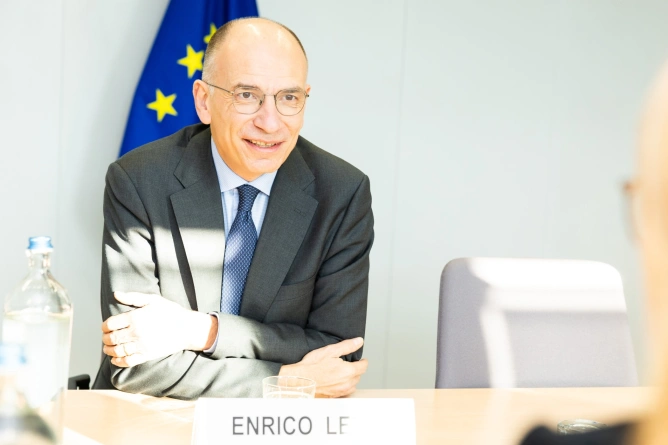
Enrico Letta says that the single market has become the test of the European Union's ability to act.
2eu.brussels


EU
Foto: 2eu.brussels

Always see our news on Google
Enrico Letta states that the roadmap "One Europe, One Market" has turned the completion of the single market into an execution test for the European Union. In a paper published by CEPR, the former Italian Prime Minister argues that Europe already has a diagnosis of fragmentation, and the political stakes now lie in the ability of European institutions to deliver on the promised reforms.
In short
Enrico Letta says that fragmentation remains the main weakness of the European Union in an increasingly organized global economy around large, integrated blocs. The CEPR paper shows that the roadmap "One Europe, One Market" was adopted in April 2026 by the European Parliament, the Council of the European Union, and the European Commission. The document outlines over 40 legislative and public policy outcomes, grouped into five strategic priorities. The priorities focus on simplifying rules, integrating the single market, trade, reducing energy prices and decarbonization, as well as digital transformation and AI. Letta argues that the quarterly monitoring mechanism should be used as a political tool for pressure, visibility, and accountability.
The paper starts from the idea that economic power is increasingly organized around large, integrated blocs capable of combining market scale, industrial capacity, strategic investments, and coordinated public action. In this logic, Letta identifies fragmentation as Europe's central weakness: the Union has a large market, a strong industrial base, world-class research, significant private economies, and regulatory influence, but these assets are limited by an incomplete single market.
The analysis indicates the sectors where fragmentation directly impacts competitiveness and strategic autonomy: financial services, energy, telecommunications, digital services, research, innovation, and critical technologies. Letta argues that European companies face difficulties in expanding across borders, fragmented capital markets limit the use of European savings for productive investments, and insufficiently integrated energy markets and networks keep prices higher and more volatile.
The roadmap "One Europe, One Market" is presented as an institutional response to this problem. According to the paper, the document was adopted in April 2026 by the European Parliament, the Council of the European Union, and the European Commission, committing the three institutions to make decisive progress in 2026 and, at the latest, by the end of 2027.
Letta emphasizes that the value of the roadmap does not lie in creating a new agenda, but in organizing an existing one. The document places several files already present in the European Union's competitiveness agenda under the same political framework and links them to common priorities, deadlines, and regular monitoring.
The five strategic blocks are simplifying rules, deepening the single market, trade, energy and decarbonization, and digital transformation and artificial intelligence. In Letta's vision, these areas can no longer be treated as separate policies, as capital markets, energy, digital infrastructure, industrial capacity, and innovation are part of the same scale and execution problem.
The paper connects this evolution to several recent political moments. Letta mentions his report on the future of the single market and the Draghi report, Compass for Competitiveness presented by the Commission in January 2025, the State of the Union speech in 2025, the informal meeting at Alden Biesen in February 2026, and the conclusions of the European Council from March 19, 2026. According to the analysis, these milestones have shifted the debate from diagnosis to prioritization, then to political commitment and delivery timeline.
A central element is the quarterly review mechanism. Letta writes that the European Parliament, the Council, and the Commission should meet every three months to assess progress, identify obstacles, coordinate action, and update the roadmap annex where necessary. In his analysis, success depends on the ability of this mechanism to create pressure, visibility, and accountability.
Letta warns that execution will be decisive, as many of the files included are politically sensitive and technically complex. They touch on areas where national preferences remain strong, and reforms of the single market may be vulnerable to sectoral resistance and national hesitation.
The paper places the single market at the center of the European competitiveness strategy until 2050. In its conclusion, Letta argues that the roadmap provides a timeline, a governance structure, and a common institutional commitment, without automatically guaranteeing results. The question becomes whether Europe can deliver what it has already committed to.
For Letta, "One Europe, One Market" must become recognizable beyond Brussels. Governments, companies, workers, consumers, and national parliaments must see the reform of the single market as a common European priority. In the absence of this broader commitment, the most difficult reforms risk falling back into the realm of sectoral resistances and national hesitations.
In short
Enrico Letta says that fragmentation remains the main weakness of the European Union in an increasingly organized global economy around large, integrated blocs. The CEPR paper shows that the roadmap "One Europe, One Market" was adopted in April 2026 by the European Parliament, the Council of the European Union, and the European Commission. The document outlines over 40 legislative and public policy outcomes, grouped into five strategic priorities. The priorities focus on simplifying rules, integrating the single market, trade, reducing energy prices and decarbonization, as well as digital transformation and AI. Letta argues that the quarterly monitoring mechanism should be used as a political tool for pressure, visibility, and accountability.
The paper starts from the idea that economic power is increasingly organized around large, integrated blocs capable of combining market scale, industrial capacity, strategic investments, and coordinated public action. In this logic, Letta identifies fragmentation as Europe's central weakness: the Union has a large market, a strong industrial base, world-class research, significant private economies, and regulatory influence, but these assets are limited by an incomplete single market.
The analysis indicates the sectors where fragmentation directly impacts competitiveness and strategic autonomy: financial services, energy, telecommunications, digital services, research, innovation, and critical technologies. Letta argues that European companies face difficulties in expanding across borders, fragmented capital markets limit the use of European savings for productive investments, and insufficiently integrated energy markets and networks keep prices higher and more volatile.
The roadmap "One Europe, One Market" is presented as an institutional response to this problem. According to the paper, the document was adopted in April 2026 by the European Parliament, the Council of the European Union, and the European Commission, committing the three institutions to make decisive progress in 2026 and, at the latest, by the end of 2027.
Letta emphasizes that the value of the roadmap does not lie in creating a new agenda, but in organizing an existing one. The document places several files already present in the European Union's competitiveness agenda under the same political framework and links them to common priorities, deadlines, and regular monitoring.
The five strategic blocks are simplifying rules, deepening the single market, trade, energy and decarbonization, and digital transformation and artificial intelligence. In Letta's vision, these areas can no longer be treated as separate policies, as capital markets, energy, digital infrastructure, industrial capacity, and innovation are part of the same scale and execution problem.
The paper connects this evolution to several recent political moments. Letta mentions his report on the future of the single market and the Draghi report, Compass for Competitiveness presented by the Commission in January 2025, the State of the Union speech in 2025, the informal meeting at Alden Biesen in February 2026, and the conclusions of the European Council from March 19, 2026. According to the analysis, these milestones have shifted the debate from diagnosis to prioritization, then to political commitment and delivery timeline.
A central element is the quarterly review mechanism. Letta writes that the European Parliament, the Council, and the Commission should meet every three months to assess progress, identify obstacles, coordinate action, and update the roadmap annex where necessary. In his analysis, success depends on the ability of this mechanism to create pressure, visibility, and accountability.
Letta warns that execution will be decisive, as many of the files included are politically sensitive and technically complex. They touch on areas where national preferences remain strong, and reforms of the single market may be vulnerable to sectoral resistance and national hesitation.
The paper places the single market at the center of the European competitiveness strategy until 2050. In its conclusion, Letta argues that the roadmap provides a timeline, a governance structure, and a common institutional commitment, without automatically guaranteeing results. The question becomes whether Europe can deliver what it has already committed to.
For Letta, "One Europe, One Market" must become recognizable beyond Brussels. Governments, companies, workers, consumers, and national parliaments must see the reform of the single market as a common European priority. In the absence of this broader commitment, the most difficult reforms risk falling back into the realm of sectoral resistances and national hesitations.
Sources

Latest News
20:59
The Russian company Rosatom claims that a Ukrainian drone hit the nuclear power plant in Zaporizhzhia.
20:38
President Donald Trump calls for the elimination of uranium stocks in the discussions regarding the ceasefire with Tehran.
20:14
American and Cuban military officials met in Guantanamo for security discussions.
19:54
According to a German publication, the Pentagon will present details about the withdrawal of American soldiers to NATO allies next month.
19:31
The reason why Lukashenko says Meloni cannot negotiate with Moscow: "She is a woman"
See more news
NEWS ON THE SAME TOPICS



Personalized news feed, AI-powered search, and notifications in a more interactive experience.