Daniel Freund asks the Commission to explain whether Poland still meets the conditions for cohesion funds



Always see our news on Google
MEP Daniel Freund challenges the continuation of the positive assessment from 2024, in the context of the crisis at Poland’s Constitutional Tribunal. Raffaele Fitto says that the situation is being monitored, while the CONT Committee requested written explanations. No new suspension of funds was announced at the hearing.
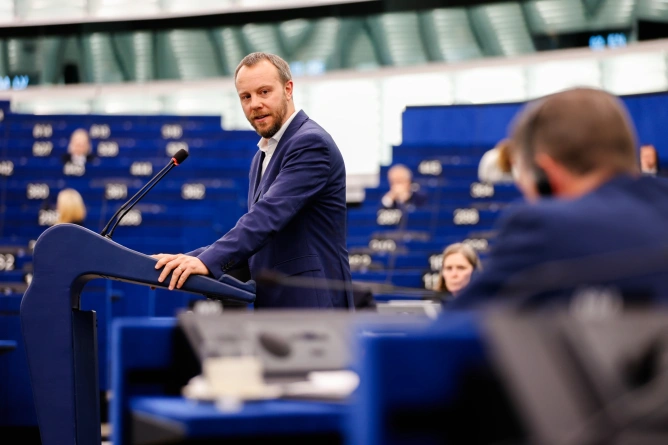
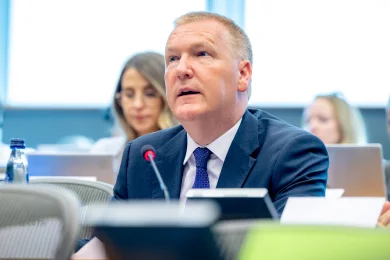
MEP Daniel Freund asked the European Commission to explain whether Poland continues to meet the requirements that allowed access, in 2024, to reimbursements from cohesion funds and other European programmes. The question was addressed to Executive Vice-President Raffaele Fitto in the European Parliament’s Committee on Budgetary Control (CONT) on 3 November, amid the new crisis at the Constitutional Tribunal in Warsaw. Fitto confirmed that developments were being monitored, without announcing a negative assessment or a new suspension of funding. The CONT Presidency requested a written response.
In brief
1. Daniel Freund, a German MEP from the Greens/EFA group, asks whether the persistent problems affecting Poland’s judiciary require a reassessment of the condition concerning the application of the Charter of Fundamental Rights in European programmes.
2. The Commission’s positive assessment in February 2024 opened access to funding of up to €76.5 billion for 2021–2027. This was the value of the programmes concerned, not an amount paid in full to Poland.
3. Raffaele Fitto says that states must comply with the enabling conditions throughout the programming period. The Commission monitors them through monitoring committees, performance reviews and exchanges with national authorities.
4. If a condition is no longer fulfilled, the Commission must communicate its assessment and examine the state’s observations. A finding of persistent non-fulfilment prevents the reimbursement of expenditure linked to the affected objectives, except for operations that contribute to fulfilling the condition.
5. CONT requested written clarifications on the assessment of Poland. The hearing did not change the status of the funding; the enabling-conditions mechanism is distinct from general budget conditionality and the milestones of the RRP.
In the exchange of questions and answers, Freund argued that the European executive had allowed Poland premature access to funds after the change of government at the end of 2023. In his view, stopping certain attacks on judicial independence did not mean that the system’s problems had been resolved. He referred to the difficulties in implementing the decisions of European courts and the president’s refusal to receive the oath of judges elected by Parliament. These are the MEP’s arguments for a reassessment, not the conclusions of a new Commission decision.
Freund insisted that the question goes beyond the confrontation of recent days over the leadership of the Constitutional Tribunal. He asked what concrete criteria the Commission uses to verify the independence of the judiciary and the functioning of the courts. He challenged the idea that the government’s promises and reform plan could be sufficient without remedying the problems and asked whether it was necessary to reopen the procedures concerning the funding conditions.
Fitto replied that the institution is closely monitoring developments and reiterated the position expressed by Justice Commissioner Michael McGrath: the Constitutional Tribunal must be able to operate in accordance with the Constitution of Poland and the case law of the Court of Justice of the EU. The Executive Vice-President did not provide a new conclusion at the hearing regarding fulfilment of the funding condition. After Freund returned to the question, the CONT Presidency requested a written explanation of how the Commission assesses Poland’s commitments.
In his general explanation, Fitto stressed that responsibility for compliance with the enabling conditions lies with the Member States throughout the programming period. He pointed to meetings of monitoring committees, performance reviews with the Commission and regular exchanges with the competent authorities as tools for identifying shortcomings and adopting corrective measures. This description of the procedures did not, however, answer the concrete criteria for the Polish case, on which Freund requested further clarification.
The financial stakes stem from the Commission’s assessment of February 2024. The executive then considered the horizontal enabling condition concerning the effective application of the Charter of Fundamental Rights to be fulfilled, opening Poland’s access to funding of up to €76.5 billion for 2021–2027. The envelope included cohesion funds, as well as programmes for fisheries and home affairs. It did not involve the immediate transfer of the entire amount. The decision allowed reimbursement of eligible expenditure under the respective programmes.
During the same period, the Commission separately assessed the milestones concerning judicial independence and financial control in Poland’s Recovery and Resilience Plan. The two assessments were presented together, but had different legal bases: the enabling conditions govern reimbursements from programmes covered by the Common Provisions Regulation, while RRP payments depend on the milestones and targets of the approved plan. Neither represented certification that all the problems of the Polish judicial system had been resolved.
The obligation to maintain the conditions is provided for by the Common Provisions Regulation. Article 15 requires the Member State to inform the Commission of changes that may affect compliance with them. If the executive considers that a condition is no longer fulfilled, it must communicate its assessment. The state may challenge it through observations submitted within one month, and the Commission must follow the examination procedure provided for in the regulation.
If non-fulfilment persists, expenditure linked to the affected specific objectives may be included in payment claims, but is not reimbursed until the condition is considered fulfilled again. There is an exception for operations that themselves contribute to fulfilling the condition. This is not an automatic cancellation of all European funding. The effects depend on the condition that is not fulfilled and the objectives concerned; in the case of a horizontal condition, the scope may be broad because it applies to all specific objectives. The procedure is distinct from the general mechanism for protecting the EU budget in cases of breaches of the rule of law.
Questions about funding arise against the backdrop of the conflict over judges and the leadership of the Constitutional Tribunal. President Karol Nawrocki refused to receive the oath of judges elected by the Sejm, the lower house of Parliament. On 30 October, Anna Korwin-Piotrowska, one of the elected judges, issued orders suspending the tribunal’s president, Bogdan Święczkowski, and vice-president, Bartłomiej Sochański, for one month. Her authority to order the measures is contested. The conflict over the appointments does not, in itself, resolve the separate question of the legality of the suspensions.
The International Commission of Jurists, a non-governmental organisation, criticised both the president’s refusal to receive the oath and the suspension of the leadership in the absence of a fair and adequate legal procedure. The organisation called on the authorities to resolve the crisis through constitutional procedures and with respect for judicial independence. Its position is not a court ruling, nor an assessment of Poland’s eligibility for European funds.
Freund linked the case to a broader problem of transparency, referring to criticism by the European Ombudsman concerning access to documents used to assess Hungary. In its decision of April 2026, the Ombudsman confirmed a finding of maladministration, considering the Commission’s explanations for refusing broader access to documents unconvincing. The conclusion concerned transparency and public access, without determining the legality of the financial assessment itself.
The written response requested by CONT must clarify how general monitoring applies to Poland’s situation. Until a new assessment is communicated by the Commission, the parliamentary exchange cannot be interpreted as a suspension of funds. The question left open at the hearing is whether the problems cited by Freund affect the Charter-related condition in the implementation of the programmes and what evidence the executive uses to determine that it continues to be fulfilled.
Latest News
16:29
16:27
16:18
16:10
16:09
See more news
NEWS ON THE SAME TOPICS







.webp)