Commission calls for agreement before Black Friday to simplify small retailers’ environmental obligations




Always see our news on Google
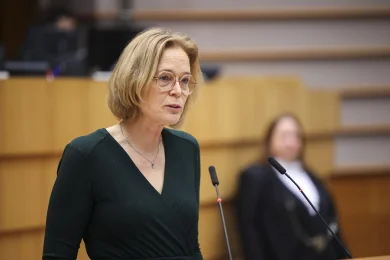
European Commissioner Jessika Roswall called, during the plenary session of the European Parliament on 19 October, for a swift agreement to simplify the obligation for producers to appoint authorised representatives when selling in other Member States. She cited the approaching Black Friday and Christmas period, an important time for small retailers, and announced that the European executive is preparing common rules for the registration and reporting of packaging. Her request concerns speeding up certain legislative changes, without introducing a derogation that companies could already apply.
In brief
Jessika Roswall calls for a swift agreement on authorised representatives for waste-related obligations, ahead of the Black Friday and Christmas season.
ENVI’s texts target a suspension for micro-enterprises and small enterprises in the EU.
The final conditions depend on the legislative procedure.
The proposed suspension concerns the local representative.
Registration, reporting and contributions for waste management would remain mandatory under the applicable rules.
The Commission is separately preparing common rules for the registration and reporting of packaging.
The act is still under preparation, and the adaptation of registers has its own timetable.
The files are on Parliament’s voting agenda for 20 October.
The plenary position is not sufficient for the derogations to be applied.
For a small online shop, selling to customers in several countries may involve more than organising deliveries. Depending on the product, the company’s role in placing it on the market and the applicable legislation, national registrations, declarations concerning quantities marketed and contributions for waste management may arise. Appointing a local representative is an additional obligation that may generate costs even when sales in a particular market are limited.
This obligation is part of extended producer responsibility, known as EPR. Through these systems, companies that place products or packaging on the market contribute to financing their collection and treatment when they become waste. The authorised representative is a person or organisation established in the country concerned, appointed by mandate to fulfil certain obligations on behalf of the producer.
In her closing intervention in the debate, Roswall linked the urgency of a solution to the year-end trading season. She called for rapid progress and said she was ready to begin negotiations. The reference to Black Friday expresses the Commission’s political objective. The date is not a legal deadline guaranteeing that companies will benefit from new rules at that time.
The changes are contained in two proposals presented by the Commission in December 2025, as part of the Omnibus VIII simplification package. The draft regulation COM(2025) 982 concerns batteries and packaging, while the draft directive COM(2025) 983 covers the relevant obligations for textiles, related products and footwear, electrical and electronic equipment, and certain single-use plastic products. The two instruments must follow the European legislative procedure.
The texts prepared for the plenary by the Committee on the Environment, ENVI, specify the category that MEPs want to temporarily exempt from mandatory representation. Reports A10-0266/2026 and A10-0267/2026 concern micro-enterprises and small enterprises established in the EU, according to the definition in Recommendation 2003/361/EC. Medium-sized and large enterprises would retain the obligation. This distinction is important because the general term SME also includes medium-sized companies.
The Commission had initially proposed a broader suspension for producers established in the Union. ENVI seeks to focus the relief on companies with lower administrative and financial capacity. The position of the parliamentary committee, reported by 2EU on 6 October, is a stage in the legislative process and must be distinguished from a definitively adopted rule.
The reports provide for suspension until 1 January 2035 or until the new horizontal European framework on EPR and authorised representatives becomes applicable, if this happens earlier. The companies concerned could voluntarily retain a representative. The texts also include safeguards against artificially fragmenting a company’s activity in order to benefit from the suspension.
The proposed relief is limited to appointing the representative. Producer registration, reporting, financial contributions, guarantees and participation in EPR systems would remain applicable under the relevant rules. Requirements concerning waste prevention, collection, reuse and recycling would also remain in place. A trader could not interpret the removal of mandatory representation as eliminating responsibility for its packaging or products.
For producers established outside the EU, ENVI retains the current representation framework, under the conditions of each sectoral act. The committee’s argument is linked to oversight. European authorities face greater difficulties when they have to identify and monitor operators outside their jurisdiction, and a local representative can facilitate verification of compliance with obligations.
A second strand, announced by Roswall in the same intervention, concerns an implementing act to harmonise the registration and reporting of packaging. The aim is to bring data formats and the information required from companies operating in several states closer together. This preparation is continuing in parallel with the files on representatives and must not be treated as an act that has already been adopted.
The Commission’s guide for small enterprises indicates that states will have an 18-month period to adapt national registers or create them under the new rules. The deadline belongs to that implementation stage. The statement in the plenary, in which the Commissioner announced the preparation of the act, does not by itself trigger this period and does not replace existing national registration obligations.
Until the legislation changes, the Commission is asking states to apply the representation obligation in a pragmatic and constructive manner and to refrain from sanctioning operators while the suspension proposal is being examined. This guidance, published in its guide, is not a legislative derogation in force. Companies must monitor the rules applicable in the markets where they sell, including the different conditions between product categories.
The negotiations encountered reservations in the Council. On 24 June, the institution announced the interruption of internal discussions on the two EPR proposals, amid opposition from a broad majority of states. On 30 September, the states agreed to explore a targeted solution for packaging-related obligations, citing potentially disproportionate burdens for small producers. The mandate adopted then for environmental assessments concerned another element of the Omnibus package, not a final agreement on EPR representatives.
The two ENVI reports appear on the agenda for the voting session on 20 October, scheduled between 12.00 and 13.00 in Strasbourg. A Parliament vote on its position does not amount to the suspension entering into force. Applying the changes requires completion of the legislative procedure together with the Council and compliance with the deadlines in the final acts.
For companies in Romania that sell in other Member States, the stakes are a reduction in the number of formalities and the costs required to access several markets. The concrete effect will depend on the category of enterprise, the products marketed and the final form of the legislation. The solution pursued by the Commission should make compliance easier, while preserving producers’ contribution to waste management and the authorities’ ability to monitor compliance with the rules.

Latest News
12:55
12:41
12:24
12:04
11:45
See more news
NEWS ON THE SAME TOPICS