Europol: Chinese artifacts are becoming targets for planned thefts from European museums



Always see our news on Google
Old porcelain items dating back hundreds of years and objects from the Ming and Qing periods are among the categories targeted in recent thefts analyzed by Europol. The agency links the interest of criminals to the high demand for such artifacts and the possibility of reselling them on the art market.
Valuable Chinese artifacts have become a distinct category of items in some recent thefts from European museums, according to Europol. The agency mentions porcelain from the 12th-13th centuries, objects from the Ming dynasty, and bronze vessels with colored enamels from the Ming and Qing periods, and considers that the interest of criminals is fueled by the demand in the art market.
In short
1. Europol identifies Chinese cultural objects among the increasingly frequently targeted categories in certain museum thefts. 2. Examples include porcelain from the 12th-13th centuries, objects from the Ming dynasty, and bronze vessels with enamels from the Ming and Qing periods. 3. The agency considers that the high demand and the possibility of reselling on the art market make these goods attractive to traffickers. 4. The analyzed thefts do not appear to be opportunistic: the items are selected beforehand, and the attacks include reconnaissance and planning. 5. Europol separates this market from that of gold and jewelry, where the value of the material allows for melting or dismantling of the objects.
In Europol's assessment of the changing nature of museum thefts, Chinese artifacts appear alongside metals and precious stones as one of the categories that attract the attention of criminals. The logic is, however, different: in the case of a gold object, the metal can be valued separately, while for a Chinese artifact, the value is tied precisely to its authenticity and provenance.
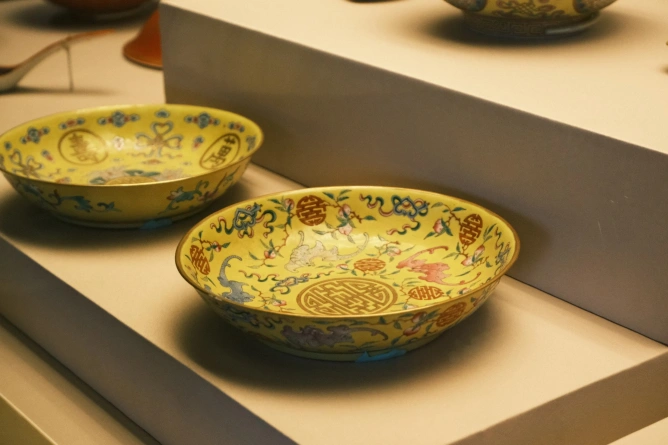
The report provides concrete examples of targeted objects: Chinese porcelain plates from the 12th-13th centuries, containers from the Ming dynasty, and bronze vessels with colored enamels from the Ming and Qing dynasties.
Europol also includes stolen items from the Keramiekmuseum Princessehof in Leeuwarden, in the Netherlands, among the examples illustrating this trend. Among these is a porcelain vessel dated around 1680 and a Chinese container shaped like a double tartlet from around 1500-1520.
The agency considers that the main reason is financial and links the thefts to the existing demand for old Chinese objects. If there are interested buyers and channels through which the goods can be introduced to the market, the artifacts can become deliberate targets for cultural trafficking networks.
Europol does not claim that all stolen Chinese objects end up on the legal art market and does not identify a specific country as a final destination. The report discusses the possibility of reselling and the demand that makes this category attractive.
An important element is the targeted nature of the operations. In the analyzed cases, the perpetrators do not appear to have randomly chosen the goods after entering the museum, and Europol identifies prior reconnaissance and preparation.
This selection implies a certain level of knowledge about the objects or access to information about their value. In a market where the appearance and age of an artifact strongly influence its price, choosing specific pieces may indicate that criminals know what they are looking for before initiating the theft.
The situation differs from thefts of precious metals in terms of how they are valued. Melting a gold object can destroy its cultural identity, while destroying a Ming porcelain would eliminate precisely the value that criminals seek to exploit.
For these goods, the resale network thus becomes essential. The object must be kept sufficiently intact to have commercial value, but at the same time, its provenance must be hidden or falsified to reduce the risk of identification as a stolen good.
Europol treats the theft of Chinese artifacts as part of the broader market for illegal trafficking of cultural goods. The report does not provide statistics on the number of stolen Chinese objects or the total value of this market.
The novelty lies in the fact that the agency identifies this category separately among the items observed in recent cases and links the selection to the existing demand and the possibility of reselling.
Latest News
23:12
22:53
22:53
22:25
22:06
See more news
NEWS ON THE SAME TOPICS