The war in Iran hits Romania hard. Credit rates are also rising. Three effects that will make life difficult for Romanians.




Always see our news on Google
The war in Iran strikes hard at the state just as the interest rates at which the Romanian Government borrows begin to finally decrease, after almost two years of constant and aggressive increases. The effects on the population will soon be felt, under the conditions in which the interest rates at which banks borrow from each other will align with the trend, and ROBOR (first) and then IRCC, that is, the two indicators directly linked to loan rates, will also rise.
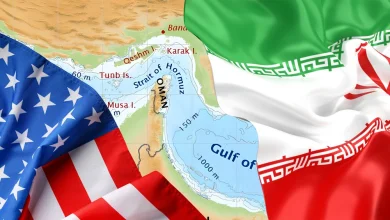
The war in Iran hits the Romanians hard, not only through the immediate increase in fuel and energy prices. In the medium and long term, the effects will be much broader, impacting inflation, which is expected to ignite again, but also the rates we pay to banks. Since the intervention of Israel and the USA in Iran, that is, in just over a week, the interest rates at which the Romanian state borrows for 10 years (one of the most common maturities) have increased by over 50 basis points, and this in the context where they were already at a very high level and had just started to decrease timidly since the beginning of this year. This inflation of borrowing costs is already visible in the interest rates at which banks borrow from each other, highlighted in the ROBOR rates for 3 and 6 months.
As a result, in the medium term, the IRCC indicator, calculated based on ROBOR, will also increase. We remind you that ROBOR is the interest rate directly linked to the costs of all variable interest loans for individuals contracted before April 2029, while IRCC has been used as a benchmark for all PF loans contracted after this date. Variable interest rates are updated with the level of ROBOR at 3 or 6 months, respectively with that of IRCC (which is calculated quarterly). In other words, in the coming months we will witness an increase in the rates paid by Romanians with loans.
A report from ING Bank shows that, "depending on the duration of the situation, the escalation of the conflict in the Middle East reduces the likelihood of a reduction in the monetary policy interest rate in May, especially since depreciation pressures on the leu have intensified, considering the general sentiment of risk aversion in global markets. In a scenario of reducing the interest rate in August (which is not yet our baseline scenario, but is more likely at this moment), we would expect total reductions of 75 basis points this year."
Latest News
15:45
15:40
15:39
15:38
15:29
See more news
NEWS ON THE SAME TOPICS