SPECIAL Informat.ro/ Bucharest Pride 2026: two decades of march, one step forward and two steps back


Always see our news on Google
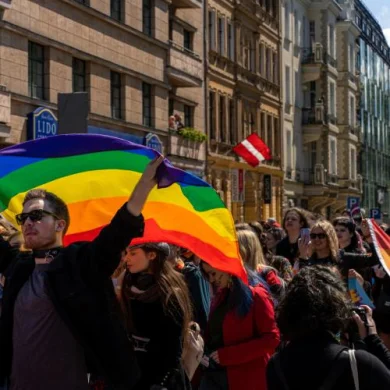
Bucharest hosts on June 13 a new march for Bucharest Pride, the 21st, in a sensitive political and social context, marked by the rise of nationalist discourse and the normalization of hate messages against LGBT people in public space, especially as a result of the cancellation of the presidential elections in 2024. More than 20 years after the repeal of Article 200 of the Penal Code and two decades of Pride, Romania remains last in the EU in terms of LGBT rights protection, without civil partnerships, without marriage, and with high levels of violence, bullying, and suicide vulnerability among LGBT youth. For some participants, the march remains the only moment of the year when they can safely live their identity in public space; for opponents, Pride is transformed into a symbol of "Western decadence" in the battle for "traditional family", while the Romanian Patriarchate expresses its "concern" that the event may create "confusion in spiritual values, in a social context already affected by instability and demographic decline".
From Article 200 to Bucharest Pride
Article 200 of the Penal Code criminalized same-sex relationships with penalties ranging from one to five years in prison, reinforcing a climate of fear and institutionalized stigma until the early 2000s. Under pressure from the Council of Europe and human rights NGOs – including ACCEPT – the text was partially amended in 1996, but the crime was completely repealed only in 2001, through Emergency Ordinance no. 89. Decriminalization was a political condition for European integration, rather than the result of a deep internal debate about human rights.
In 2004, the first GayFest festival takes place in Bucharest, and in 2005 the first Pride march is organized by ACCEPT – a moment that marks the transition of LGBT visibility from the underground to the central public space. The first editions were strongly contested: participants were met with hostile counter-demonstrations, and influential politicians and public figures launched virulent homophobic statements. We recall here statements from that time by Gigi Becali, who claimed that "we need to get rid of homosexuals in this country" or promised to "go out on the street with priests" against Pride.
If in 2005-2007 Pride meant a few hundred people protected by consistent lines of gendarmes, the latest editions have gathered tens of thousands of participants, including families, straight individuals, and foreign diplomats, while counter-demonstrations remained rather fragmented. However, this increase in visibility has not translated into legislative progress comparable to that of other EU states, and the legislative framework for same-sex couples remains blocked.
Limited protection, frequent abuses
Legally, Romania prohibits discrimination based on sexual orientation and gender identity in employment, education, and access to services, and hate-motivated crimes can receive increased penalties, but there is neither marriage nor civil partnership for same-sex couples. The European Court of Human Rights, in the case of Buhuceanu and others v. Romania (2023), explicitly found that the lack of any form of recognition for same-sex couples violates the right to private and family life, obliging the state to create an adequate legal framework.
On the ground, data from the EU Agency for Fundamental Rights (FRA), published in 2024, shows that 53% of LGBTI people in Romania were harassed in the year prior to the survey, and 16% suffered physical or sexual attacks in the last five years – above the EU average. 69% experienced bullying, ridicule, or insults during school, and about 60% report that they hide their orientation or identity in the educational environment. The level of reporting to the police is very low; only about 7% of victims reported to the authorities, citing fear, distrust, or the belief that "nothing will happen".
Organizations such as ACCEPT and MozaiQ constantly document cases of assaults, threats, and arson of properties belonging to LGBT activists, also signaling online messages that directly incite violence. Human Rights Watch drew attention, in a 2022 report, to legislative projects aimed at banning educational materials related to sexual orientation and gender identity, projects considered dangerous for the safety of LGBT youth.
Youth, mental health, and suicide cases
Against this backdrop, mental health indicators are alarming. A FRA factsheet from 2024 shows that 15% of LGBTIQ respondents in Romania reported having thought about "des" or "permanently" about suicide in the previous year, above the EU 27 average of 12%. A report from the organization "Mental Health for Romania" indicates that LGBTQ+ individuals in Romania are twice as likely to develop a mental health disorder and six times more likely to have attempted suicide compared to heterosexual individuals.
The case of a 19-year-old teenager from Constanța, a student at the Art High School, who died after positioning himself on the railway tracks in the Medeea area, has brought back to attention the vulnerability of youth perceived as "different" – including LGBT individuals – to the pressures of bullying, shame, and isolation. The press reported that the reasons that led the young man to take this step were that he felt rejected by his father (who was reportedly violent) due to his sexual orientation. Although details regarding his orientation and the direct connection to a context of homophobia require caution, the case fits into a broader pattern described in psychological literature: LGBT youth subjected to family rejection, bullying in school, and hate speech have an increased risk of suicidal ideation. Psychologists cited by relevant NGOs emphasize three essential protective factors: acceptance in the family, support from a trusted adult (teacher, counselor), and access to mental health services informed about sexual and gender diversity. In Romania, institutional anti-bullying programs with an explicit LGBT component are rare, and teacher training on this topic largely depends on specific projects run by NGOs or external funding.
Vlad Viski, president of MozaiQ, one of the associations for the rights of LGBTQ individuals in Bucharest, constantly shares on his Facebook page about cases where young people and adolescents are left on the streets because their families do not accept them.
"Mihai was found by my colleagues at the gate of the MozaiQ community center on the street, with a bag of belongings, in the cold and snow. After a burst of courage, he told his mother that he is gay, and the family threw him out of the house," he wrote on June 2 on his Facebook page.
"I meet day by day with such rejected, abandoned, thrown out, or run away young people. Some just need advice and guidance, others need safe shelter, financial or psychological support to get through moments that no young person should have to go through!" shows a message from Victor Pînzaru, the social worker of MozaiQ.
Radicalization of discourse: from 2000 to the canceled presidential elections of 2024
If in the 2000s the anti-LGBT discourse was mainly associated with figures like Gigi Becali, who built his political image on a combination of religious populism and homophobic statements, in recent years the rhetoric has been adopted and amplified by leaders of nationalist parties. The AUR party and its leader, George Simion, have turned the theme of "traditional family" and opposition to "gender ideology" into a pillar of their political message, alongside Euroscepticism and anti-globalism.
BBC noted, in the context of the unprecedented cancellation of the presidential elections and the scandal surrounding candidate Călin Georgescu, that NGOs like MozaiQ have signaled a wave of antisemitic, racist, and homophobic rhetoric, including online messages encouraging attacks on the organization's headquarters. The Constitutional Court annulled the presidential election amid information regarding an online pro-Georgescu campaign supported by Russia, and the resumption of elections was accompanied by a campaign in which themes such as LGBT, migration, and "globalism" were intensively used for electoral mobilization.
In this context, Pride has become, in the discourse of some politicians, the perfect example of "Western decadence" and the "globalist agenda" that threatens "traditional Romanian values." Public statements against the march – sometimes accompanied by calls for counter-demonstrations "for family" – reinforce the message that LGBT people are an "internal enemy," indirectly legitimizing assaults and abuses in the street, in schools, or online.
Romania versus European neighbors
From the perspective of legal recognition of same-sex couples, Romania is lagging significantly behind EU states in the region. Hungary and Bulgaria do not recognize marriage but have introduced forms of civil partnership or recognize certain rights of same-sex couples; Greece recently adopted marriage between same-sex individuals, while Croatia and Slovenia have also moved towards extensive legal recognition. Romania remains without any form of civil partnership and refuses, in practice, to recognize marriages between same-sex individuals concluded in other states, despite the CJEU ruling in the Coman case regarding freedom of movement.
At the European level, 33 countries or territories recognize some type of union between same-sex individuals, either through marriage or civil partnership, which emphasizes Romania's "backward" position within the EU. Reports from ILGA Europe, reflected in international press, placed Romania last in the European Union in the Rainbow Map ranking in 2025, due to legislative blockage and the intensification of anti-LGBT rhetoric.
Romania vs EU neighbors (LGBT rights)
Romania has no recognized union for same-sex couples (neither civil partnership nor marriage), has a partial anti-discrimination framework, and is the last state in the EU in Rainbow Map 2025. Hungary has registered partnership for same-sex couples since 2009, does not allow equal marriage, maintains formal anti-discrimination protection but with political regression, and is in the lower zone of the ILGA Europe ranking, above Romania.
Bulgaria has no civil partnership or equal marriage, but recognizes some marriages or rights from abroad, has an anti-discrimination framework that includes sexual orientation and is below the EU average, but ahead of Romania in the Rainbow Map.
Greece has civil partnership for same-sex couples since 2015, adopted in 2024 marriage with parental rights, has an extensive anti-discrimination protection framework, and has risen to the upper third of the ILGA Europe ranking.
Celebration or march to demand rights?
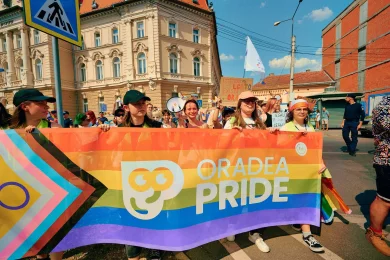
After two decades of Bucharest Pride, the balance is ambivalent. On one hand, the march has decisively contributed to the visibility of the community, the creation of a network of NGOs, and the strengthening of a public discourse about diversity, supported also by embassies, European institutions, and part of civil society. On the other hand, the absence of civil partnerships, the positioning at the bottom of the EU in terms of LGBT rights, high levels of violence, and mental health indicators make Pride resemble more a march for survival than a celebration of equality already achieved.
Moreover, Victor Ciobotaru, executive director of the Accept Association, said that in 2026 Bucharest Pride is about "demanding protection and legal recognition granted equally to all families, including those formed by same-sex individuals, through marriage and civil partnership," as well as about requesting simplified procedures for gender recognition for transgender individuals.
Beyond colorful banners and a festive atmosphere, FRA data, ILGA Europe reports, Human Rights Watch, and testimonies from psychologists working with LGBT youth outline a darker reality: young people who hide, families who do not know how to support their children, unprepared teachers to intervene against bullying, and a state that, despite European obligations, postpones from one electoral cycle to another any decision regarding the legal recognition of same-sex couples.
The LGBT community in Romania can celebrate the fact that it exists, that it goes out into the street, and that it makes room in public space, but what it has been demanding for almost 20 years – effective protection, legal recognition, safe schools for youth – remains largely an unfinished project.
****Synthesis made with the help of a data monitoring flow provided by the media monitoring platform NewsVibe Romania. The analysis, data, and images presented have been enhanced with the help of Machine Learning and Artificial Intelligence tools.
Latest News
23:03
22:44
22:40
22:37
22:34
See more news
NEWS ON THE SAME TOPICS