How the EU builds defense in Romania through bridges, borders, and resilience in the Black Sea




Always see our news on Google
While the EU discusses defense capabilities and strategic autonomy, investments in Romania refer to a less visible reality, European defense is built, in practice, through transport infrastructure adapted for dual civil-military use, through cross-border connectivity on the eastern flank, and through resilience projects that treat the Black Sea as a conflict-related risk area.
In short
The EU indirectly finances defense projects in Romania through transport and environmental programs
Five bridges on the TEN-T network are being modernized for civil and military mobility, with a technical standard of 130 t
A new bridge over the Prut, at Ungheni, connects Romania and the Republic of Moldova and is part of the future Târgu Mureș–Iași–Ungheni highway
An EMFAF project maps pollution in the Black Sea associated with armed conflicts, including contaminants and underwater noise
The case of Romania illustrates how the EU's "civilian" budgets become instruments of security and resilience
In a material published at the beginning of this year, the European Executive Agency for Climate, Infrastructure and Environment (CINEA) presents three initiatives that together describe a European policy line dedicated to strengthening defense through infrastructure and rapid response capabilities, not just through classic military investments.
The first project refers to what the EU calls "military mobility," adapting transport infrastructure for dual use. In Romania, a package of works funded through the Connecting Europe Facility (CEF) aims to modernize five bridges on the TEN-T network, at Ovidiu, Azuga, Arginești, Straja, and Vișoara. The project has an EU contribution of 14.4 million euros and aims for these bridges to be reinforced to allow both civil traffic and the transit of military equipment, including by aligning with the technical standard of 130 t provided in the relevant framework for military mobility.
From a journalistic perspective, the stake is not just the rehabilitation of some bridges, but moving defense into the realm of everyday infrastructure. The project is explicitly built as a double win, improving safety and traffic fluidity for citizens and businesses, while increasing Romania's capacity to support the rapid movement of military assets on the eastern flank. It is an example of "low visibility" security, where defense decisions are implemented through technical transport criteria, not through military-style communication.
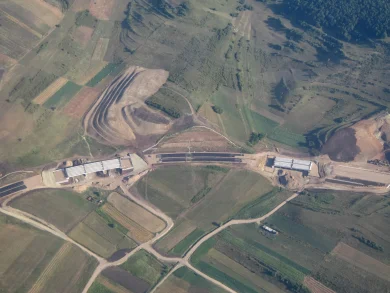
The second project has the same logic of mobility but anchors it in strategic geography. The bridge at Ungheni, funded through CEF with an EU contribution of 16.16 million euros, involves the construction of a new 261 m bridge over the Prut and the necessary infrastructure for border control and customs. The project is presented as part of the future Târgu Mureș–Iași–Ungheni highway, from the TEN-T Core network, and as an investment with economic and logistical effects, including reducing travel time by approximately 30%.
Here, the main angle is that border infrastructure becomes an instrument of security and regional integration. Beyond road traffic, the bridge is presented as an element that strengthens the connection with the Republic of Moldova and supports its integration into the European transport network, and through its design for civil mobility and defense, the project is connected to the EU's preparedness and resilience objectives.
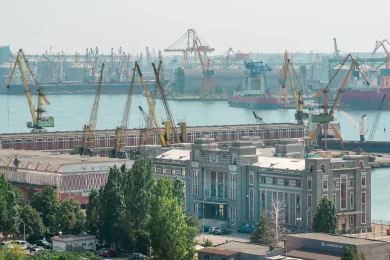
The third project shifts the discussion from transport to the environment but maintains the same strategic logic. Black Sea SIERRA, funded through the European Maritime, Fisheries and Aquaculture Fund (EMFAF), with an EU contribution of approximately 600,000 euros, addresses marine pollution in the Black Sea as a security and governance issue in a conflict context. The project covers approximately 90,000 km² and targets specific contaminants, including pollution associated with armed conflicts, microplastics, pesticides, and underwater noise, with a focus on the impact on biodiversity, including dolphins. Announced results include risk maps, a regional database, and a pollution assessment guide, plus training activities and dialogue with authorities to enhance response capacity.
In editorial terms, this is the piece that shows how the EU expands the concept of defense beyond military doctrine. The Black Sea is approached as a space where conflict generates environmental and public health consequences, and the required response is one that is cross-border, data-driven, with common procedures and administrative capacity. It is a form of defense through resilience, which treats environmental disruption as a strategic risk.
Viewed together, the three projects outline a common line, EU defense is not just about military budgets and capabilities, but also about infrastructure, connectivity, and the ability of states to respond quickly to risks. In Romania, this strategy is reflected in how funding from "civilian" programs is used for security-relevant outcomes, bridges capable of supporting heavy transport, a better-connected eastern border to Moldova, and a scientific-administrative tool for environmental risks generated by conflict in the Black Sea.
CINEA presents these projects as examples of investments through which the EU supports defense by modernizing transport links, strengthening cross-border connections, and improving preparedness for emerging risks, including those of environmental nature generated by conflicts. The projects are funded through different instruments, CEF for transport and EMFAF for the maritime and environmental dimension, but are united by a common logic, resilience and rapid mobility within the single market and on the eastern flank.
Latest News
14:32
14:32
14:32
14:32
14:25
See more news
NEWS ON THE SAME TOPICS
.webp)