Who defies whom?




Always see our news on Google
In the 1980s, a former French journalist turned politician wrote a book that became a worldwide bestseller and which made a career for decades to come. The author is named Jean-Jacques Servan-Schreiber (JJSS), and the book is titled "The Global Challenge".
The book was successful both in the West and in Eastern Europe, where its appearance was likely approved by censorship, probably to help those who read it understand the major difficulties that socialist Romania was already facing.
In Western Europe, the work attracted attention because it portrayed an economy of the future, described at that time by an American author, Alvin Toffler, who published "The Third Wave" during the same period. JJSS and Alvin Toffler were actually describing the new economy in simple and clear terms.
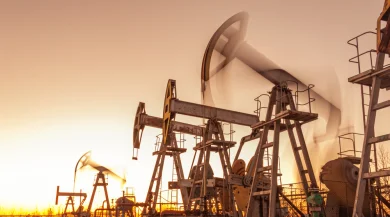
The French author's book was published in his home country in 1980 and, two years later, in Romania. The work was remarkable from two points of view; on one hand, it explained the first major oil crisis that occurred in the 1970s, against the backdrop of the Yom Kippur War and in the context in which Arab oil-producing states imposed an embargo on oil deliveries to the USA and to the countries that supported Israel in the conflict. Overnight, the price of oil rose from a few dollars to several tens of dollars per barrel.
On the other hand, JJSS wrote about the new economy of those decades, giving the example of Japan, which economically relied not on classic natural resources, but on the organization of labor, innovation, and especially on new technology (as it was defined in the 1980s).
Romania was far from the new economy of the 1980s. On the contrary, in the 1970s, Romania had made significant investments in what was then called heavy industry. Only the large complexes were built taking into account the supply of oil at a price of a few dollars, and in less than a decade the price rose to several tens of dollars, and interest rates on Romanian state loans skyrocketed.
That is, loans were contracted at an interest rate of 8%, and in the 1980s the interest that had to be paid rose to 13%. For example, in just four years, 1978-1981, Romania's external debt exploded from about one billion to 10 billion dollars. The result was that Romania practically entered into a state of insolvency.
It is a long parenthesis, but within it there are a number of similarities with today's situation, such as, on one hand, the disruptive nature of the economy (both then and now), and, on the other hand, the increase in external debt from the period 2020-2025 resembles in speed and magnitude that of the 1980s.
Returning to the present, the conflict in the Middle East brings immense inflationary pressure on the global economy. The experience in this regard, after 2020, of European states is not the happiest, because the European Union has gone through two successive crises, the health crisis and the energy crisis due to the war in Ukraine, from which some member states emerged with budget deficits and high public debts that, in a number of countries, have not been resolved even today.
Latest News
21:57
21:48
21:38
21:24
21:11
See more news
NEWS ON THE SAME TOPICS
.webp)
.webp)