Andrei Cornea, Dilemma: Odysseus Among Us




Always see our news on Google
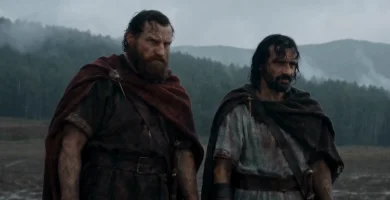
The fact that in the era of the digital revolution and the beginning of the Artificial Intelligence revolution we still discuss and debate the theme and the way of making a film retelling the Odyssey deserves, I believe, a moment of reflection. Essentially, why do we do this? What do we, people of today, have in common with those from almost three thousand years ago? Surely, some will say that Christopher Nolan's Odyssey, like other, older or more recent, rewritings in different languages and modalities of ancient legends, is not actually about the warriors and travelers on the seas of Homer, but about the problems of today's world. In fact, it is certainly about the problems of today's world, only if these problems were not compatible, even similar to those in the time of Odysseus, Calypso, Penelope, and all the other heroes and heroines, then such adaptations, retellings, or reboots – in literary, theatrical, or cinematic forms – would make no sense. If we were fundamentally separated by the fact that we wage wars with drones and rockets, while people of old fought with arrows and slings, we would truly have nothing important to learn from the endless adventures of some Odysseus, Achilles, Hector. And, of course, we could add here countless differences between them and us, related to the way we travel, the way we interrelate, in short, the way we live.
And yet, that distant past, like that from so many other fables, legends, histories, and myths, continues to live within us, in us, and with us. What matters is not what weapons we use to wage wars, but the fact that we continue to wage wars. The differences, however colossal they may seem, remain superficial. We are, just like our ancestors, consumed by envy and terrified by terror. We shy away from the unknown, but we are also curious to explore it, just like they were. We miss home when we are far away, but we are also afraid of what we will find upon our return. We love and hate just like they did, we have the ambition to prove our worth over rivals; we like to boast about what we have done and we do not shy away from inventing things beyond what we have done. Just like Odysseus. And, ultimately, we are tribal. Our clan, our kin, our group, our "tribe" – that matters to us first and foremost. Just like a hundred years ago or a thousand years ago, or ten thousand years ago. Just like always.
So let us imagine Odysseus unexpectedly landing in our world, through a rupture in the spatio-temporal fabric: he would be amazed at first, believing he had arrived among gods, even among some gods stronger than his Olympians. For several days he would not recover from his astonishment, but then he would get used to and even adapt quite quickly to using our digital toys, for he is not described by Homer as "versatile" (polytropos).
We know: the immense material, technological, scientific, economic, medical, social progress that humanity has known for about two hundred years has very little correspondence in our soulful life, in our morality, in our abilities to dominate our destructive impulses, good or bad emotions. We remain some barbarians capable of reaching the Moon, communicating instantly on the other side of the Earth, and conquering countless diseases. We traverse spaces in all directions, but we are just like people of all time: overwhelmed by old age, death, suffering, misfortunes, worries. We have not escaped from them and there are no chances to escape.
If Odysseus were to come to us, he would certainly take us at first for gods. Then he would realize that this first impression is false: "Strange gods," he would say, "unhappy and miserable! They are not what I knew about immortals. They are also just some poor humans. At least they know how to have fun from time to time. It is still phenomenal that they still use my inventions about the places I traveled! Just like when I was the guest of King Alcinous and the Phaeacians."
Now, however, there exists cinema. Consequently, tempted and curious, perhaps Odysseus, stranded in the 21st century and not on the island of Scheria as before, would go to the cinema to see the latest film about himself...
Latest News
23:03
22:34
22:16
21:55
21:16
See more news
NEWS ON THE SAME TOPICS