What do we have as a theme?




Always see our news on Google
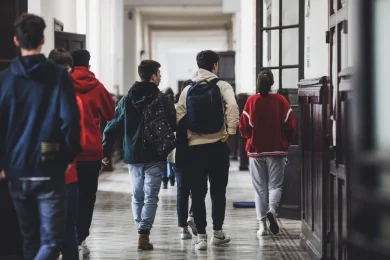
I started, like any teacher who still believes in the honesty of their own questions, from a simple doubt: can skills such as text writing be developed without homework? The question is not only technical but also sentimental: entire generations have grown up with homework as a ritual. But when you take it seriously, you discover that the problem is not the homework itself, but the way education is separated between the classroom and the "world beyond".
The discussion is not new. In 1916, a ministerial order already established limits and principles for homework – two hours a day for middle and high school, a balance between effort and rest, measured. Later, a study by the ministry and the Institute of Educational Sciences, published in 2017, recommended the same limit: two hours, approximately 10-20 minutes per subject. And recent research, including those led by Dacian Dolean, shows that the effects of homework vary greatly depending on age, quality, and degree of autonomy, not volume. In the Republic of Moldova, I found similar documents, with the same concern for time and equity. It seems that, regardless of the era or border, rationality always takes this round form: two hours.
If we look at other education systems, we observe a surprisingly diverse map. Some countries, as far as I found information, firmly regulate homework: France prohibits it in primary school, China drastically limits its volume by law, and regions like Madrid have introduced specific norms for digital homework (!). Other systems, such as Finland or the Netherlands, cultivate the tradition of little homework, naturally integrated into the school rhythm. And in Anglo-Saxon or international schools, freedom is the rule, with ingenious internal solutions: in a school in Luxembourg that I visited, teachers completed a common document online where they could see, in real time, what homework others had assigned, so as not to put pressure on the children that they cannot bear. Viewed this way, the initial question takes on a different meaning. Not whether we can give up homework, but how we use class hours so that the absence of homework does not turn into the absence of skills. And the answer comes directly from research: writing is developed through rhythm, not quantity, through rapid feedback, not through solitude at home. It is not simple, of course, and requires practice from the teacher as well. Micro-writings of five minutes, guided writing, on-the-spot rewriting, pair work, roles of editor and proofreader in teams – all these develop real competence, not "pages" made in the silence of the room.
Against this background, the draft order regarding homework, currently under debate, does not close the path to writing but clarifies it. It establishes reasonable limits (one hour for primary school, two at other levels), differentiates mandatory homework from supplementary homework, requires monitoring and feedback from students and parents, and, most importantly, explicitly states that "contents that require a systematic approach in class" cannot be assigned as homework – a formulation that, naturally, includes writing a longer text.
Therefore, yes: we can develop writing skills without excessive homework, if the class becomes a workshop, through micro-writings of 5-10 minutes, in which the student practices an idea, a sentence, a small paragraph, through guided writing, where the teacher models the process, through rewriting and editing done on the spot, not at home, where mistakes become inherently invisible, through pair work, in teams or in "roles" (author, editor, proofreader), impossible to replicate as homework – in other words, if education returns to fluency and meaning. Writing in which the student feels the process, not just delivers it. In reality, writing competence thrives more on rhythm than on mileage.
And perhaps this is exactly where the public discussion should be: not whether homework disappears, but what remains in its place. If silence remains, then the project will produce nothing. If the exercise remains, then perhaps, just perhaps, we will begin to see homework not as an additional obligation but as a natural extension of a learning time that starts in class and does not end with the bell. Of course, this also assumes that the programs are not too focused on the problem of transmitting and accumulating information.
Latest News
07:55
07:42
07:39
07:30
07:25
See more news
NEWS ON THE SAME TOPICS