Carl Bildt: The illiberal world order has begun



Always see our news on Google
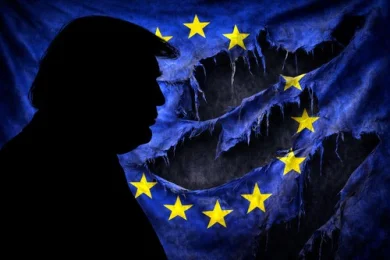
Now, after the Donald Trump administration explicitly rejected the institutions and international agreements based on rules created by America after World War II, the very idea of an international order is losing relevance. The world now belongs to illiberal regimes determined to pursue their own interests.
Once, it was normal to talk about a "liberal international order." Even though the institutional regulations that accompanied it were not always in a fully liberal, international, or systematic framework, this label had its purpose. After all, the goal of an ideal is not to describe reality but to guide behavior, and for many decades, most countries aspired to be part of the liberal order and to contribute to its development (even if some preferred to take advantage of the system or to evade it).
Those times are undoubtedly over. We have entered a new era of global disorder. Clearly, the constant rise of China and other emerging economies would always have posed a challenge to the agreements created by Western powers after World War II. But the decisive factor in the disappearance of the liberal international order is that its main architect, the United States of America, has abandoned it. American leaders are no longer loyal to John F. Kennedy's commitment "to pay any price, to bear any burden, to meet any hardship, to support any friend, to oppose any foe to assure the survival and the success of liberty."
It is true that the U.S. has not always been consistent in respecting international law or supporting the United Nations and its multilateral cooperation frameworks. But no one doubts that, without American support, this entire edifice would have collapsed, as it seems to be crumbling now. Under the second administration of President Donald Trump, the U.S. has come to explicitly denounce the old liberal order, with Secretary of State Marco Rubio asserting that it "is not only outdated but is a weapon used against us today."
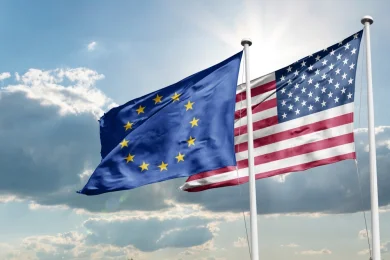
By definition, an international order implies certain common rules. But the Trump administration opposes any such constraints. It explicitly pursues a policy that places its self-defined interests above all else and has proven willing – and even eager – to brusquely treat friends and allies in this pursuit.
Trump's punitive tariffs are just part of the story. He has abandoned the entire system of rules, including by imposing import tariffs for reasons unrelated to trade. We are still at the beginning, but there is no doubt that the global economy will pay a significant price for Trump's destructive regime – with the U.S. economy likely to suffer the most in the long run.
Meanwhile, the concept of international law has been almost entirely evacuated from the formulation of U.S. foreign and economic policy. The long-standing notion of geopolitics as a struggle between democratic regimes and authoritarian regimes now seems completely irrelevant. Trump and his appointees speak about human rights only selectively, as when they make false claims about the genocide against white farmers in South Africa (while Palestinians in Gaza and the West Bank are barely mentioned).
In the U.S., there has been an easily understandable reaction against the "endless wars" in Afghanistan and Iraq, as well as a belated recognition that foreign countries cannot be simply reorganized by American dictate. The "unipolar" moment of unmatched U.S. power – between the fall of the Berlin Wall and the rise of China as a technological superpower – undoubtedly favored American hubris.
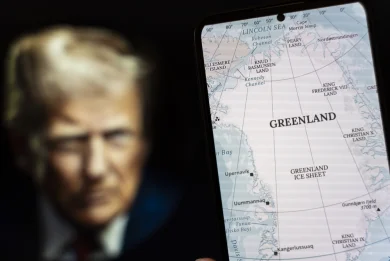
But now, the pendulum has swung in the other direction. From Greenland to the Panama Canal, the U.S. has become a motor of international disorder, joining countries like Russia, with its delirious war of aggression against Ukraine and its increasingly intense shadow war against the European Union. Meanwhile, vast regions – from the Horn of Africa to Sudan, passing through the Sahel – are collapsing into conflict and chaos, and no one seems to care. In fact, the U.S. is busy with its own little "chosen war" against Nicolás Maduro's regime in Venezuela.
Despite its industrial power and growing naval resources, it is unlikely that the People's Republic of China will fill the void left by the U.S. So far, the Chinese have cautiously engaged, mounting strong resistance to what they consider American bullying and intimidation, but refraining from intervening in various conflicts around the world. China explicitly desires a new global order, and not a continuation of the U.S.-led liberal order that has prevailed for eight decades after World War II.
But no new order is in sight on the horizon. We have entered a period of global disorder, in which illiberal regimes are gaining ground, and old international structures are disintegrating. These trends would be dangerous enough taken alone, but they are all the more perilous in the context of climate change, pandemic risks, and potentially disruptive technologies like Artificial Intelligence.
The cooperation necessary to manage these threats does not seem to be taking shape. The only hope that remains in this era of global disorder lies in multilateral coalitions focused on specific issues – trade norms, global health, and energy transition, among others. Countries that recognize the dangers we face will need to find new ways to collaborate on their own.
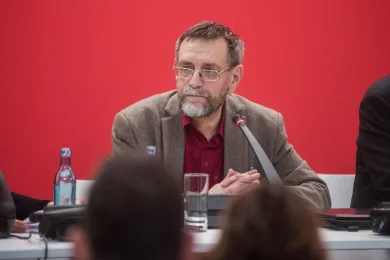
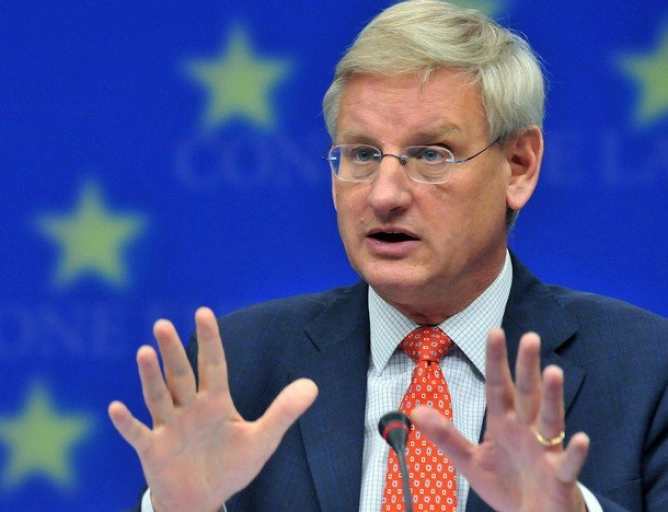
Carl Bildt is a former Prime Minister and Foreign Minister of Sweden. Copyright: Project Syndicate, 2025 www.project-syndicate.org translation by Matei PLEȘU
https://www.dilema.ro/pe-ce-lume-traim/a-inceput-ordinea-mondiala-iliberala
Latest News
13:18
13:17
13:16
13:01
12:56
See more news
NEWS ON THE SAME TOPICS