VIDEO | NASA's Artemis 2 mission has been successfully launched. What will happen in the next 10 days and the mission's records


Always see our news on Google
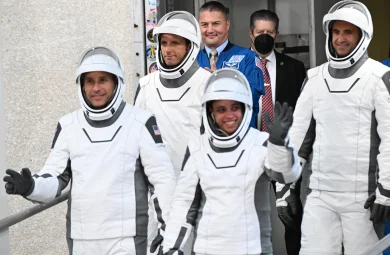
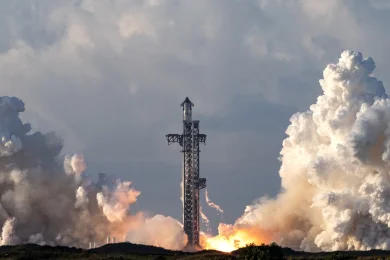
The NASA Artemis 2 mission, the first crewed flight around the Moon in over 50 years, was launched Wednesday from Florida. The Artemis mission crew is officially heading into a historic 10-day mission around the Moon, which could take them farther from Earth than anyone has ever gone before.
Less than 15 minutes after liftoff, astronauts Reid, Wiseman, Koch, and Hansen crossed the Kármán line - the boundary between Earth's atmosphere and space - and reached Earth orbit.
Only on days 2-5, the main engine of the Orion spacecraft will ignite, propelling it from Earth orbit towards the Moon, which is approximately 392,000 kilometers away.
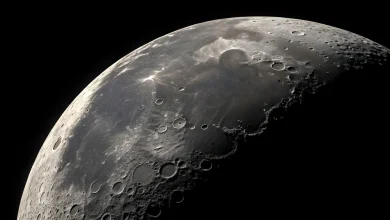
The flight past the Moon is scheduled to take place on day 6. At that point, Orion will reach its farthest point from Earth, about 8,000 kilometers beyond the Moon. The astronauts will immortalize the flight with the help of cameras.
On days 6-9, after passing by the Moon, the Orion spacecraft will use the gravity of the Moon and Earth to return home. Reentry into the atmosphere: the service module of the Orion spacecraft will separate from the capsule, which will reenter Earth's atmosphere, generating temperatures of about 1,650 °C.
After they reach Earth, the Artemis II crew will land with a parachute in the Pacific Ocean, concluding the mission. The mission breaks a series of records, but also historic firsts. NASA mission specialist Christina Koch is set to become the first woman in history to surpass low Earth orbit, as well as the first woman to visit the lunar environment.
NASA pilot Victor Glover is set to become the first Black astronaut to venture beyond low Earth orbit and visit the lunar environment. Canadian Space Agency mission specialist Jeremy Hansen will become the first non-American astronaut to visit the Moon, while mission commander Reid Wiseman will become the oldest astronaut to visit the Moon. He will turn 50 in November.
Video source: youtube.com/@ABCNews
Sources



Latest News
21:54
21:41
21:34
21:05
20:53
See more news
NEWS ON THE SAME TOPICS