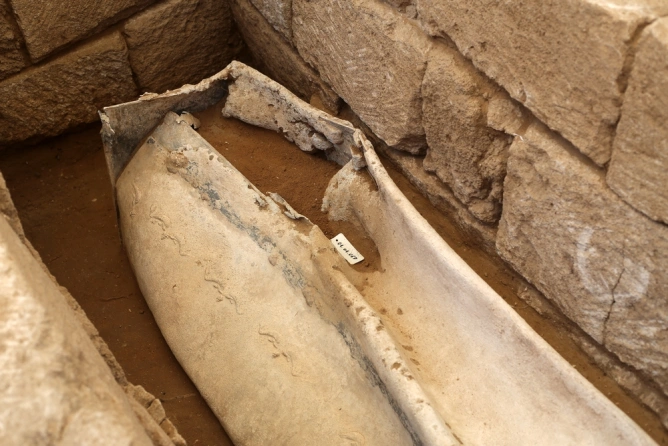
The USA returned to Lebanon fragments of sarcophagi from the Roman era, recovered by the FBI after they had been illegally removed from the city of Tyre.
Cristiana Dida


International
Foto: shutterstock.com

Always see our news on Google
The United States has returned several fragments of lead sarcophagi dating from the Roman period to Lebanon after they were illegally removed from the ancient city of Tyre in the south of the country and recovered as part of an FBI investigation. The artifacts were handed over on Wednesday at the Lebanese Consulate in New York and are due to be repatriated.
The fragments were identified in the catalogs of Arte Primitivo, an auction house specializing in antiquities and based in New York. Lebanese authorities then alerted US institutions, and the investigation established that the cultural artifacts came from illegal archaeological excavations carried out in Tyre or its surroundings.
According to the authorities, the pieces display artistic, decorative and technical characteristics specific to the lead sarcophagus workshops active in Tyre in antiquity. The FBI’s New York office indicated that the artifacts date from the period between the third and second centuries BC, although the exact timing of the trafficking has not been established.
The restitution reflects cooperation between the US and Lebanon in combating the illegal trafficking of cultural heritage. The Tyre region, rich in Phoenician and Roman remains, has recently been affected by bombardments and was included by UNESCO on its List of World Heritage in Danger considered to be in danger of destruction or significant damage as a result of armed conflict or other threats? UNESCO wording is not in original. But must preserve exact.
Sources


Latest News
20:07
Sindicatul Europol transmite un mesaj de solidaritate polițiștilor polonezi, în urma atacului din Cracovia, soldat cu șase morți și 15 răniți
19:54
Pope Leo XIV condemns violence in Uruguay and urges young people to start families
19:39
Commemorative plaque in Moscow in memory of the former head of East German intelligence, Markus Wolf
19:14
Teachers' unions demand that Education Ministers pay the salary rights won in court
19:06
A female police officer in Constanța accidentally fired a shot at the institution’s headquarters
See more news
NEWS ON THE SAME TOPICS
International
Turkey recovers 100 historical artifacts, some more than 4,000 years old and missing for nearly seven decades.

Diaspora
Two Romanians were arrested in the U.S. after allegedly robbing elderly people in four states
.webp)

Personalized news feed, AI-powered search, and notifications in a more interactive experience.