The Commission is launching a wave of infringement procedures that focus on Poland, Slovakia, Malta, Hungary, and Italy.



Always see our news on Google
The infringement package of the European Commission from November 2025 confirms a significant acceleration of EU law enforcement actions, with open or advanced procedures in a wide range of areas – from the rule of law and the environment to the internal market, energy, digital, migration, and fundamental rights. Although 95 cases are closed, the political content of the package shows a moment of pressure and realignment, in a context where the Commission is firmly pursuing the implementation of European standards. The document highlights a Union in which some member states are advancing, while others are distancing themselves from common obligations.
1. The rule of law and the European legal order
The most political and serious of the decisions included in the November package is the open procedure against Slovakia for violating the fundamental principles of EU law. The constitutional amendments adopted in Bratislava, which allow authorities and courts to decide whether European norms and CJEU rulings are applicable on Slovak territory, represent a direct affront to the primacy of EU law, the autonomy of the European legal order, and the uniform application of Union legislation.
The Commission emphasizes that even constitutional amendments cannot derogate from the obligation to respect EU law. This firm position marks a new episode in the debate on the rule of law, following similar cases in Poland and Hungary over the past decade. The opening of the procedure sends a clear signal: the European legal order is non-negotiable, and any attempt to relativize the authority of the CJEU triggers the intervention of the Commission.
2. Environment: air, water, biodiversity, and species protection
The environmental field is the most loaded in this package, with new procedures and referrals to the Court of Justice in cases concerning air quality, water protection, biodiversity, and the conservation of protected species.
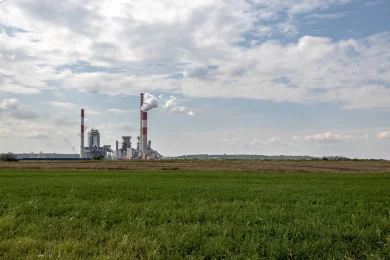
The Commission is sending Poland to the CJEU for the persistent exceedance of nitrogen dioxide (NO₂) limit values in urban areas of Kraków and Upper Silesia. Exceedances have been continuous for 14 and 15 years, and the measures adopted by Polish authorities have not sufficiently reduced pollution to meet the requirements of the Air Quality Directive. Additionally, the Commission is sending Bulgaria, Lithuania, Portugal, and Sweden to Court for failing to comply with obligations under the NEC Directive regarding the reduction of ammonia, NOx, and volatile organic compounds, after years of non-compliance and insufficient measures.
In the water sector, Poland is targeted for incorrect transposition of the Water Framework Directive, as national legislation does not impose periodic review of water abstraction permits. Meanwhile, Malta is targeted for a new derogation regarding the capture of finches for "scientific purposes," considered by the Commission a disguised reintroduction of recreational hunting, despite the CJEU having banned such practices in previous rulings.
The Netherlands receives a reasoned opinion for lacking an adequate monitoring system for bycatch of the porpoise, a strictly protected species in the EU. These cases highlight the Commission's pressure to ensure the correct implementation of European environmental legislation, against the backdrop of climate objectives and commitments regarding biodiversity.
3. Energy and climate: critical delays in transposing legislation on buildings and renewables
The EU's 2030 climate target requires accelerating the implementation of energy legislation, yet the infringement package highlights new delays in several member states.
Estonia, Italy, and Hungary are in procedure for failing to implement provisions regarding the phasing out of subsidies for fossil fuel boilers by January 1, 2025, according to the new Energy Performance of Buildings Directive (EPBD). This obligation is a key pillar for decarbonizing the building stock by 2050, and non-compliance jeopardizes national energy transition plans.
Meanwhile, Poland receives a reasoned opinion for incomplete transposition of the Renewable Energy Directive (RED III), which includes clear deadlines for project authorization procedures and for integrating necessary infrastructure. The Polish delays are concerning, given the key role of renewable energy in achieving decarbonization goals.
4. Internal market: public procurement, concessions, and freedom of establishment
The internal market is another area where the Commission is actively intervening. Hungary receives an infringement procedure for awarding the national waste management concession under conditions deemed discriminatory and for a concession duration of 35 years, exceeding the limits set in EU directives on concessions.
Greece faces a reasoned opinion for allocating coastal areas to local operators without a tender, which contravenes the principles of free competition and the Services Directive. Italy is under investigation for how it applies the "Golden Powers" legislation in the banking sector, as government prerogatives could unjustly limit freedom of establishment and the free movement of capital, affecting the ECB's competencies within the single supervisory mechanism.
These cases highlight the ongoing tension between national economic interests and the rules of the Single Market.
5. Digital and communications: cross-border interference and incomplete transposition
Italy is targeted for FM radio interferences affecting France, Croatia, Malta, and Slovenia. The Commission notes that Italian authorities have not taken sufficient measures to eliminate these interferences, which contravenes EU legislation on electronic communications. It is a rare and sensitive case, as it directly affects the functioning of the Single Market in telecommunications.
In terms of cybersecurity, Estonia, Poland, and Hungary are in procedures for incorrect transposition of the Directive on attacks against information systems, particularly regarding illegal interceptions and tools used in cybercrime. These cases highlight the importance of uniform application of European legislation in the field of cybercrime.
6. Migration, justice, and procedural rights
Bulgaria and Hungary are targeted for incorrect transposition of the Directive on legal aid in criminal proceedings. The Commission finds that not all affected individuals have access to legal assistance, which contravenes European norms regarding fundamental rights.
Sweden receives a reasoned opinion for incomplete transposition of the Directive on protecting the financial interests of the EU (PIF Directive), especially regarding VAT-related fraud. This is a case with direct implications for EU finances.
7. Transport and mobility: ITS, road charging, and maritime security
Portugal has not submitted the report required by the ITS Directive on the implementation of intelligent transport systems, which includes requirements related to traffic, smart parking, eCall, and the provision of digital data on infrastructure. The lack of this report hinders national progress assessment and cross-border interoperability.
Czechia, Hungary, and Austria are targeted for incorrect transposition of the Eurovignette Directive on road charging, particularly regarding definitions for zero-emission vehicles, the duration of road tickets, and the justification of derogations.
Portugal is also targeted for incomplete implementation of EU maritime security legislation, with gaps in port inspections and necessary administrative procedures.
8. Social security and workers' rights
Greece is sent to the CJEU for discriminatory rules regarding family allowances, imposing excessive residency periods for EU and non-EU citizens covered by social security coordination regulations. The Commission clarifies that social benefits cannot be conditioned on residency criteria, according to Regulation 883/2004.
The infringement package from November 2025 provides a clear picture of the enforcement priorities in the European Union. While some member states make significant progress (confirmed by the closure of 95 cases), others continue to ignore or delay the implementation of European rules in critical sectors. The Commission aims to send a strong message through the chosen themes and targeted cases, starting with the rule of law, environmental protection, energy transition, the internal market, and up to fundamental rights.
Overall, the package reflects a Union that seeks to reduce implementation disparities among member states, defend fundamental legal principles, and accelerate the transition to a competitive, green, digital, and rights-based economy. In a global context marked by tensions, fragmentation, and internal pressures, the Commission uses one of its most important tools, the infringement procedure, to protect the integrity of the Single Market and the common legal order.
Latest News
12:39
12:20
12:06
11:47
11:25
See more news
NEWS ON THE SAME TOPICS


.webp)