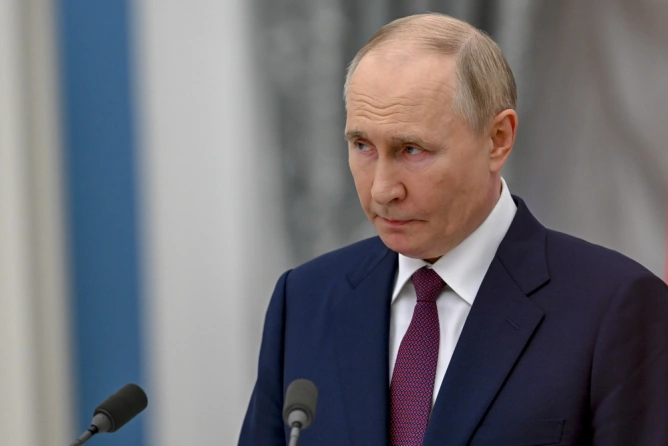
Russian President Vladimir Putin held a press conference on Thursday after the trilateral meeting with his counterparts Donald Trump and Xi Jinping during which he commented on the comparison between the Shenzhen meeting and the Yalta Conference.
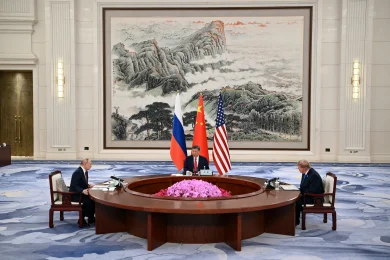
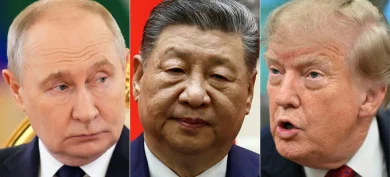
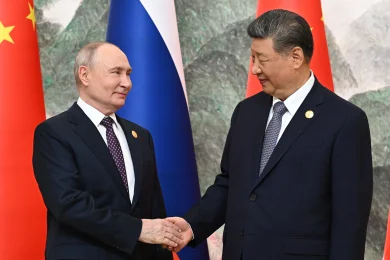
The presidents of Russia, the United States, and China, Vladimir Putin, Donald Trump, and Xi Jinping, attended a trilateral meeting held on Thursday as part of the APEC summit in Shenzhen. The public part of the meeting lasted approximately 10 minutes, after which the discussions continued behind closed doors.
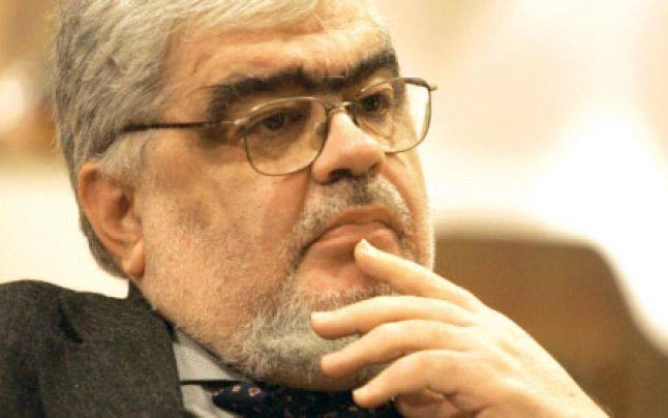
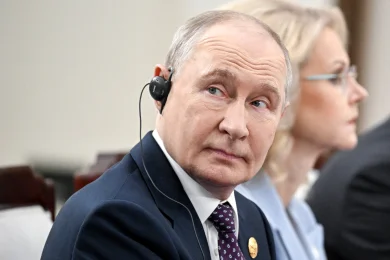
A notable moment during the meeting occurred when Russian journalist Andrei Kolesnikov, special correspondent for Kommersant, asked Vladimir Putin whether the meeting could be considered “Yalta 2.0.” Putin listened to the question, paused briefly, and nodded affirmatively.
Later, the subject came up again during a press conference by Vladimir Putin held after the trilateral meeting.
“I wouldn’t mind”
According to the BBC report, Putin offered his own interpretation of the 1945 Yalta Conference, stating that it did not divide the world, but merely recorded the realities that emerged after World War II. According to the Russian leader, the same realities should also be accepted in current conflicts.
“At Yalta, victory over Nazism was enshrined… I wouldn’t mind—even consider it right—to also enshrine a victory over ‘neo-Nazism’,” Putin said, according to the BBC.
“No one divided the world at Yalta. The realities that emerged after World War II were simply acknowledged,” he added.
“And when it comes to today’s conflicts, the realities on the ground will have to be accepted,” Putin added, in an apparent clear reference to the war in Ukraine.
The Kremlin leader had previously stated that the trilateral talks were to address global and regional economic relations, as well as food and energy security. Donald Trump described the meeting as a historic moment and said it could open up new opportunities for cooperation.
Xi Jinping said that the world is going through a period marked by major changes and instability. He argued that Russia, the United States, and China—all permanent members of the UN Security Council—must cooperate to maintain peace and stability.
Context: ahead of the trilateral APEC meeting, Putin–Trump–Xi prepared an unusual discussion in terms of format and indicated topics such as arms control and economic relations
Before the meeting in Shenzhen, the Kremlin and the leaders of the three states announced the possibility of a trilateral summit on the sidelines of APEC, and the discussions were described as having an agenda “without a predetermined schedule.” At the same time, a U.S. official indicated that Donald Trump intended to address nuclear arms control by initiating a dialogue among the three major nuclear powers, without necessarily seeking to conclude an agreement; the war in Ukraine was considered unlikely to be addressed, including because Beijing would avoid direct involvement in a peace process.
The plans for the meeting came after earlier talks and signals between the leaders of the United States and Russia, while the preparations were also associated with geopolitical tensions involving Ukraine and Iran. In parallel, Trump mentioned that the discussions could include denuclearization and finding a solution to stop the war in Iran, while Putin stated that he anticipated “significant potential benefits” from the meeting, against the backdrop of a global economy affected by political and military risks.




.webp)


.webp)