
Before the debate in Poland on response options, NATO convened an extraordinary meeting after three Russian cruise missiles (Kh-101) violated Polish airspace during attacks on Ukraine, while Polish authorities later announced that this had not involved just one missile. Prime Minister Donald Tusk described the incident as “an intentional provocation,” and Poland activated air defense systems, such as Patriot, as prosecutors determined the origin of the missiles.
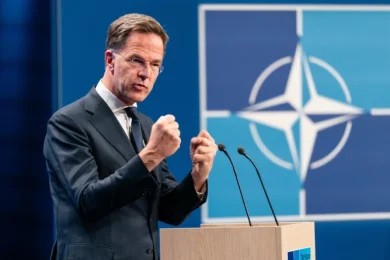
In Warsaw, NATO Secretary General Mark Rutte promised that the Alliance would defend “every inch” of Polish territory and said that the Supreme Allied Commander Europe could take measures to identify threats and make operational adjustments. In parallel, the Polish government was preparing evacuation plans and alert measures following warnings about the risk of the war spreading, including through possible provocations at the border and actions later presented as accidents.
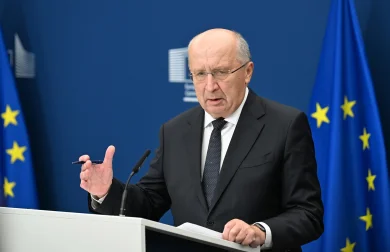
Discussions about what an allied response means also emerged in official statements: European Commissioner for Defence Andrius Kubilius said that a Russian attack on an arms factory in Europe could fall under Article 5, although NATO stressed that its activation is not automatic. At the same time, Polish Lieutenant General Piotr Błazeusz stated that Russia cannot attack a NATO state now, but is “constantly escalating” through hybrid operations.