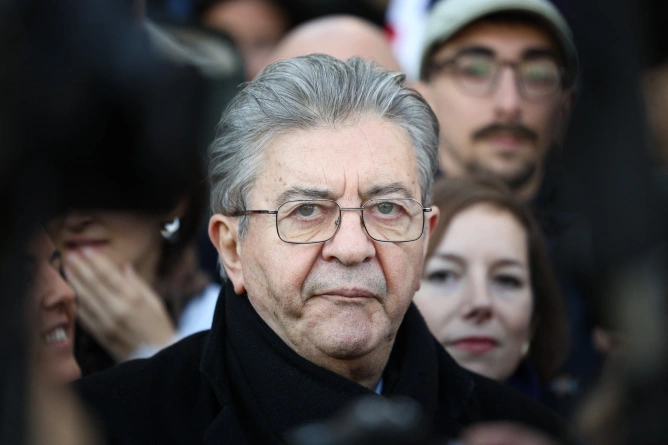
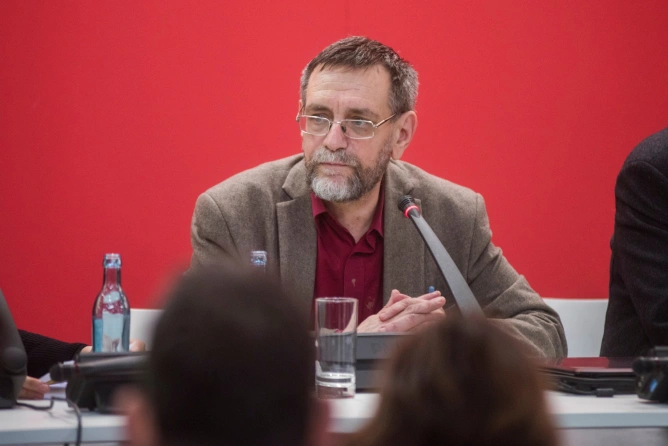
The France Unbowed party, the far-left formation led by Jean-Luc Mélenchon, proposes France’s withdrawal from NATO’s integrated military command and, subsequently, from the organization. The measure is included in the official 222-page program published on Friday, ahead of next year’s French presidential election.
The document also rejects the objective of allocating 5% of GDP to defense, supported by the United States. Instead, the formation states that France would continue to provide assistance to European Union member states, based on the European treaties.
The program provides for the nationalization of certain strategic companies in the defense industry, including ArianeGroup, as well as reducing dependence on equipment and services supplied by the United States through NATO. The party supports investments in communications, intelligence, and logistics and proposes stricter rules for lethal autonomous weapons and nuclear weapons.
Regarding Ukraine, the formation does not announce an end to support but insists on a diplomatic solution and collective security guarantees. France Unbowed also wants the closure of NATO’s space center in Toulouse, opposing the space arms race, but supports the development of a French space shuttle.
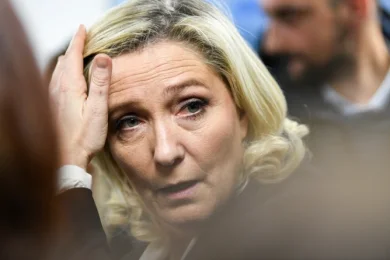
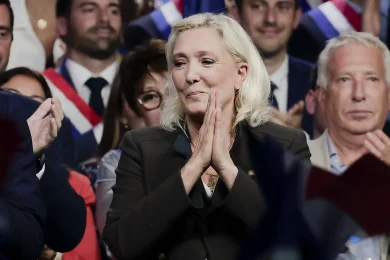
Mélenchon is rising in some polls and could reach the second round, including in a matchup against far-right leader Marine Le Pen, who likewise supports France’s withdrawal from NATO’s integrated military command.
Context: polemics over NATO and support for Ukraine intensified the campaign in France ahead of the elections
Before the discussion about possible distancing from NATO, Marine Le Pen said she wanted to postpone France’s withdrawal from the integrated command for as long as the war in Ukraine continued, taking a nuanced position compared with previous statements. At the same time, she stated that Paris “can no longer” support Ukraine financially at the current level because of the difficult state of public finances, while clarifying that it could continue military training and the provision of defensive equipment.
Meanwhile, several polls published before the campaign program showed that Le Pen and Jean-Luc Mélenchon had consolidated their positions in voting intentions. A second-round scenario from an Odoxa poll (October) placed Mélenchon in second place (18%), while Le Pen had 37% in the first round, and another survey indicated a strengthening of polarization and projected the two qualifying for the runoff in several scenarios.