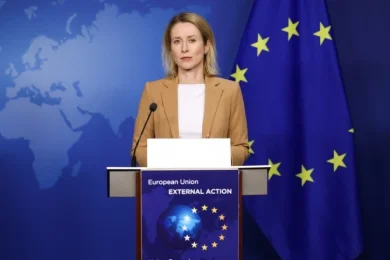
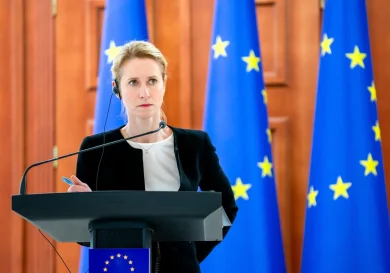
Kaja Kallas believes that the EU must strengthen its defense and use its economic power to support Ukraine.



Always see our news on Google
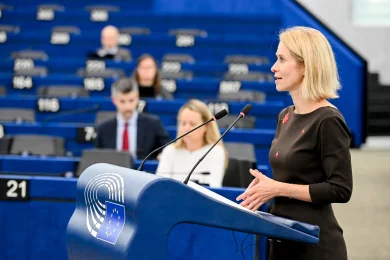
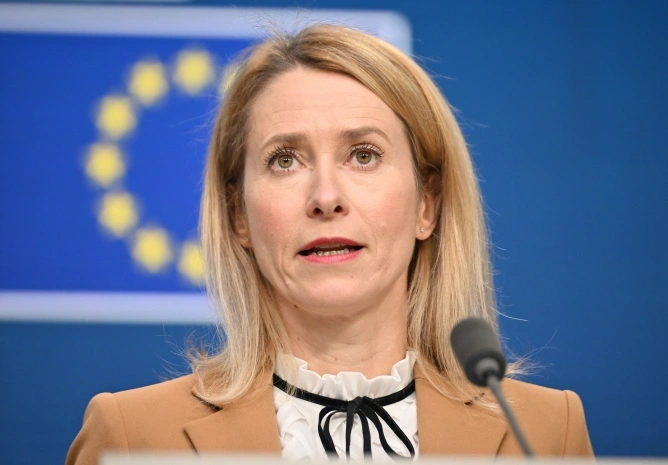
In front of the European Parliament's AFET committee, Kaja Kallas warned that the end of the war in Ukraine will define Europe's security and called for the acceleration of sanctions and the "Reparations Loan" mechanism.
Brussels, December 9, 2025 - The High Representative of the Union for Foreign Affairs, Kaja Kallas, presented to the Foreign Affairs Committee of the Parliament an analysis of the EU's most important external challenges, highlighting the need to maintain military and financial support for Ukraine, strengthen European defense, and uphold the international order in the face of geopolitical pressures.
In short
Record support for Ukraine and five new sanction packages against Russia.
The need for the rapid adoption of the "Reparations Loan" mechanism.
The EU is undertaking the most extensive defense reform since its inception: Readiness 2030 and military mobility.
Intensifying diplomatic action in Africa, the Indo-Pacific, and the Southern Neighborhood.
Candidate states are increasingly aligning with the EU's foreign policy.
Foreign interference is increasing, especially in Armenia; Moldova is a positive example.
The EU plays a major role in regional security in Gaza, Lebanon, and Syria.
EU enlargement by 2030 is becoming a realistic prospect.
Kaja Kallas opened her speech by emphasizing that the year 2025 "has been one of the most difficult" for Europe, dominated by a large-scale war, actors challenging the international order, and systemic shocks to the global economy. In the face of these challenges, she highlighted the progress made by the EU in the last 12 months, particularly in supporting Ukraine and strengthening European defense.
The High Representative mentioned that the EU has provided record funding for Ukraine's defense and imposed five new sanction packages, which "deprived Russia of tens of billions of euros needed to finance its war machine." She insisted that the war continues because Russia refuses to stop its aggression and manipulates diplomatic discourse, presenting the EU as an obstacle to peace, "when the reality is exactly the opposite."
Kallas emphasized that "the way this war ends matters for Europeans," arguing that support for Ukraine is less costly than a potential direct war on EU territory. In this regard, she stressed the need to advance with the financial mechanism "Reparations Loan" and with new sanctions, mentioning the IMF's estimate that Ukraine will need 135 billion EUR in 2026 and 2027.
In terms of defense, Kallas spoke about the most extensive European military reform in history: the White Paper on Defense, the Roadmap to Readiness 2030, and plans for military mobility. The EU is investing "record levels" in defense, and these strategies are designed to transform financial resources into real capabilities. She also highlighted partnerships established with eight states, including the United Kingdom, as well as successful operations carried out together with India and Norway.
Regarding multilateral diplomacy, the High Representative presented the outcomes of ministerial meetings on the Southern Neighborhood, Africa, and the Indo-Pacific, focusing on cooperation in critical raw materials, artificial intelligence, maritime security, and the protection of underwater infrastructure.
Kallas warned about the intensification of Russian interference, mentioning the situation in Armenia and the campaigns targeting Moldova this year, which "have been successfully countered." She emphasized the need for a "societal-level" approach to protect democratic processes.
Discussing the situation in the Middle East, Kallas highlighted the EU's role in supporting the two-state solution, the financial support provided to the Palestinian Authority, and the preparation of the EUPOL COPPS mission to train future Palestinian police forces. The EU also contributes to regional security in Lebanon and Syria.
In conclusion, the High Representative conveyed to the deputies that the EU must be more credible in its economic influence and use its available resources more strategically. She expressed her commitment to continued cooperation with Parliament and to defending the Union's democratic values.
The statement comes at a time when the EU is finalizing the SAFE programs, implementing the Roadmap to Readiness 2030, and discussing additional sanction packages. Meanwhile, the EU is preparing the multiannual budget and reactivating diplomatic instruments in the neighborhood and globally.
Latest News
00:32
22:56
22:37
22:23
22:09
See more news
NEWS ON THE SAME TOPICS