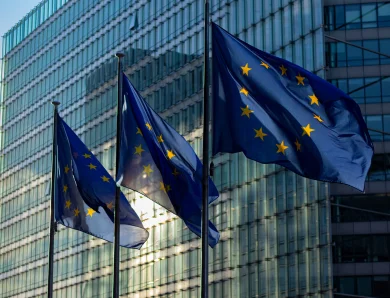
Europe tests the reaction to a deliberate biological attack during the "Operation Vector" exercise.



Always see our news on Google
Brussels, November 19, 2025 – The European Union has conducted a large-scale cross-border exercise to test the response to a deliberate biological incident, in a global context marked by increasing hybrid threats. "Operation Vector," organized by the European Centre for Disease Prevention and Control (ECDC) in collaboration with Europol, took place on November 11 and 12 at the Statens Serum Institut in Copenhagen and brought together over 100 experts from public health, law enforcement, and European institutions.
The exercise involved 62 representatives from EU/EEA member states, 18 participants from candidate countries and the Eastern Partnership, as well as observers from the European Commission (DG SANTE and DG HOME) and the World Health Organization. Participants worked together in a complex and realistic scenario based on the intentional release of a genetically modified pathogen, to test European early warning procedures, rapid operational decisions, and information exchange between sectors and countries.
During the two days, experts simulated the joint response of health authorities and law enforcement to an emerging biological threat, in a high-pressure environment. The exercise aimed to achieve five major objectives: testing preparedness plans and alert mechanisms, assessing inter-institutional operational capabilities, strengthening cross-border coordination, improving risk communication to the public, and identifying biosecurity vulnerabilities and response gaps in deliberate scenarios.
The opening of the exercise was marked by a strong call for international cooperation. Henrik Ullum, director of the Statens Serum Institut, emphasized that "no country can face such threats alone," recalling the lessons of the COVID-19 pandemic. From the European Commission, Laura Gillini (DG SANTE) highlighted how the exercise fits into the new European health security framework, stressing that "intersectoral efforts and well-established communication channels are essential for rapid detection and effective response to all threats, including deliberate ones." DG HOME representative Wiktor Wojtas insisted on the critical role of collaboration between police and public health in investigations related to biological incidents, in line with the EU CBRN Action Plan.
The exercise allowed participants to test how European early warning tools – including IHR (WHO) systems – can support a coordinated response among agencies, countries, and different professional fields. The scenario, designed to progress rapidly from initial signals to managing medical and forensic investigations, encouraged a common understanding of the limits and the necessity for prompt information exchange.
The results obtained from "Operation Vector" will guide future ECDC training and capacity-building programs, including within the initiative "Health Resilience in the Eastern Partnership," which aims to strengthen health systems in Armenia, Azerbaijan, Georgia, Moldova, and Ukraine from 2025 to 2027. The exercise represents an important step in Europe’s collective preparedness for biological risks, whether natural or deliberate, in an increasingly complex health security context.
Latest News
22:52
22:48
22:43
22:38
22:20
See more news
NEWS ON THE SAME TOPICS


.webp)