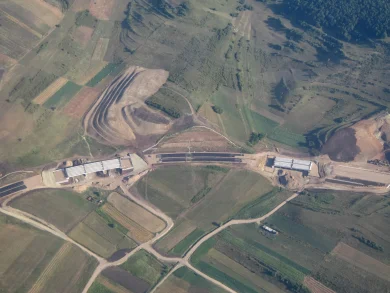
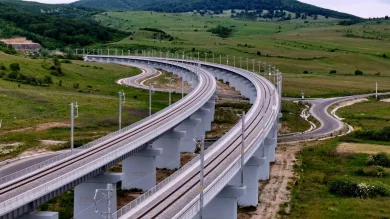
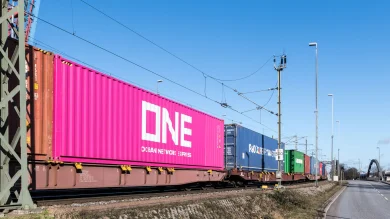
The EU supports the railway infrastructure in Eastern Europe, including Romania, Ukraine, and the Republic of Moldova.




Always see our news on Google
Brussels, November 7, 2025 — The European Commission has signed a series of grant agreements for transport infrastructure projects in Poland, Slovakia, Romania, Ukraine, and Moldova. The funding comes from the Connecting Europe Facility (CEF) and supports cross-border projects aimed at strengthening the so-called "solidarity corridors" between the European Union and Ukraine.
In Romania, Ukraine, and Moldova, three major railway projects will receive European funding: €73.5 million for a European gauge line between Poland and Lviv, €45 million for the modernization of a railway axis connecting the port of Constanța and Bucharest to Ukraine and Moldova, and €33 million for the rehabilitation of the Iași–Ungheni section, which will become the first electrified railway segment in Moldova.
In Poland, four projects will benefit from nearly €452 million, including the Polish section of Rail Baltica (€294 million), the modernization of the Mikołów–Czech border section (€18.4 million), the implementation of the ERTMS system on the TEN-T network (€94.9 million), and the expansion of the access channel to the ports of Świnoujście, Szczecin, and Police (€44.3 million).
In Slovakia, the Commission will fund four projects worth €135 million, focused on modernizing cross-border railway connections between eastern Slovakia, Ukraine, and the Czech Republic, as well as improving the safety and interoperability of the TEN-T network. Key works include the modernization of the Žilina–Košice line (€96.7 million) and the rehabilitation of the Košice–Čierna nad Tisou connection (€27.3 million).
On November 6, in Uzhhorod, the fourth EU–Ukraine Transport Dialogue took place, co-chaired by Ukrainian Deputy Prime Minister Oleksii Kuleba and the Director-General of DG MOVE, Magda Kopczyńska. The meeting assessed progress in aligning Ukraine with European transport legislation and common priorities for regional connectivity.
The discussions in Uzhhorod also brought together representatives from the Commission, Romania, Moldova, and Ukraine, who agreed to accelerate cooperation within the "Solidarity Lanes" initiative, created in 2022 to facilitate Ukrainian exports following the Russian invasion.
For the next financial period (2028–2034), the European Commission proposes to double the CEF budget to up to €51 billion, to expand the trans-European transport network (TEN-T) and support military mobility and high-speed rail projects.
Latest News
08:03
07:53
07:37
07:20
23:12
See more news
NEWS ON THE SAME TOPICS