EFSA and ECDC link a Salmonella outbreak from 14 countries of flavored noodle products
2eu.brussels


International
Credit foto: shutterstock.com

Always see our news on Google
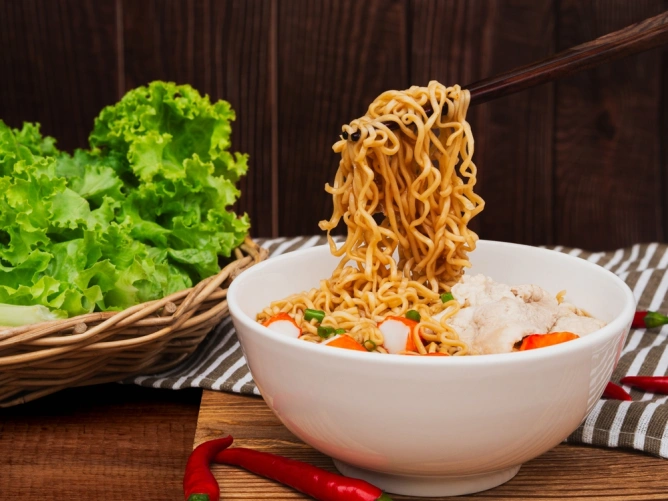
Flavored noodle products are the most likely source of a multinational outbreak of Salmonella Stanley, according to a rapid assessment conducted by the European Food Safety Authority and the European Centre for Disease Prevention and Control. Between November 2025 and June 2026, 106 cases were confirmed in 13 countries of the European Union and the European Economic Area, as well as in the United Kingdom.
In brief
EFSA and ECDC have identified flavored noodle products as a probable source of the outbreak. 106 confirmed cases have been reported in 13 EU/EEA countries and in the United Kingdom. At least 49 people required hospitalization. The outbreak has mainly affected children and young adults. The suspected products come from the same manufacturer in Ukraine and have been distributed in several countries.
Cases have been reported in Austria, Czech Republic, Denmark, Estonia, France, Germany, Hungary, Latvia, Lithuania, Netherlands, Norway, Poland, Sweden, and the United Kingdom. European authorities say that the outbreak is still ongoing, although product withdrawals and recalls reduce the likelihood of new infections related to the already identified products.
Epidemiological investigations have shown that infected individuals from Denmark, Estonia, Germany, Latvia, and Lithuania consumed flavored noodle products of the same brand. The link was also supported microbiologically: the outbreak strain was detected in Germany and Lithuania in products with chicken and spicy chicken flavor.
The products have been distributed in several countries and are linked to the same manufacturer in Ukraine. EFSA and ECDC state that available data suggest a possible common source of contamination at the production unit level, but the investigation continues to determine the exact cause.
Authorities have also detected other strains of Salmonella in products of the same brand. This element indicates the possibility that contamination may involve more than one source, including one or more ingredients, not just a single point in the production process.
Salmonella can cause diarrhea, fever, abdominal cramps, nausea, and vomiting. Severe cases may require hospitalization, especially in children, elderly individuals, pregnant women, or people with weakened immunity. In this outbreak, the number of hospitalizations is high: at least 49 people out of 106 confirmed cases.
Food safety authorities in the affected countries have implemented control measures, including the withdrawal and recall of the implicated products. Consumers should not eat the products included in the recalls. EFSA recommends returning them to the point of sale or disposing of them.
The risk is not completely closed. The cause and the point or points of contamination have not yet been established, and the products may have a long shelf life. Some packages may remain stored in households for extended periods, which maintains the possibility of new cases arising.
For products that require preparation before consumption, EFSA and ECDC recommend strictly following the instructions on the label. Food hygiene remains important during preparation: hands, utensils, and surfaces used for cooking must be cleaned to avoid cross-contamination.
Public health authorities are encouraged to interview new cases, sequence isolates when possible, and transmit information to ECDC. Food safety authorities must continue the investigation into the suspected products and establish the origin of the contamination.
In brief
EFSA and ECDC have identified flavored noodle products as a probable source of the outbreak. 106 confirmed cases have been reported in 13 EU/EEA countries and in the United Kingdom. At least 49 people required hospitalization. The outbreak has mainly affected children and young adults. The suspected products come from the same manufacturer in Ukraine and have been distributed in several countries.
Cases have been reported in Austria, Czech Republic, Denmark, Estonia, France, Germany, Hungary, Latvia, Lithuania, Netherlands, Norway, Poland, Sweden, and the United Kingdom. European authorities say that the outbreak is still ongoing, although product withdrawals and recalls reduce the likelihood of new infections related to the already identified products.
Epidemiological investigations have shown that infected individuals from Denmark, Estonia, Germany, Latvia, and Lithuania consumed flavored noodle products of the same brand. The link was also supported microbiologically: the outbreak strain was detected in Germany and Lithuania in products with chicken and spicy chicken flavor.
The products have been distributed in several countries and are linked to the same manufacturer in Ukraine. EFSA and ECDC state that available data suggest a possible common source of contamination at the production unit level, but the investigation continues to determine the exact cause.
Authorities have also detected other strains of Salmonella in products of the same brand. This element indicates the possibility that contamination may involve more than one source, including one or more ingredients, not just a single point in the production process.
Salmonella can cause diarrhea, fever, abdominal cramps, nausea, and vomiting. Severe cases may require hospitalization, especially in children, elderly individuals, pregnant women, or people with weakened immunity. In this outbreak, the number of hospitalizations is high: at least 49 people out of 106 confirmed cases.
Food safety authorities in the affected countries have implemented control measures, including the withdrawal and recall of the implicated products. Consumers should not eat the products included in the recalls. EFSA recommends returning them to the point of sale or disposing of them.
The risk is not completely closed. The cause and the point or points of contamination have not yet been established, and the products may have a long shelf life. Some packages may remain stored in households for extended periods, which maintains the possibility of new cases arising.
For products that require preparation before consumption, EFSA and ECDC recommend strictly following the instructions on the label. Food hygiene remains important during preparation: hands, utensils, and surfaces used for cooking must be cleaned to avoid cross-contamination.
Public health authorities are encouraged to interview new cases, sequence isolates when possible, and transmit information to ECDC. Food safety authorities must continue the investigation into the suspected products and establish the origin of the contamination.
Sources

Latest News
22:55
Cristian Bușoi, Secretary of State at the Ministry of Energy, assures that Romanians will not receive double electricity bills for the same consumption next winter
22:48
Police conducted searches in a case involving card fraud after foreign tourists were allegedly deceived in the Old Town.
22:22
Radu Miruță announces measures for Romanian grain exports and denies that Ukrainian trains are being prioritized at the Port of Constanța
22:14
Marco Rubio urges Europe to “wake up from sleep” and strengthen its defense
21:54
Bulgaria invites Romania and Turkey for consultations after drone attacks on commercial vessels in the Black Sea
See more news
NEWS ON THE SAME TOPICS
.webp)

.webp)

Personalized news feed, AI-powered search, and notifications in a more interactive experience.