The European Commission approves state aid for the construction of the first nuclear power plant in Poland



Always see our news on Google
Brussels has authorized a financial support package of 42 billion euros for the Lubiatowo-Kopalino power plant, simultaneously imposing strict conditions to protect competition in the energy market.
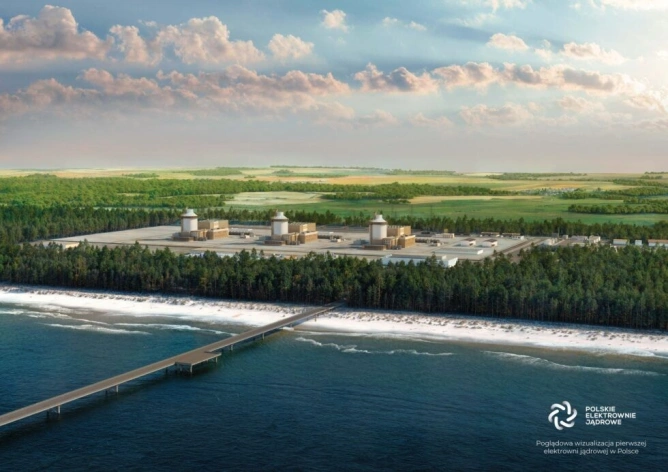
Brussels, December 10, 2025 The European Commission has approved, in accordance with EU state aid rules, Poland's plan to support the construction and operation of its first nuclear power plant. The project, considered a central pillar in the national decarbonization strategy, will have a generation capacity of up to 3,750 MW and is scheduled to start production in the second half of the 2030s.
In short
1. The 42 billion euro project aims to construct three nuclear reactors with a total capacity of 3,750 MW.
2. The state support includes guarantees for debts and a contract for difference (CfD) valid for 40 years.
3. To prevent market distortion, 70% of the energy will be sold mandatorily on the free market.
The beneficiary of the measure is the state-owned company Polskie Elektrownie Jądrowe (PEJ), which will manage the power plant located in Lubiatowo-Kopalino. Total capital costs are estimated at approximately 42 billion euros. Poland will support the project through a capital injection covering 30% of the costs, state guarantees for 100% of the contracted debt, and a revenue stabilization mechanism through a contract for difference (CfD).
Following a thorough investigation initiated in December 2024, the Commission requested Poland to make significant adjustments to ensure that the aid does not affect competition. In response, the duration of the support through the price was reduced from 60 to 40 years. A control mechanism was also introduced to prevent overcompensation; any profit exceeding the market rate of return will be returned to the state.
To protect the domestic energy market, Poland has committed that at least 70% of the annual production of the plant will be sold on the open energy market (including day-ahead and futures markets). The Commission concluded that these revised measures align the project with EU rules, allowing Poland to pursue its energy security objectives without unjustifiably disadvantaging renewable energies or other operators.
Latest News
16:53
16:45
16:44
16:42
16:32
See more news
NEWS ON THE SAME TOPICS

.webp)