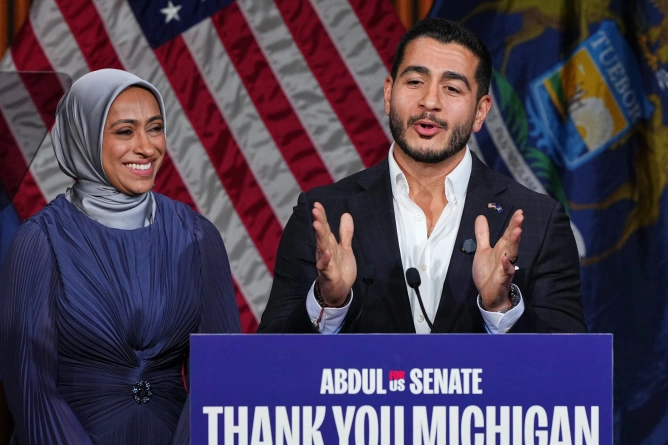
Abdul El-Sayed, the Democratic Party candidate in Michigan, won the election for the United States Senate, according to the election monitoring and forecasting platform Decision Desk HQ. The Muslim-born physician received 51.8% of the vote, while Republican Mike Rogers was credited with 46.2%, after approximately 76% of the ballots had been counted.
The result represents a first for the United States: El-Sayed becomes the first Muslim elected to the U.S. Senate. His victory is considered an important success for the progressive wing of the Democratic Party, which is trying to demonstrate that liberal messages can attract voters from diverse racial, ethnic, and social groups.
The campaign in Michigan was tense. El-Sayed criticized Mike Rogers over high gas prices and tariffs imposed during the Trump administration. The Democrat, for his part, promoted a discourse critical of Israel and the war with Iran, seeking to win support including from the middle class and rural voters.
El-Sayed's religion and the Middle East occupied a central place in the final weeks of the campaign, as Republicans intensified their criticism of his Muslim background, associations, and progressive positions—from proposing “Medicare for All” (healthcare for everyone) to his previous calls to cut police funding. Rogers repeatedly tried to associate El-Sayed with the Muslim Brotherhood—an accusation the Democrat denied, dismissing it as an unfair attack on his faith and patriotism, reports WSJ.
His candidacy was also marked by accusations of antisemitism, as well as a rift within the Democratic Party. Former Democratic candidate Haley Stevens announced that she supports Rogers. El-Sayed nevertheless received the support of several progressive leaders, including Senator Bernie Sanders and Representative Alexandria Ocasio-Cortez.
Democrats also won victories in other states, including Maine, South Carolina, Ohio, and Iowa.
Context: Donald Trump's first reaction after the election results
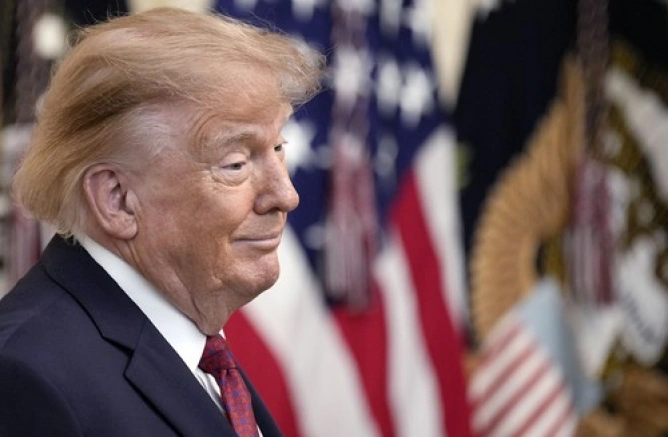
Before the Michigan vote, several media projections showed that Democrats were taking control of both chambers of Congress, which was described as a major defeat for President Donald Trump. Previous analyses indicated that, with the change in majorities, a tough “political war” would follow: Trump was expected to use his veto power to block Democratic initiatives, while they would launch investigations, within the limits allowed by their majorities in the Senate. However, Trump announced in his first reaction that his administration would cooperate with Democrats whenever this was in the country's interest, but warned that he had “strong” veto power. “If I consider it to be right, we will simply exercise the veto power,” Trump said.















.webp)