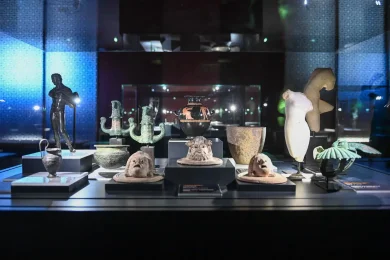
Shortly beforehand, Turkey recovered 100 historical artifacts offered for sale by an auction house in the United States, following legal and diplomatic efforts supported by scientific analyses regarding the objects’ origin. The pieces were returned and presented in Istanbul as part of the exhibition “No Way Out: Boubon,” which brought together fragments of Roman statues looted in the 1960s, whose provenance was confirmed through investigations into the joins, soil, and lead isotopes.
Archaeologists have discovered 420 metres of tunnels beneath Hagia Sophia
Riana Gegiu


International
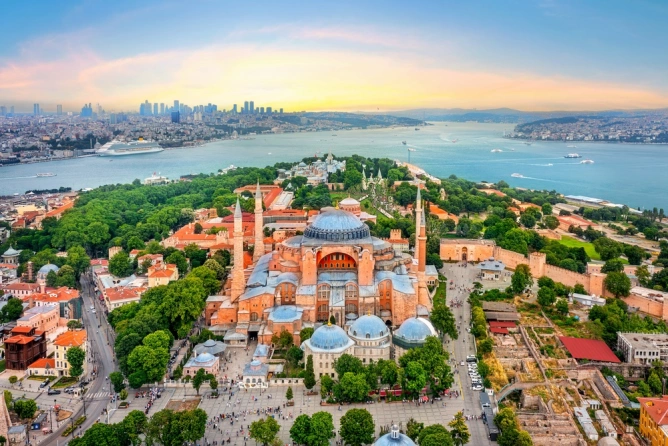
Hagia Sofia/ Foto: Shutterstock

Always see our news on Google
Archaeologists discovered and cleared 420 metres of tunnels beneath Hagia Sophia in Istanbul in November 2026, as part of a major restoration programme for the monument. The underground network comprises nine tunnels and six chambers, some of which may date from a period before the current Byzantine basilica.
Nearly 3,000 tonnes of earth and fill material were removed from the Vizier’s Garden and the Western Garden. Seven of the galleries have been cleared, while measurements and documentation continue in the other two. The longest tunnel is 180 metres long and runs parallel to the monument’s façade. Specialists are investigating whether it was connected to Constantinople’s ancient roads.
A hypogeum, an underground funerary structure, was also identified in the Vizier’s Garden, approximately 1.5 metres below the previously known level. The remains have not yet been dated, and the hypothesis that some structures are older than Hagia Sophia remains under analysis.
Researchers believe the tunnels were also used for water management. Meanwhile, the vaults and masonry are being reinforced, and authorities are considering opening certain areas to visitors, although no date has yet been set.
Context: Before the research beneath Hagia Sophia, Turkey resumed other operations related to cultural heritage
Sources


Latest News
15:19
Denmark will propose banning phones in primary and lower-secondary schools from the 2027 school year
15:15
Transgaz on the salary increase: Indexation of up to 6.5% applies to employees, not directors or board members
15:08
Maia Sandu warns NATO that Russia is waging a conventional war against Ukraine and a cognitive war against European democracies
15:08
Approximately 450 schools in Germany received emails containing bomb threats. The police do not consider them credible
15:08
DRDP Craiova closes Transalpina between Obârșia Lotrului and Curpăt due to heavy snowfall
See more news
NEWS ON THE SAME TOPICS
Current Affairs
CNAIR announces that the Momaia Tunnel is nearly completed, and traffic on the Tigveni–Curtea de Argeș section could be opened this year
International
Turkey recovers 100 historical artifacts, some more than 4,000 years old and missing for nearly seven decades.

Personalized news feed, AI-powered search, and notifications in a more interactive experience.