What is hantavirus and how is it transmitted, the virus that caused victims on the MV Hondius ship



Always see our news on Google
Three people have died, and another person is in critical condition, after a possible hantavirus outbreak aboard the cruise ship MV Hondius, off the coast of Cape Verde. In this context, the National Institute of Public Health (INSP) reminds that hantavirus also exists in Romania, where only a few cases are reported annually, but it is insufficiently studied and likely underdiagnosed.
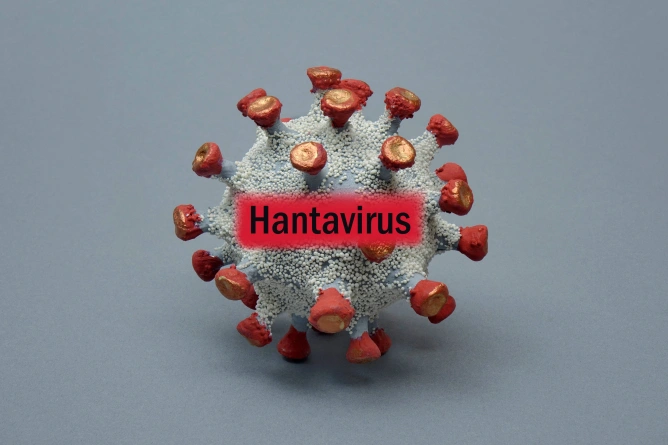
What is hantavirus
Hantavirus is a family of viruses primarily carried by rodents – mice, rats – which are "natural hosts" for them, but when they reach humans, they can cause serious illnesses. The virus does not "circulate" among people like the flu, but most often reaches us through contact with the urine, feces, or saliva of infected rodents, for example in sheds, barns, cabins, or dusty areas where mice live.
The most common route of infection is inhalation of very fine, invisible particles that rise into the air when we clean or sweep areas contaminated with rodent droppings. Infection can also occur if we bring a dirty hand to our mouth, nose, or eyes, if we eat contaminated food, or, more rarely, if we are bitten by an infected rodent.
In humans, hantavirus can cause two main types of illness:
a severe respiratory syndrome (hantavirus pulmonary syndrome – HPS), more common in the Americas;
a form with renal involvement and sometimes hemorrhagic (hemorrhagic fever with renal syndrome – HFRS), mainly encountered in Europe and Asia.
Initial symptoms resemble those of the flu: fever, chills, extreme fatigue, muscle aches, headaches, sometimes abdominal pain, nausea, or diarrhea. Within a few days, in some patients, the disease can suddenly progress to severe breathing difficulties, dry cough, rapid heart rate, or low blood pressure, which can lead to respiratory failure or severe kidney damage and requires emergency hospitalization, often in intensive care.
WHO and other authorities mention human-to-human transmission as possible only for certain strains, under very specific conditions, not as a general rule for all hantaviruses. Typically, hantaviruses are transmitted from rodents to humans. An important exception is the Andes virus (ANDV), responsible for some cases of hantavirus pulmonary syndrome in Argentina and Chile, for which clusters of human-to-human transmission have been documented, including to family contacts or healthcare workers. Public health documents explicitly state that "human-to-human transmission is rare, but has been demonstrated for the Andes virus."
What we know about the outbreak on MV Hondius
The case that brought hantavirus back into the public eye is the suspected outbreak on the cruise ship MV Hondius, operated by the Dutch company Oceanwide Expeditions, which has capacity for approximately 170 passengers and 70 crew members, currently traveling from Ushuaia (Argentina) to Cape Verde. So far, three people have died, including an elderly couple, and a 69-year-old British passenger is in intensive care in South Africa after testing positive for a hantavirus; two other infected passengers are set to be repatriated to the Netherlands.
Authorities say that an epidemiological investigation is still ongoing: WHO and national specialists are collecting samples, conducting laboratory tests, and genetic sequencing to understand which strain of the virus is involved and how the passengers became infected. The company operating the ship emphasizes that only one evacuated passenger has been confirmed to have the virus, and in the case of other symptomatic individuals, the investigation continues, so the picture is not complete.
The situation is unusual because hantavirus is usually associated with contact with rodents in terrestrial environments (households, warehouses, rural areas), not with cruises. Specialists are considering several scenarios: the presence of rodents on board, a common exposure during a stop in a rural area or in an infested building, or a combination of factors.
Hantavirus in Romania: few cases, little data
Following the wave of news about MV Hondius, the National Authority for Research and INSP issued a statement explaining that hantavirus exists in Romania, but only a few cases are recorded annually, with a clearly "sporadic" nature. According to this data, cases are documented, but infections "remain insufficiently explored," indicating that we do not yet have extensive studies, detailed national registers, or a complete picture of the virus's circulation in the population and in the animal environment. Specialists also warn about the risk of underdiagnosis: initial symptoms resemble many other viral infections, and accurate diagnosis is only made through specialized laboratory tests, which are limited in availability. Therefore, it is possible that some mild or moderate cases go unnoticed or are classified as other respiratory or renal diseases.
Authorities insist, however, that currently, there is no evidence of a hantavirus outbreak in Romania and that the virus is not responsible for the current increase in respiratory viral infections or flu. The message is one of information and prevention, not alarm: the individual risk for the general population remains low, but the infection deserves to be known, especially by those who work or live in areas with rodents.
How "dangerous" is it really
The natural question from the public is: "Should I be afraid of hantavirus?" The experts' answer is no – but we should treat it seriously. Hantavirus is not a very widespread virus, it does not easily transmit between people, and it cannot cause pandemics like COVID-19, according to assessments by the CDC and ECDC.
Where it causes severe illness, it can, however, be lethal. Hantavirus pulmonary syndrome (HPS), the form that severely affects the lungs, has a mortality rate of approximately 38% in patients with severe respiratory symptoms, according to the American Centers for Disease Control and Prevention (CDC), a figure also cited in the Romanian statement. For hemorrhagic fever with renal syndrome (HFRS), more commonly encountered in Europe, mortality generally varies between under 1% and 10-15%, depending on the strain of the virus and the speed of access to medical care.
Another important aspect is that not every exposure leads to severe illness. Many people can be exposed without becoming infected or may have mild forms that resolve, especially in the case of "milder" strains. However, for those who develop a severe form, the progression can be rapid, and the only chance is to present as early as possible to the hospital, where treatment consists of oxygen therapy, mechanical ventilation, supportive medications, and sometimes dialysis.
How can we protect ourselves
Both INSP and experts cited in the Romanian press emphasize prevention: the key is to limit contact with rodents and the traces they leave around us. Here are some basic recommendations:
Keep your home clean and ventilated, store food in airtight containers, and do not leave food scraps within reach of rodents.
If you find mouse or rat droppings, do not sweep or vacuum directly: moisten the area with a disinfectant solution and clean with gloves, possibly with a mask on your face, to avoid inhaling contaminated dust.
In rural areas or on vacation in cabins, avoid sleeping or storing food in areas where you see signs of rodents and call for pest control if the infestation is significant.
At the onset of a severe "flu," also accompanied by extreme fatigue, muscle aches, and later, breathing difficulties or decreased urine output, especially if you have had contact with areas with rodents, seek emergency medical attention and mention this exposure.
Authorities emphasize that climate change, deforestation, urbanization, and increased human mobility can more frequently bring humans into contact with wildlife, including hantavirus-carrying rodents.
****Synthesis made with the help of a data monitoring flow provided by the media monitoring platform NewsVibe Romania. The analysis, data, and images presented have been enhanced with the help of Machine Learning and Artificial Intelligence tools.
Latest News
16:50
16:45
16:45
16:32
16:18
See more news