



SPECIAL What the assassination attempt on General GRU says about the Russian military apparatus. The professional portrait of Vladimir Alekseev



Always see our news on Google
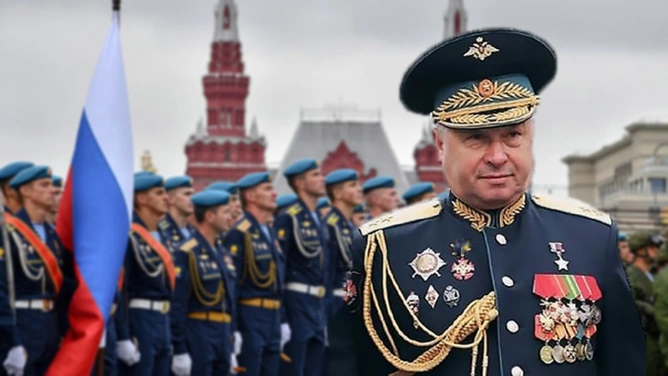
Vladimir Alekseev, the number two in the Russian military intelligence service (GRU), remains hospitalized in serious condition in Moscow after being shot multiple times on Friday, in the building where he resides, by an attacker who managed to escape. The incident, treated by Russian authorities as an assassination attempt, involves one of the most visible and controversial figures of the military and intelligence apparatus of the Russian Federation, involved in the wars in Ukraine and Syria, cyberattacks in the USA, and clandestine operations in Europe. Furthermore, the Kremlin has used the attack to accuse Ukraine of being behind the assassination attempt.
How the attack unfolded and the general's condition
According to the Investigative Committee of the Russian Federation, an unidentified individual opened fire on Lieutenant General Vladimir Alekseev in his residence in northwest Moscow, on Volokolamskoie highway, around 7 local time.
Multiple reports indicate that gunfire was exchanged inside the building, in the area of the hallway or elevator, in close proximity to the general's apartment.
Alekseev was shot multiple times in the back, after which the attacker fled the scene, triggering a large search operation in the Russian capital. Witnesses cited by international media describe cries for help and the victim collapsed on the floor, covered in blood, until the ambulance arrived. The general was urgently transported to the hospital and admitted to intensive care, being described as in serious but stable condition.
Official communications remain cautious: the spokesperson for the Investigative Committee, Svetlana Petrenko, only confirmed the hospitalization, without details regarding the prognosis, while sources close to security structures speak of a fight for survival after multiple gunshot wounds.
This opacity is in line with how Russian authorities generally manage incidents involving high-ranking officials from the military and intelligence apparatus.
In contrast, according to The Guardian, which cites other sources, the attacker allegedly came "disguised as a courier" and shot Alekseev in the stairwell, in the leg and arm, then, while the general tried to wrestle the weapon from him, he shot him in the chest, after which he fled.
The attacker and the circumstances of the assassination attempt
Officially, the aggressor is described as a "unknown person," and so far no arrests or public identifications have been announced. Reports from Telegram channels close to power structures suggest that the attacker may have waited for the victim in front of the building or in the hallway, indicating a premeditated and targeted action, not a random incident.
The Investigative Committee has opened a criminal case for attempted murder and illegal arms trafficking, and investigators are analyzing surveillance camera footage from the area to reconstruct the assailant's route. Authorities have secured the perimeter and mobilized specialized investigative structures, treating the case as a failed assassination of a high official of the Ministry of Defense.
The Kremlin claims Ukraine is the scapegoat that "sabotages" peace negotiations
So far, Moscow has not publicly advanced any scenario regarding possible perpetrators or masterminds, under conditions in which, in other similar cases, the official discourse quickly indicated suspicions against Ukrainian services. HotNews emphasizes that, until now, Kyiv – often mentioned as the "usual suspect" in such cases – has made no comment and has not claimed responsibility for the incident.
The Kremlin states that Putin is constantly informed about the investigation, and special services are "taking care of" the case, which reinforces the status of the incident as a top national security case, not just a regular criminal investigation.
Politically, the timing is explicitly linked to peace talks in Abu Dhabi: journalist Pjotr Sauer notes that in Moscow, a narrative is quickly being constructed that the attack would be an attempt by Kyiv to derail the process, in the context where there were signs of progress in negotiations.
Sergei Lavrov has gone public and pointed the finger at Ukraine, stating that the attempt would show that "Zelensky wants to sabotage the peace process," but The Guardian clearly emphasizes that these accusations are made without presenting any evidence.
Deputy Alexei Juravliov goes further and states that an attack on Alekseev is "the best way to derail these discussions," claiming that the only beneficiary would be Zelensky and demanding the elimination of those involved.
In a quick analysis, journalist Pjotr Sauer notes that Alekseev's shooting will be perceived as a new failure of Russian services to protect the military elite, and military bloggers are already criticizing security breaches – a useful angle for the subsection on the physical vulnerability of generals and the precedent of other assassinations/attacks in Moscow.
Who is Vladimir Alekseev: career and role in GRU
Vladimir Alekseev was born in 1961, in Soviet Ukraine, in a region that today belongs to independent Ukraine. He graduated from the Higher Air Command School in Ryazan (Reazan), one of the elite institutions of the Soviet army, and began his career in airborne units and special forces.
Over the years, he has led intelligence structures within the Moscow and Far Eastern military districts, as well as a department of the Main Intelligence Directorate of the General Staff. Since 2011, Alekseev has been the first deputy head of the GRU, a position that makes him the number two in the Russian military intelligence service and one of the main architects of Moscow's external operations.
The general has been involved for years in high-level military planning and in overseeing operations in Syria, for which he received in 2017 the title of "Hero of the Russian Federation," one of the highest state honors. His military biography also includes other prestigious decorations, such as the Order of Saint George and the Order "For Merit to the Fatherland," awarded for services considered exceptional by the Kremlin.
Alekseev, involved in Ukraine, Syria, with GRU operations and international sanctions
Alekseev's role is closely linked to Russia's two major war theaters in the last decade: Syria and Ukraine. The Ukrainian military intelligence agency accuses him of identifying targets for Russian air and missile attacks on Ukrainian territory and of contributing to legitimizing the occupation in occupied territories by orchestrating referendums.
In Syria, Alekseev is described as one of the coordinators of military operations, a fact that decisively weighed in granting him the title of "Hero of Russia." In the context of the war in Ukraine, several media sources place him at the center of the planning process for missile strikes and in the decision-making mechanism regarding the use of volunteer and mercenary units in the theater of operations.
However, his activity is also associated with clandestine GRU operations in the West. In 2016, the United States sanctioned him for organizing "malicious cyber activities" during the American presidential elections, after which Donald Trump won his first term. Canada also sanctioned him in August 2022 for complicity in the large-scale invasion of Ukraine.
The United Kingdom and the European Union accuse him of orchestrating the Novichok nerve agent attack in Salisbury in 2018, which targeted former double agent Sergei Skripal and his daughter. The two survived, but a British civilian who later came into contact with the substance died, and the cases led to the expansion of European sanctions against the GRU leadership, including Alekseev.
Connections with Wagner and mercenary structures
Another essential element of Alekseev's profile is his relationship with Russian volunteer and mercenary formations, especially with the Wagner group. In June 2023, during Wagner's armed revolt, he appeared in images in Rostov-on-Don, alongside Deputy Defense Minister Yunus-Bek Yevkurov, in discussions with Yevgeny Prigozhin, the mediation attempt being presented as an effort to de-escalate the confrontation between Wagner and the military leadership.
Alekseev publicly condemned the revolt and called on Wagner fighters to lay down their arms, positioning himself as a representative of loyalty to the Kremlin in relation to the mercenary group. According to HotNews, he also contributed to the creation of the so-called "Russian Volunteer Corps," which included paramilitary units such as Redut and the Espanola brigade – the latter formed, among others, from former football hooligans – a structure that has since been disbanded.
These connections illustrate his role as an interface between the regular army, military intelligence services, and the network of paramilitary forces that Russia has used in various conflict theaters, from Syria to Ukraine.
Reactions from Russia and the broader context
The official reaction from Moscow focused, in the first hours, on investigative aspects: the announcement of the opening of a criminal case, the confirmation of the general's hospitalization in the hospital, and the emphasis that this is an attack on a high representative of the Ministry of Defense. Pro-government televisions and websites quickly adopted the official line, avoiding explicitly assigning responsibility, but presenting the incident as part of a series of attacks and suspicious deaths targeting the Russian military elite in the context of the war in Ukraine.
Media close to power insist on Alekseev's image as a "hero of Russia," a veteran of the campaign in Syria and a key figure in the GRU, to underline the seriousness of the attack from a national security perspective.
At the same time, HotNews reminds that the assassination attempt is part of a series of attacks against Russian military officials, the most recent case being the killing of Fanil Sarvarov, head of the operational training department of the General Staff, in a car bomb attack in Moscow in December 2025.
Politically and strategically, the incident raises questions about the physical vulnerability of high-ranking figures in the Russian military apparatus, even in the capital, and fuels speculation about possible security breaches or internal rivalries within the power apparatus. Although it is too early to draw firm conclusions, the assassination attempt on the number two in the GRU emphasizes the tendency to personalize the Russo-Ukrainian conflict, in which generals and architects of operations are increasingly becoming direct targets.
Synthesis made with the support of the NewsVibe platform and Perplexity
Latest News
10:01
09:55
09:52
09:39
09:37
See more news
NEWS ON THE SAME TOPICS





.webp)


