SPECIAL Informat.ro / The top international security topics of the last week. Potential implications for Romania


Always see our news on Google
In recent days, the global conversation about security has been reordered around several main axes: the escalation of the conflict between Iran and the United States and Israel, mediation attempts through a 15-point peace plan, and the direct effects on the energy market, the vulnerability of critical infrastructure in the eastern neighborhood of the European Union, and the acceleration of military innovation in Europe. Together, these developments outline a fragmented yet interconnected picture, where military, nuclear, and energy dimensions overlap, and shockwaves reach even states seemingly on the periphery of conflicts, including Romania, through the energy supply channels and infrastructure security.
The data was collected by the media monitoring platform NewsVibe Romania, during the period of March 19 - 25, 2026, based on over 10,000 articles published in the global press. The ranking of international security themes is based on the number of mentions and their visibility in the last seven days, taking into account the estimated impact of each material and the recurrence of the subject in distinct sources. The analysis selects topics that address military and strategic dimensions, internal and external security, human rights with international criminal implications, as well as critical infrastructures and cybersecurity.
Escalation and mediation of the US–Iran–Israel conflict
The 15-point peace plan sent to Iran by the United States, through Pakistan, proposes the surrender of the enriched uranium stockpile, the dismantling of existing nuclear capabilities, and the commitment to keep the Strait of Hormuz open, in exchange for the lifting of sanctions and support for an exclusively civilian nuclear program. The document provides for a one-month ceasefire to analyze the requests, the dismantling of facilities at Natanz, Isfahan, and Fordo, and granting full, transparent, and effective access to the International Atomic Energy Agency regarding the Iranian nuclear program.
Meanwhile, Donald Trump states that American officials are negotiating this plan with Iran, while the US sends thousands of soldiers and new warships to the Gulf region, amid the continuation of Israeli strikes on Iran and Lebanon. Tehran publicly warns Washington regarding the deployment of ground troops, declaring that it is closely monitoring all military movements and that American forces risk becoming "victims" of the "delusions" of Israeli Prime Minister Benjamin Netanyahu.
Regional sources indicate that Iranian representatives do not wish to resume discussions with envoys such as Jared Kushner or Steve Witkoff, preferring to negotiate with Vice President JD Vance and with the head of diplomacy Marco Rubio, considered more suitable to build a stable dialogue framework. Pakistan and Turkey are mentioned as possible hosts for negotiations, with Islamabad described as a key mediator in delivering the peace plan, while the Iranian ambassador in Pakistan publicly insists that there are currently no direct or indirect negotiations with the United States, only "efforts by friendly countries to prepare the ground".
Impact on the global energy market
The price of oil drops by about 4% following the emergence of details regarding the American ceasefire plan, with Brent falling around the $100 per barrel threshold and WTI below $90, however, quotations remain high, maintaining pressure on import-dependent economies. Developments show that any signal of a ceasefire in the Middle East is immediately reflected in the markets, but volatility remains high due to uncertainty regarding the success of negotiations and the security of transit through the Strait of Hormuz.
The Republic of Moldova feels this context directly, with the price of diesel exceeding 30 Moldovan lei per liter, with an increase of nearly 10 Moldovan lei in a single month, while gasoline approaches 29.3 Moldovan lei. The regulatory authority announces gasoline stocks for 16 days, diesel for 8 days, and LPG for 15 days, explaining that the global fuel market is severely affected by the war in Iran and the limitation of oil tanker transit through the Strait of Hormuz.
In the region, countries in the Western Balkans also report rapid increases in fuel prices, with increases of up to 50 convertible marks for a full tank in Bosnia and Herzegovina and new government measures to mitigate the energy impact. This picture confirms that the war in the Middle East has triggered a new wave of pressure on transport and production costs in Southeast Europe.
Military and technological reconfigurations: air defense and defense innovation
At the European level, the Commission proposes allocating 115 million euros for the rapid implementation of new defense technologies, including systems based on artificial intelligence, quantum research, and drones, with the aim of having new capabilities reach the armed forces within 1–3 years. The program targets up to 30 projects, which would be fully funded from the Union's budget, with grant awarding procedures within a four-month period, precisely to respond to lessons learned from the war in Ukraine.
At the same time, Iran announces new cruise missile attacks on the American aircraft carrier USS Abraham Lincoln and publishes images of strikes on the ship, claiming that it is constantly under monitoring and could become the target of "devastating strikes". These statements show how long-range strike capabilities become central tools for both deterrence and strategic communication.
Vulnerabilities of energy infrastructure and security in the eastern neighborhood
Russian Shahed drone attacks on southern Ukraine hit pylons of the Isaccea–Vulcănești power line, crucial infrastructure for supplying the Republic of Moldova with energy imported from Romania. Images published by the authorities in Chișinău show broken conductors and consistent damage, and the energy minister estimates that repair work may take up to seven days, during which the interconnection remains disconnected.
The government of the Republic of Moldova declares a state of emergency in the energy sector for 60 days, under conditions where the Isaccea–Vulcănești line normally provides 60–70% of the consumption on the right bank of the Dniester and there is a risk of a deficit of up to 400 MW during peak hours. This measure reflects the structural vulnerability of the energy network of a state that largely depends on electricity imports and the stability of infrastructure located on Ukrainian territory.
In the same context, near the Moldovan border, in the Copceac area, explosions and bright lights in the sky are reported, however, the authorities clarify that there is no direct danger to the population and that the incidents are a consequence of airstrikes in Ukraine. The situation highlights the geographical proximity of the war to the borders of Romania and the European Union.
The dynamics of the war in Ukraine and regional vectors
In northeastern Europe, a drone originating from Russian airspace crashes into an electrical center in Estonia, and another device explodes in Latvia after entering national territory from Russia, without causing casualties or major damage to civilian infrastructure. Early warning systems register sounds similar to explosions, and authorities confirm that such incidents, including the discovery of drones of Ukrainian origin, have been recurring since the beginning of the war in Ukraine.
On a political level, Russia maintains the message that it is not holding direct or indirect negotiations with Washington regarding Ukraine, but acknowledges that "friendly countries" are trying to create conditions for dialogue between Moscow and the American capital. This formulation is almost identical to the language used by the Iranian ambassador in Pakistan regarding contacts related to the peace plan, suggesting a common model of strategic communication.
Internal political reactions and civic movements
In Greece, Prime Minister Kyriakos Mitsotakis declares that investments in the armed forces are a "necessity, not a luxury," in the context of a reality marked by "extremely turbulent times." He links this priority to the need for national unity and the modernization of the arsenal, from conventional equipment to drones, to cope with the current security environment.
At the same time, in several European states, discussions about rearmament programs or even a possible course towards nuclear armament at the continental level are intensifying, against the backdrop of statements by the French president regarding strengthening the nuclear doctrine and offering an extended "nuclear umbrella." Internal debates in countries such as the Czech Republic and Finland show that these discussions are no longer abstract but translate into concrete options for security policy.
Implications for Romania
Romania is indirectly but consistently affected by these developments, primarily through the lens of regional energy security. The Isaccea–Vulcănești line, hit by Russian drones in southern Ukraine, represents the main channel through which electricity produced in Romania reaches the Republic of Moldova, and its disconnection has led to the establishment of a 60-day energy emergency in Chișinău. This situation shows that the stability of Ukrainian infrastructure has a direct impact on Romania's ability to act as an energy security provider for its neighbors.
The sharp increase in fuel prices in the Republic of Moldova, in a context where the global market is heavily affected by the war in Iran and the transit restrictions through the Strait of Hormuz, offers a clear indication of similar risks for the Romanian market. Any new military escalation that would jeopardize the security of oil and petroleum product transport could fuel additional pressures at the pump and on production costs in Romania.
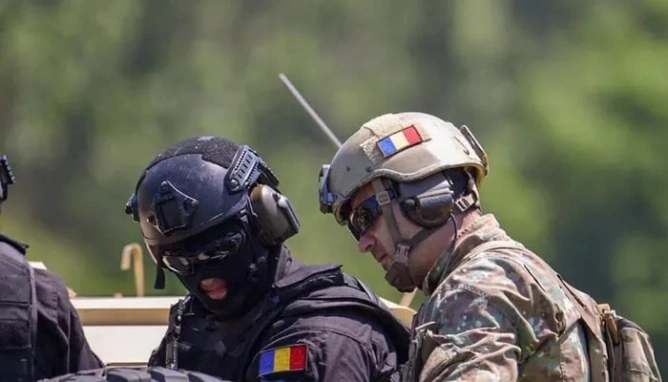
In terms of security, Romania is on the eastern flank of a military alliance that is strengthening its presence in the Black Sea area, amid intensifying tensions with Iran and the continuation of the war in Ukraine. Incidents with drones in Estonia and Latvia, as well as attacks on energy infrastructure close to Romania's borders, indicate the need for a consistent strengthening of air defense and protection of critical infrastructure.
At the same time, European investments in new defense technologies and regional debates regarding advanced missile interception systems outline a framework in which Romania has an interest to quickly adapt its armament policies, so as to remain aligned with interoperability standards and the new configuration of missile and drone threats.
The combination of energy pressures, vulnerabilities of regional infrastructure, and military tensions raises the stakes of foreign policy and defense decisions in Bucharest. Balancing the role of an energy hub and a pillar of the eastern flank with the need to protect the domestic economy and manage public perception becomes essential for Romania's positioning in a global security context marked by high volatility.
****Synthesis made with the help of a data monitoring flow provided by the media monitoring platform NewsVibe Romania. The analysis, data, and images presented have been enhanced with the help of Machine Learning and Artificial Intelligence tools
Latest News
17:35
17:28
17:16
17:02
16:47
See more news
NEWS ON THE SAME TOPICS