SPECIAL Informat.ro / The top international security topics of the last week. Potential implications for Romania


Always see our news on Google
In the last week, the global security agenda has been dominated by simultaneous crises with cascading effects. The two-week provisional ceasefire between the United States, Israel, and Iran, announced on the night of April 7 to 8, 2026, proved to be more fragile than announced: ceasefire negotiations failed in the following weekend, Washington imposed a naval blockade in the Gulf on April 13, declaring "maritime superiority in the Middle East," and decided to send approximately 10,000 additional troops to the region. The fragile peace in the Gulf overlaps with a continuing war in Ukraine, a significant power shift in Hungary, a cyber breach in Romanian military infrastructure, and an accelerated reconfiguration of the global economic and military order.
The data was collected by the media monitoring platform NewsVibe Romania, during the period of April 9 - 15, 2026, based on over 10,000 articles published in the global press. The ranking of international security themes is based on the number of mentions and their visibility in the last seven days, taking into account the estimated impact of each material and the recurrence of the subject in distinct sources. The analysis selects topics that address military and strategic dimensions, internal and external security, human rights with international criminal implications, as well as critical infrastructure and cybersecurity.
The US-Iran Conflict
The military escalation between the United States and Iran occupies the top position in the hierarchy of global security themes during this period. The Pentagon decided to send approximately 6,000 additional troops to the Middle East, aboard the USS George H.W. Bush aircraft carrier and other warships, along with an additional 4,200 members of an amphibious group and the Marine Corps, with an estimated arrival by the end of April. The decision came just hours after Donald Trump stated in a televised interview that the war with Iran is "almost over" and that he considers it "in the past."
This evident contradiction between political signals and concrete military movements is the element that best defines the current stage of the conflict: a deliberate ambiguity, in which Washington simultaneously maintains maximum military pressure and openness to resuming negotiations. Trump oscillated on the same day between direct threats to Iran on social media and suggestions that peace talks could be resumed, a coercive tactic through uncertainty that is difficult for the opposing side to manage.
The broader military context reveals that the US declared "maritime superiority in the Middle East" on April 13, coinciding with the establishment of the blockade, in response to the failure of the ceasefire negotiations from the previous weekend. The projection of American naval power in the Gulf has a regional deterrent component that exceeds the bilateral relationship with Iran: it sends a signal to all actors in the area, including Russia and China, that Washington is prepared to sustain a costly and indefinite military presence. The subject is being closely monitored in the United States, the United Kingdom, and in Middle Eastern states.
The Strait of Hormuz and Iran's Economic Survival Plan
The Strait of Hormuz, through which most of Iran's oil exports pass and a significant fraction of global energy traffic, is at the center of an economic and strategic conflict with direct implications for global markets. The naval blockade imposed by the US forces Tehran to seek alternative routes, and the Iranian plan aims to utilize northern ports and the Caspian Sea to redirect trade flows.
This strategy has clear structural limits. The Caspian Sea is a closed sea, without direct access to the world's oceans, and Iranian trade through this route currently represents less than 5% of total exports. There are possibilities for expansion, but they are conditioned by the transport capacities of the riparian states Russia, Kazakhstan, Azerbaijan, and Turkmenistan, and by their willingness to take on and redistribute Iranian goods in the context of international sanctions. Russia, itself under severe sanctions, represents a possible partner, but with a logistical capacity already strained by its own needs generated by the war in Ukraine.
Beyond the logistical aspects, the subject has a deeper strategic component: Iran's ability to withstand American economic pressure in the medium term will directly influence the duration of the conflict and Tehran's willingness to negotiate. An economically suffocated Iran has less diplomatic maneuvering space, but also less to lose, which can generate unpredictable reactions. The subject is being closely monitored in Romania, in the Arab world, and in Central Asian states, precisely because disruptions in oil supply from the Gulf generate ripple effects in global energy markets.
The War in Ukraine: Drones and Russia's International Combatant Network
The conflict in Ukraine continues to generate a consistent volume of global attention. The military and technological dimension is marked by the intensified use of drones by both sides, with an increased focus on precise attacks and high symbolic value. Ukrainian forces have expanded drone operations to include high-visibility strikes, including attacks on targets within Russia, signaling a fundamental transformation of military doctrine: from territorial defense to projecting power into the strategic depth of the adversary. On the battlefield, the massive use of drones changes the equation of survival and raises the human and material costs of conventional operations for both sides.
The international dimension of the conflict is highlighted by an official assessment sent to the US Congress, which accuses Cuba of having contributed up to 5,000 combatants for Russian military operations in Ukraine. The document, five pages long and unclassified, states that there is no evidence to certify official orders issued by the authorities in Havana, but indicates the presence of strong indications that the Cuban regime has allowed or facilitated, directly or indirectly, the departure of these fighters. Washington is using this assessment to intensify diplomatic and economic pressures on Cuba, in a broader campaign to reduce external support for Moscow. This angle confirms that the war in Ukraine can no longer be analyzed exclusively in a European key: it has become a conflict with a global dimension, in which states from Latin America, Africa, and Asia are involved, directly or indirectly, in supporting one of the sides.
The Power Shift in Hungary and the Reconfiguration of Central Europe
The outcome of the parliamentary elections in Hungary marks the end of a political era in Central Europe. Viktor Orbán, who has dominated the Hungarian political scene for about 16 years, hands over power to Peter Magyar, a politician perceived as a reformer with a pro-European orientation. The change is not just one of personnel: it redefines Hungary's positioning on a series of sensitive issues that Budapest has blocked or complicated in recent years, from support for Ukraine to its policy towards Russia, to relations with European institutions and adherence to the rule of law.
For Central and Eastern Europe, the moment has a symbolic weight and practical implications that are difficult to overestimate. Hungary has represented, in recent years, the main blocking factor in the decision-making mechanisms of the EU and NATO on issues related to the conflict in Ukraine, from sanction packages against Russia to military support for Kyiv and European funds. A change in orientation in Budapest could unlock mechanisms that have functioned poorly and could rebalance the internal dynamics of Western alliances.
Reactions from Romania, where high-ranking officials have publicly interpreted the result as a "signal of stability" and regional predictability, reflect both the hope that complex bilateral relations with Hungary will see improvement, and the awareness that transforming electoral capital into concrete policies requires time and is conditioned by the internal stability of the new government.
European Digital Regulation: Social Media and Minor Protection
At the level of the European Union, an initiative is taking shape to regulate adolescents' access to social media, coordinated by France and supported by several member states. President Emmanuel Macron convened a high-level videoconference attended by leaders from Spain, Italy, the Netherlands, and Ireland, along with the President of the European Commission, Ursula von der Leyen, with the aim of building a common position and accelerating the adoption of concrete measures in Brussels.
The initiative comes at a time when several European states have already adopted or are debating similar national restrictions, and the political pressure for a unified regulation at the European level has increased significantly. The arguments invoked target the mental health of young people, exposure to harmful content, misinformation, and the risk of radicalization, and the urgency declared by French authorities suggests that the subject has surpassed the stage of academic debate and has entered the phase of political decision-making.
The strategic importance of this subject exceeds the dimension of social protection. Regulating large digital platforms involves negotiations with American corporations that have strong lobbying power and significant capacity to influence the legislative process. How Europe will manage this tension, between protecting citizens and relations with commercial partners and transatlantic allies, will define not only digital legislation but also the EU's ability to exercise its sovereignty in the online space.
The Iranian Nuclear Program
Even after American and Israeli attacks on Iranian nuclear facilities, Tehran continues to hold approximately 440 kilograms of uranium enriched to 60%, a concentration that is just a short distance from the 90% threshold necessary for producing a nuclear weapon and which, according to the International Atomic Energy Agency, far exceeds the 3.67% limit imposed by the 2015 nuclear agreement.
The central issue is not, at this moment, Iran's capacity to produce nuclear weapons, but that the stocks of fissile material have not been placed under international control. Even though a complete reconstruction of the program would require years and massive investments, the existence of these reserves of enriched uranium keeps open a window for proliferation that no international mechanism can close in the absence of a verifiable agreement with Tehran.
Russian Cyber Attacks on Romanian Military Infrastructure
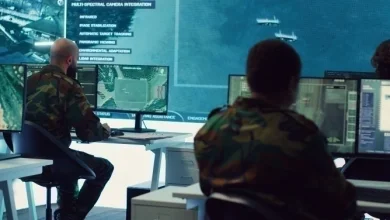
Hackers of Russian origin are reported to have compromised over 60 email accounts of the Romanian Air Force. The incident represents a concrete breach in the operational communication of a NATO military structure and confirms that cyber aggression against the eastern flank of the alliance is not an abstract threat, but an ongoing phenomenon. Even though public technical details are limited, the number of compromised accounts suggests a systematic operation, not an accidental intrusion.
The significance of this incident exceeds the technical dimension. Gradual cyber attacks on military infrastructure in Eastern Europe tend to remain below the threshold of public visibility, precisely because they do not generate images or casualties. This relative invisibility is, in itself, a strategic advantage for the attacker: it allows for the accumulation of information and testing of vulnerabilities without triggering a proportional political or military response. The subject is treated in the local media space in Romania, without reaching the international visibility corresponding to its potential gravity.
Russia, China, and the Prospect of High-Level Strategic Dialogue
The Kremlin has confirmed that a visit by Vladimir Putin to China is in preparation, in the context of a strategic partnership considered "privileged" by both parties. Chinese President Xi Jinping has officially invited the Russian leader to visit China in 2026, and Moscow has stated that the details of the schedule will be communicated later.
The relevance of this development exceeds diplomatic protocol. In recent years, China has strengthened its role as a platform for dialogue and a tacit mediator in major international crises, from the conflict in Ukraine to tensions in the Middle East. A Putin-Xi visit in the current context, with the war in Ukraine ongoing and the US-Iran conflict active, signals that Beijing does not intend to withdraw from its role as an alternative strategic pole, but rather to strengthen it. Potential high-level contacts could influence both the dynamics of negotiations regarding Ukraine and China's positioning regarding international sanctions against Russia. The subject is being closely monitored in NATO states and in European capitals that are monitoring the Sino-Russian relationship.
What These Developments Mean for Romania
The profile of the dominant themes places Romania at the intersection of several simultaneous risk vectors, with different intensities and time horizons. The direct cyber threat is the most concrete confirmed risk of the period. The compromise of military email accounts by Russian state actors is not an isolated incident, but part of a persistent pattern of cyber aggression directed primarily at NATO's eastern flank. The discrepancy between the potential severity of such attacks and the reduced media attention they receive raises a public perception issue: military digital security remains under-visible compared to conventional conflicts, even though its operational consequences can be just as serious.
Energy security is the second vector of indirect impact, but with measurable economic consequences. A prolonged blockage of the Strait of Hormuz and the disruption of oil exports from the Gulf exert pressure on global energy prices, with direct effects on industrial and consumer costs in Romania. Iran's efforts to redirect exports do not eliminate the risk, but rather postpone and redistribute it, maintaining a structural uncertainty in energy markets that affects all of Europe.
The political change in Hungary opens a window of opportunity in bilateral and regional plans. A strengthened pro-European Budapest can facilitate coordination on sensitive issues, from support for Ukraine to energy policies and common positions within NATO and the EU. Public reactions in Romania currently reflect a strategic hope, not a certainty: transforming an electoral outcome into concrete policies requires time and testing in real situations.
European digital regulation will necessarily involve Romania as an EU member state. Once a directive regarding minors' access to social media is adopted at the Union level, its transposition into national legislation becomes inevitable. For Bucharest, this means that the digital protection of young people, from mental health to resilience against misinformation, will become a public policy priority imposed from the outside, not just voluntarily assumed.
****Synthesis made with the help of a data monitoring flow provided by the media monitoring platform NewsVibe Romania. The analysis, data, and images presented have been enhanced with the help of Machine Learning and Artificial Intelligence tools.
Latest News
23:06
22:49
22:37
22:22
22:03
See more news
NEWS ON THE SAME TOPICS