ANALYSIS The arrest of Andrew Mountbatten-Windsor: scenarios for British justice, the future of the monarchy and the global echoes of the Epstein case



Always see our news on Google
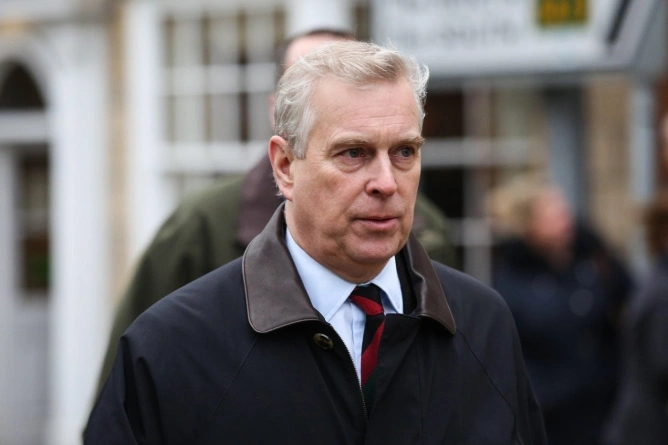
The arrest of Andrew Mountbatten-Windsor, the former Prince Andrew, opens a precedent-free chapter for the British monarchy and raises essential questions about the criminal responsibility of a former senior member of the royal family and the possible penalties he faces in the case related to Jeffrey Epstein.
The context of the arrest
Andrew Mountbatten-Windsor, at the age of 66, the third child of Queen Elizabeth II and the younger brother of King Charles III, was arrested on the morning of February 19, 2026, on his birthday. He is the first senior member of the British royal family to be arrested in a criminal case in modern times, which amplifies the political and symbolic stakes of the case.
His previous career includes a 22-year tenure in the Royal Navy, with an active role as a helicopter pilot in the Falklands War, followed by his appointment as special envoy for trade and investment for the United Kingdom from 2001 to 2011. The image built around his military service and diplomatic role began to erode after the emergence of information in the public domain regarding his friendship with Jeffrey Epstein and allegations of sexual abuse made in the United States, concluded through a confidential civil settlement without an admission of guilt.
Andrew's arrest is related to the suspicion of misconduct in public office, an equivalent of abuse of office, a crime that concerns how he exercised his mandate as the UK's trade envoy. According to details that emerged with the publication of the "Epstein files" by the U.S. Department of Justice, Andrew allegedly provided Jeffrey Epstein with government reports and sensitive commercial information resulting from official visits to Vietnam, Singapore, China, and other destinations, including data on investment opportunities in gold and uranium in Afghanistan.
The role of trade envoy involved strict obligations of confidentiality and protection of sensitive information regarding economic policy and British commercial interests. Any transmission of such data to a private actor, such as Epstein, is treated by investigators as a potential overreach of official mandate and as a possible violation of public interest.
In parallel with this line of inquiry regarding documents and information, there is also an investigation into allegations that a woman was sent by Epstein to London to have sexual contact with Andrew, which opens the possibility of additional charges related to human trafficking and sexual abuse, if evidence supports this hypothesis. Andrew has consistently denied any illegal conduct, both regarding his relationship with Epstein and the sexual allegations.
Details about the arrest, procedure, and possible penalties
The arrest took place at Wood Farm, Andrew's temporary residence on the Sandringham estate in Norfolk, in an operation involving unmarked police vehicles. At the same time, police conducted searches at the Royal Lodge in Windsor, Andrew's former residence, as well as at other properties in Berkshire and Norfolk, with police filters at gates and vehicle checks coming in and out.
Currently, the former prince is in police custody, without the exact location being publicly disclosed. British law allows for the detention of a person without charge for a maximum of 24 hours, a term that can only be extended in serious cases, including up to 96 hours, with the approval of senior officers and a magistrate. During this period, investigators can confiscate electronic devices, access documents and images, extend searches, and interview the suspect in the presence of a lawyer.
Regarding possible penalties, the crime of misconduct in public office is considered serious in the British legal system and can be punished with imprisonment for several years, depending on the circumstances. The severity of the penalty is influenced by several factors, such as the level of harm caused to the public interest, the nature of the disclosed information, the existence of a personal advantage obtained by the official or third parties, as well as the impact on public trust in state institutions.
If the line related to human trafficking or possible sexual offenses leads to separate charges, the range of penalties would become even more severe, as crimes such as human trafficking for sexual exploitation or sexual assault carry significant penalties, which can include lengthy prison sentences. At this moment, the investigation is still officially focused on the suspicion of abuse in public office, and any potential expansion will depend on the evaluation of the evidence collected.
At the end of the detention period, the police have several options: release without charge, release with the discreet continuation of the investigation, charging and sending the case to prosecutors, who will decide whether the case goes to court. Any eventual referral to trial would open a public process, in which evidence from the Epstein files would be correlated with Andrew's concrete actions during his official tenure.
The relationship with Epstein
Andrew's friendship with Jeffrey Epstein, the billionaire convicted in 2008 for sexual crimes involving minors, represents the essential background of the current investigation. Their relationship, which began in the late 1990s, has been described as "unhappy" by Andrew, who claimed to have severed ties after Epstein was convicted, although he acknowledged spending time at his properties.
In civil terms, Andrew's name was central in the lawsuit filed in the U.S. by Virginia Giuffre, who accused him of sexually abusing her three times when she was a minor, allegations publicly denied by the former prince. His 2019 interview with BBC Newsnight, in which he attempted to defend his reputation, was perceived by the public as a communication failure, emphasizing the impression of a lack of empathy and disconnection from the seriousness of the allegations.
The civil case was closed in February 2022, when Andrew reached an out-of-court settlement with Virginia Giuffre and paid a confidential sum without admitting guilt. The death of Virginia Giuffre in April 2025 added a tragic dimension to the story and reignited the debate over the accountability of elites who entered Epstein's circle of relationships.
The publication of the "Epstein files" by the U.S. Department of Justice in 2026 intensified pressure on Andrew. The declassified documents refer to a character generically designated as "The Duke," interpreted as Andrew, in emails in which Epstein suggests a meeting with a person "he liked," a meeting that "The Duke" would have agreed to, indicating a level of familiarity beyond simple protocol interactions.
The files also include elements regarding the transmission of information resulting from Andrew's official visits as a trade envoy, which prompted British authorities to analyze to what extent these actions can be framed as abuse in public office. The photographs and declassified video materials, in which Andrew appears in informal poses alongside individuals whose identities are not disclosed, have a major media impact, even though their evidentiary value will depend on the context and date they were taken.
The royal family's reaction and the impact on the monarchy
King Charles III reacted with a statement in which he expressed that he learned "with the deepest concern" about the suspicions surrounding Andrew. The sovereign emphasized that "justice must take its course" and that the authorities have the "full support" of the royal family, insisting at the same time that he and family members will continue their public duties.
The palace conveyed that the prince and princess of Wales support the king's position, while Queen Camilla was directly asked in public about the arrest but avoided commenting, limiting herself to formal gestures. The king continued his agenda with audiences at St James's Palace and appearances at events such as London Fashion Week, signaling a strategy of separating Andrew's personal crisis from the functioning of the institution.
Structurally, the monarchy is already going through a period of eroding popularity. An Ipsos poll mentioned in the press shows that only 28% of Britons consider the way the royal family has handled Andrew's case appropriate, while 82% have an unfavorable opinion of him, a percentage that has increased compared to previous polls. The king previously decided to withdraw Andrew's right to use the title of prince and the title of Duke of York in an official context, against the backdrop of scandals related to Epstein, but this distancing has not been enough to stop the decline in public trust.
Royal commentators believe that the current situation pushes the palace into uncharted territory, where traditional mechanisms of "institutional protection" become difficult to sustain in the face of a criminal investigation directly targeting a family member. At the same time, political leaders emphasize that it is essential for justice to demonstrate that rank, titles, or belonging to the monarchy do not offer protection against criminal accountability.
What follows: legal scenarios and political stakes
In the short term, the evolution of the case will depend on the police's decision after the expiration of the initial detention period. In the scenario of a formal indictment for "misconduct in public office," Andrew would face the prospect of a criminal trial in which the maximum penalty could mean a lengthy prison sentence, especially if the court considers that the disclosure of confidential information severely affected the public interest and was committed for the benefit of a controversial private actor.
Any eventual indictment that would also include charges related to human trafficking or sexual offenses would raise the level of severity of the case, both legally and politically, and would turn the case into a test of how the justice system treats a former senior member of the royal family compared to any other citizen. Even in the absence of a verdict, the mere conduct of a trial with such a profile risks deepening the monarchy's credibility crisis.
The British government is also under pressure, having been previously criticized for hesitations in supporting parliamentary initiatives aimed at the complete withdrawal of Andrew's titles. The arrest and ongoing investigation create a new reality, in which calls for a clear separation between the monarchy institution and the individual behavior of royal family members become stronger.
Analysis conducted with the support of NewsVibe and Perplexity
Latest News
23:06
22:49
22:37
22:22
22:03
See more news
NEWS ON THE SAME TOPICS
.webp)
.webp)