ANALYSIS The ranking of international political topics from the last week. Effects on Romania


 (1).webp)

Always see our news on Google
The dominant themes of international politics from February 10 to 16, 2026, are shaping around the war in Ukraine and the increasingly visible involvement of North Korea, the reconfiguration of the Euro-Atlantic security architecture, as well as the regional transformations with strategic stakes in Europe and the Middle East. In this context, Romania appears simultaneously as a NATO frontline state, a member of the European Union in technical recession, and a vulnerable actor to geopolitical, economic, and institutional changes that mark the global agenda.
Methodology
The data was collected by the media monitoring platform NewsVibe Romania, during the period of February 10 to 16, 2026, finding over 10,000 articles published in the global press. The ranking of international security themes is based on the number of mentions and their visibility in press articles from the last seven days, taking into account the estimated impact of each material and the recurrence of the subject in distinct sources.
The War in Ukraine, North Korea, and the Navalny Case
The war in Ukraine remains the central theme of international politics, and data from the last week confirms its expansion into a conflict involving extra-regional actors. North Korean leader Kim Jong-un is organizing a public ceremony in Pyongyang inaugurating homes for the families of North Korean soldiers who fell in battle in Ukraine on the side of Russia, presenting them as "new martyrs" of the regime. South Korean and Western intelligence services estimate that Pyongyang has sent thousands of troops to the front, of which about 2,000 are believed to have been killed, indicating a high degree of political and military commitment to the alliance with Moscow.
Additionally, former energy minister Gherman Galușcenko is arrested while attempting to leave the country, in connection with the "Midas" case, a money laundering and embezzlement scheme in the energy sector estimated at around 100 million dollars. The National Anti-Corruption Agency (NABU) states that the investigation targets a sophisticated network of officials and intermediaries, and the scandal has provoked outrage in a country where the energy infrastructure is already severely affected by Russian attacks. Combating corruption in energy thus becomes an essential test for Ukraine's credibility on its path to the European Union.
Meanwhile, two years after the death of Alexei Navalny, events of commemoration are taking place in Russia and over 20 other countries, with a particular concentration in Germany, where at least 12 cities publicly mark the moment. A joint investigation by five European states – the United Kingdom, France, Germany, Sweden, and the Netherlands – establishes that Navalny was poisoned with a rare toxin while in detention, and London publishes an official statement confirming the presence of the poison in the analyzed samples. The opposition leader's mother, present at his grave in Moscow, states that the family "knew from the beginning" that Navalny was killed and demands that justice be served in Russia, not just in symbolic courts of Western partners. These issues are being intensely discussed in Western Europe, especially in Germany, the United Kingdom, France, Sweden, and the Netherlands, but also in the Russian press, which reflects both the official line and echoes of criticism.
Reconfiguring the Security Architecture: Munich, NATO, and Iran
The Euro-Atlantic security architecture is entering a phase of reconfiguration, and the Munich Security Conference provides a condensed picture of the tensions and repositionings within the Western alliance. German Vice Chancellor Lars Klingbeil publicly states that in the episode related to Greenland, "a limit has been exceeded," alluding to initiatives from the Washington administration that have fueled the perception of a more volatile transatlantic relationship. Comments in the German press show that the current governing coalition is experiencing tension between the desire to maintain a solid partnership with the United States and the need to respond to internal sensitivities regarding the political style of the Trump administration.
The topic of NATO's eastern flank is brought back to the forefront by discussions regarding the German brigade in Lithuania. Germany has committed to deploy around 4,800 soldiers and 200 civilians for the defense of the Baltic state by 2027, but confidential documents indicate a significant volunteer shortfall, putting the Defense Ministry led by Boris Pistorius in front of a "dilemma" regarding recruitment methods.
In the Middle East, Iran sends a dual signal: openness and firmness. Ali Larijani, Secretary of the Supreme National Security Council, states that Iran will allow the International Atomic Energy Agency to inspect even underground nuclear sites, to demonstrate that it is not pursuing nuclear weapons. At the same time, the Iranian official asserts that the ballistic program remains a "national security issue" and will not be negotiated, and negotiations must be "fair, meaningful, and without delaying tactics."
In Geneva, Iranian Foreign Minister Abbas Araghchi arrives for discussions with an American delegation led by White House envoy Steve Witkoff and Jared Kushner, advisor to President Donald Trump, signaling a new stage of direct dialogue between Washington and Tehran. Meanwhile, President Trump convenes a "Peace Council for Gaza" to which Greece, Italy, Cyprus, and Romania will participate as observers.
In East Asia, China and Japan are becoming hot spots of regional security. In Munich, Chinese diplomat Wang Yi accuses "forces of the extreme right" in Japan of trying to revive militarism, in the context where Tokyo is increasing its defense budget and openly mentions the Taiwan issue. The Japanese government sends a "strong protest" to Beijing, considering the Chinese statements unfounded and dangerous, in an already tense climate.
Economic and Social Pressures: Romania's Recession, Regional European Budgets, and Global Markets
Economic pressure represents the third major axis of recent days, with Romania at the center of a set of developments that include recession, high inflation, and internal political tensions. Data published by the National Institute of Statistics shows that Romania entered technical recession at the end of 2025, after two consecutive quarters of GDP decline, while the annual inflation rate reached 9.6% in January 2026. Food products have increased by 7.86% compared to January 2025, non-food products by 9.99%, and services by 11.59%, with the most spectacular increase recorded in electricity, with an annual advance of 59.33%.
In Greece, the picture is almost the opposite. Data from the Ministry of Economy and Finance shows that the Greek budget recorded a primary surplus of 3.51 billion euros in January, compared to a deficit of 1.751 billion, and the total surplus reached 2.287 billion, well above the planned level. Tax revenues exceeded 6.2 billion euros, with a 0.5% overrun of the deficit, while some expenditures were postponed, which amplified the positive effect on cash flow. This performance is presented as a result of a combination of economic growth, better tax collection, and strict control of expenditures.
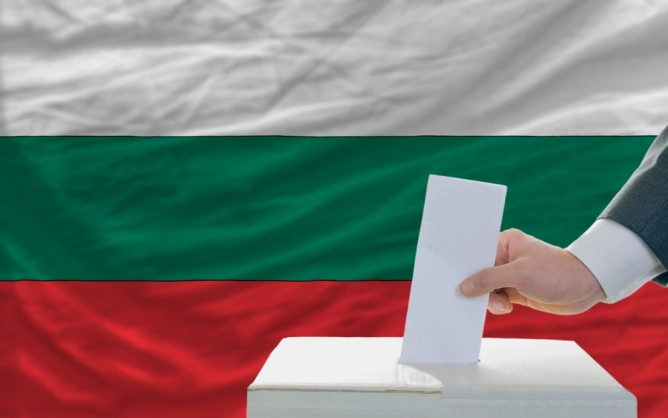
Bulgaria finds itself in a more fragile situation, with fiscal expert Lubomir Datzov warning that budgets based on "desired revenues" and "desired expenditures" lead to deficits and mistakes in the chain. He observes that the lack of a coherent budget and the repetition of wrong decisions weaken public and business confidence, at a time marked by political crisis, discussions related to adopting the euro, and new elections.
Globally, the gold market is becoming a barometer of economic uncertainty. The price of gold temporarily reached over 5,500 dollars per ounce and remains at around 4,993 dollars, up 17% since the beginning of the year, under the influence of central bank purchases, expectations of interest rate cuts by the Fed, and a wave of speculative options. However, Goldman Sachs analysts believe that this development does not signal a "super-cycle" of commodities, emphasizing that the supply of gold is structurally limited, unlike other resources whose production can be adjusted more easily.
Social Policies and Structural Transitions in Europe: Demography, Green Energy, and Family Protection
In Croatia, data from the Statistical Office shows an acceleration of demographic decline, with a decrease of nearly 23,000 children under 14 years old between 2021 and 2025 and an increase of over 42,000 people aged over 65. The proportion of elderly people reaches 23.51% of the population, while children under 14 represent less than 14%, which amplifies pressure on social systems and the labor market. The government is responding with a package of tax incentives, which includes full reimbursement of income tax for young people under 25, half reimbursement of tax for those between 26 and 30 years old, and for the first time extending the right to reimbursement to citizens who have recently returned to the country.
Hungary is described in the German press as becoming a "superpower in solar energy," after the government in Budapest compensated for the political veto on wind energy through a rapid expansion of photovoltaic parks. Analyses cite the European goal that at least 42.5% of the EU's energy consumption should come from renewable sources by 2030 and note that Budapest has chosen to reach this threshold primarily through solar energy, invoking environmental, aesthetic, and profitability factors to reject wind turbines.
In Italy, the adjustment of family allowances to the inflation rate of 1.4% and the recalibration of ISEE thresholds demonstrate how social policy is used to protect families in a context of high costs. The new rules raise the maximum amount to 204.4 euros per month per child for households with ISEE up to 17,468.51 euros and establish a minimum amount of approximately 58.5 euros for incomes exceeding 46,582.71 euros, without requiring a new application from families that already have active files.
How is Romania affected by these global contexts?
In this global landscape, Romania finds itself at the intersection of trends that affect both its external position and internal stability. In terms of security, the escalation of the war in Ukraine through the direct involvement of North Korea and the strengthening of military cooperation between Moscow and Pyongyang amplifies the strategic relevance of NATO's eastern flank, in which Romania is one of the frontline actors. Berlin's dilemmas regarding the brigade in Lithuania and the transatlantic tensions reflected in Munich show that security guarantees increasingly depend on each member state's ability to concretely fulfill its commitments, not just on political declarations. In this context, President Nicușor Dan's decision to participate in the first meeting of the Peace Council in Washington, at the invitation of Donald Trump, as an observer, marks Romania's entry into a new architecture of international dialogue on the Gaza issue, with no voting rights but with increased visibility at the negotiating table.
On the economic axis, the technical recession and high inflation limit Bucharest's maneuvering space precisely at a time when regional partners are consolidating their positions. Greece enters 2026 with a consistent budget surplus, Croatia is adapting its fiscal policies to combat demographic decline, and Hungary is capitalizing on the energy transition through massive investments in solar, while Romania is currently facing an open dispute between the prime minister and PSD leaders regarding the economic direction. This combination of internal vulnerability and lack of external profile may affect Romania's ability to negotiate favorably on key issues at the European level, from fiscal rules and support packages for Ukraine to financing the green transition. Romania has considerable energy potential and a strategic geographical position on the Black Sea, and leveraging these advantages depends on the adoption and implementation of coherent, transparent, and predictable public policies.
Overall, data from the last week indicate that developments related to internal recession, the debate on Romania's role in the EU, and security challenges at the eastern border are interconnected. The war in Ukraine, the dynamics of the transatlantic relationship, economic pressures, and regional transformations configure a common strategic framework, in which Bucharest's position is influenced by how national interests are defined and communicated.
*****Synthesis made with the help of a data monitoring flow provided by the media monitoring platform NewsVibe Romania. The analysis, data, and images presented have been enhanced with the help of Machine Learning and Artificial Intelligence tools.
Latest News
11:38
11:23
11:20
11:12
11:05
See more news
NEWS ON THE SAME TOPICS