The European Union sends 34 million euros to Armenia after the trade restrictions imposed by Russia.



Always see our news on Google
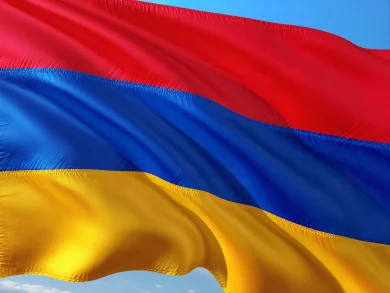
The European Commission has transferred 34 million euros to Armenia to help the private sector cope with the effects of the trade restrictions imposed by Russia. The support is the first tranche of a broader package announced by Ursula von der Leyen and includes measures for market access, trade facilitation, and support for affected sectors, such as agri-food products, flowers, and other export-oriented industries.
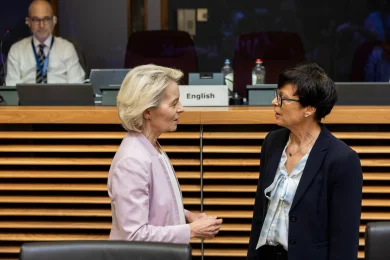
The European Commission has transferred 34 million euros to Armenia to help companies affected by the trade restrictions imposed by Russia, at a time when Yerevan is trying to strengthen its economic resilience and expand its trade ties with the European Union. The payment is the first tranche of a broader package announced by Ursula von der Leyen after discussions with Armenian Prime Minister Nikol Pashinyan.
In short
The European Commission has transferred 34 million euros to Armenia as immediate support for the private sector.
The funds are intended to mitigate the impact of the trade restrictions imposed by Russia.
The support is the first tranche of a broader package announced by Ursula von der Leyen.
The European Union is also preparing trade facilitation measures, business matchmaking, and market access for Armenian producers.
The targeted sectors include agri-food products, flower production, and other export-oriented industries.
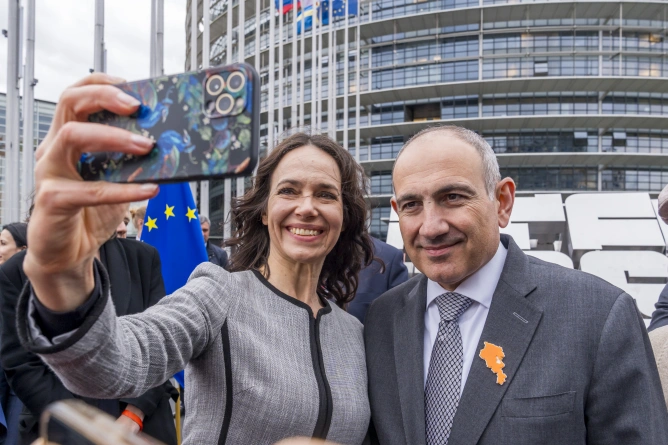
The financial support comes two weeks after the conversation between European Commission President Ursula von der Leyen and Armenian Prime Minister Nikol Pashinyan. The Commission presents the payment as a swift delivery of the European commitment to support Armenia and its population in the face of the economic pressures generated by Russian trade restrictions.
For Armenia, the issue is not just the amount received, but access to alternative markets. The trade restrictions imposed by Russia can directly affect producers who depend on exports, especially in sectors sensitive to border blockages, logistics costs, and the rapid loss of sales markets.
The European package is not limited to the transfer of money. The European Commission states that the support includes trade facilitation and solidarity measures to strengthen Armenia's economic resilience. In practice, this means support for business connections, expanding market access, and connecting Armenian producers with regional and European partners.
Sectors affected by trade restrictions will receive additional support. The Commission mentions agri-food products, flower production, and other export-oriented industries. These areas depend on functional trade networks and external markets capable of quickly absorbing products that cannot be stored long-term.
The announced measures include trade initiatives, business matchmaking events, and targeted actions for market access. For Armenian companies, these tools can matter if they help find new buyers, understand European market requirements, and reduce dependence on a single trade direction.
The support comes after last month's EU-Armenia Summit, where the two parties discussed strengthening economic relations. The European Union and Armenia will continue to work to strengthen business ties and expand market access for Armenian producers.
The implementation of the measures is monitored by the EU-Armenia Task Force on Economic Resilience. The group continues to meet periodically to coordinate and monitor the support provided to Armenia.
Marta Kos, the European Commissioner for Enlargement, presented the support as an expression of European solidarity towards a sovereign, democratic, and independent Armenia.
"The European Union stands firmly with Armenia, a sovereign, democratic, and independent country," said Marta Kos. She added that today's support will help manage immediate economic challenges and open new opportunities for Armenian companies to trade with regional and European markets.
The European Commissioner will visit Armenia on July 5 to advance the implementation of the support package and discuss the next steps in EU-Armenia cooperation.
For the European Union, the support provided to Armenia also has a geopolitical dimension. It is not just about compensating for immediate trade losses, but about reducing the economic vulnerability of a partner country under pressure and about more closely connecting the Armenian economy to regional and European markets.
The EU-Armenia relationship has intensified in recent years, against the backdrop of Armenia's repositioning in a complicated regional context and the need for economic diversification. The package announced by the European Commission combines immediate financial support with trade measures aimed at helping Armenian companies find alternative markets and reduce their exposure to restrictions imposed by Russia.
Latest News
00:32
22:56
22:37
22:23
22:09
See more news
NEWS ON THE SAME TOPICS


.webp)