EU transfers €2.86 billion to Ukraine for drones, missiles, air defense and ammunition



Always see our news on Google
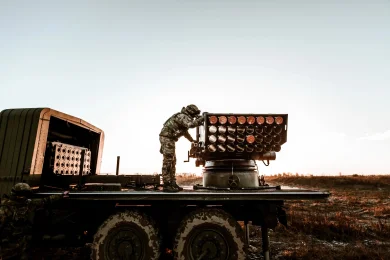
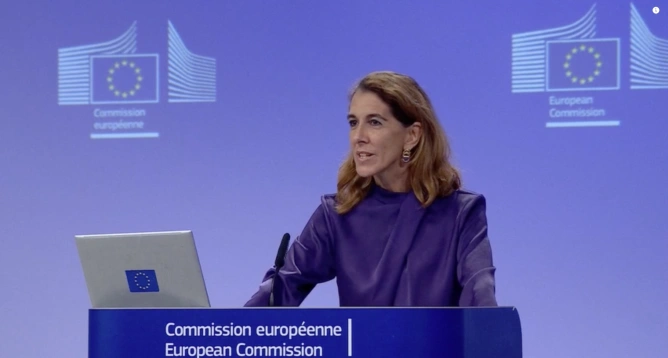
The European Union has transferred another €2.86 billion to Ukraine for defense procurements, in a new payment from the European loan of up to €90 billion created for the country's budgetary and military needs in 2026 and 2027. The European Commission announced the payment on October 14 and specified that the funds would be used for drones, air defense systems, missiles, radars, electronic warfare systems, and ammunition. The government in Kyiv confirmed receipt of the new tranche on the same day.
In brief
1. The European Commission made a payment of €2.86 billion from the defense component of the Ukraine Support Loan.
2. The European loan has a maximum value of €90 billion for 2026-2027, with an indicative allocation of €60 billion for defense and €30 billion for budgetary support.
3. For 2026, the EU has made up to €28.3 billion available for Ukraine's defense industrial capabilities. After the October 14 payment, the Commission says that €12.54 billion remains available for this component during the year.
4. The payment does not amount to the immediate delivery of all the weapons. Ukraine presents the contracts and procurements, while the Commission verifies compliance with the conditions before releasing the funds.
5. For the rest of 2026, the Commission indicates that another €29.64 billion is available to Ukraine through several defense and budget financing components, each with its own conditions.
The news on October 14 is the actual payment. In the earlier stages, the Commission had approved the procurement packages that were to use the military component of the loan. The transfer of €2.86 billion shows that some of these operations have now moved from the allocation of funds and approval of contracts to disbursement.
The distinction is important for interpreting the European amounts intended for Ukraine. An approval establishes that certain procurements may be financed, while an allocation reserves money for them. Disbursement is the moment when the funds are actually made available to Ukraine. Even disbursement, however, does not demonstrate that all the financed products have already been manufactured, delivered, or placed in service by the Ukrainian forces. Contracting, production, and delivery have their own timelines.
The instrument from which the payment originates was created by Regulation (EU) 2026/467. The Ukraine Support Loan can make up to €90 billion available to Ukraine during 2026-2027. The structure established at the European level provides, indicatively, €60 billion for defense and €30 billion for macroeconomic and budgetary support.
For 2026, the financing strategy approved by the Council allows access to up to €45 billion. Of this, €28.3 billion is reserved for support to defense industrial capabilities, while €16.7 billion is allocated to budgetary support. The budgetary component is divided into two parts of €8.35 billion each, one through macro-financial assistance and the other through the Ukraine Facility mechanism.
The military component operates around concrete procurements. Ukraine submits financing requests associated with contracts or agreements for defense products, and the Commission verifies eligibility and the conditions before authorizing payment. This mechanism explains why the sum of €2.86 billion should not be presented as a general pool of money that Kyiv can redistribute without connection to the approved procurements.
By September, the Commission had approved the use of the entire €28.3 billion envelope earmarked for Ukraine's defense in 2026, allocating the funds to identified procurements, suppliers, and implementation schedules. The approval included air and missile defense systems, ammunition, drones, electronic warfare, and other military products. The October 14 payment represents one of the financial stages through which these approved procurements are converted into actual financing.
Some operations may involve Ukrainian industry, companies from the European Union and the EEA-EFTA states, while the legislation allows, under certain conditions, the participation of other partner countries. The regulation also provides for the possibility of targeted derogations when an urgent military need cannot be covered sufficiently quickly from the ordinary eligible sources. The Commission has already used such derogations in 2026 for certain drone components and equipment needed for Patriot systems.
This architecture pursues two objectives simultaneously. The first is Ukraine's rapid access to the equipment it needs on the front. The second is using as much of the financing as possible for the development and closer integration of the defense industries of Ukraine and Europe. For this reason, the instrument is not designed exclusively to finance the purchase of weaponry immediately available on the global market.
For the rest of 2026, the Commission says that Ukraine still has €29.64 billion available through the European instruments included in its calculation. Of this amount, €25.24 billion remains available through the Ukraine Support Loan: €12.54 billion for defense industrial capabilities and €12.7 billion for budgetary support. Another €4.4 billion for the budget remains available through the initial component of the Ukraine Facility.
The €29.64 billion does not represent a single tranche that will be paid automatically. The components have different procedures and conditions. The Commission states that more than €17 billion of the remaining total represents budgetary support, and those payments depend, among other things, on fulfilling the conditions set out in the Ukraine Plan and in the documents applicable to macro-financial assistance.
Defense support is also conditional. Among other things, the regulation requires continued respect for democratic mechanisms, the rule of law, and human rights, including the rights of persons belonging to minorities. Combating corruption is explicitly included in the general conditionality. For military procurements, the Commission additionally verifies the contracts and the products' compliance with the instrument's rules.
The Ukrainian government confirmed the payment of €2.86 billion and linked it to needs for drones, air defense, missiles, and ammunition. Prime Minister Sergii Koretskyi indicated that Kyiv continues discussions with European partners to accelerate access to the remaining defense financing. The confirmation from Kyiv is relevant because it distinguishes this stage from the earlier mere financial approvals.
The instrument began making payments in the summer of 2026. The first payment for the military component, €3.9 billion, was announced on June 30 for drone procurements. Other tranches for drones, missiles, air defense, and other needs followed, while the Commission continued approving new lists of products based on the requests submitted by Ukraine.
The Council describes the €90 billion loan as being financed through loans raised by the EU on the capital markets and guaranteed by the European budget. The mechanism is structured so that repayment by Ukraine is linked to war reparations owed by Russia. This structure differentiates it both from grants provided to Ukraine and from the use of revenues generated by immobilized Russian assets.
The October 14 payment is also distinct from the €2.1 billion European guarantee used by the European Investment Bank for projects in Ukraine's public sector. The EIB guarantee covers the risk of loans for infrastructure and public services. The €2.86 billion announced now comes from the Ukraine Support Loan and finances defense procurements.
The Commission estimates that, since the beginning of Russia's full-scale invasion, the EU and its member states have provided Ukraine with total support worth €231.5 billion. The figure includes very different instruments, from military and budgetary support to economic assistance and other forms of aid, and should not be confused with the value of payments made through the €90 billion loan.
The next stages will be new disbursements from the defense component, as the Commission completes its verification of the contracts and conditions. For 2026, the financial benchmark remains the envelope of up to €28.3 billion for defense industrial capabilities, of which the Commission now indicates that €12.54 billion remains available for payment.
Sources

Latest News
17:18
17:16
17:16
17:11
17:03
See more news
NEWS ON THE SAME TOPICS
.webp)