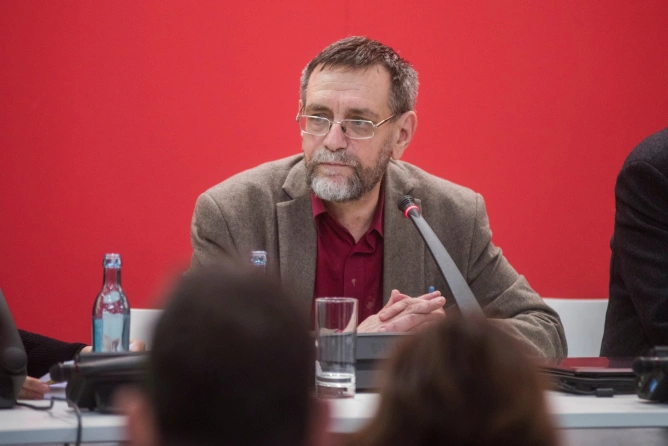
The European Parliament rapporteur says that minors under 13 should not use social networks alone.



Always see our news on Google
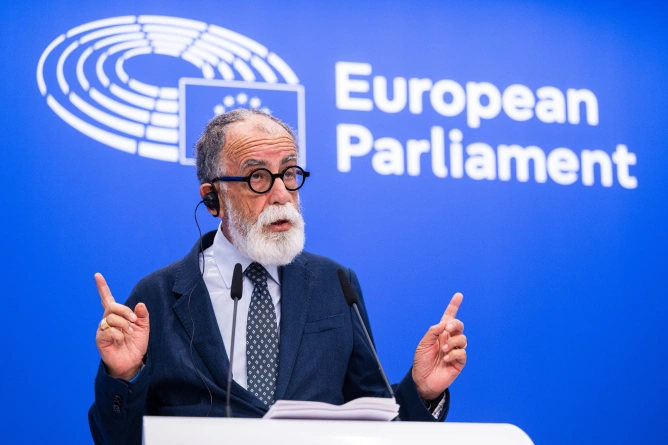
Sandro Ruotolo says that the European Union needs a common minimum digital age, but does not yet support a single threshold of 15 or 16 years. He calls for progressive access based on age, age verification with privacy protection, and the obligation for platforms to demonstrate that their services are safe for children.
Children under 13 should not be able to use social networks independently, but the European Union should not set a final threshold before the conclusions of experts, said Sandro Ruotolo, the European Parliament's rapporteur on the impact of the online environment on young people. He supports a system where access increases gradually with age and where platforms must prove that their products are safe for minors.
In short
1. Ruotolo argues that minors under 13 should not have autonomous access to social networks. For younger children, access to online services should be supervised by adults and limited in duration.
2. The rapporteur does not currently call for a European ban until the age of 15 or 16. He says that Parliament must wait for the conclusions of experts and the initiative that the European Commission is preparing for after the summer vacation.
3. A European rule should replace the situation where member states set different limits. Ruotolo warned that a child can have different digital rights immediately after crossing a border within the EU.
4. Platforms should verify age without collecting unnecessary personal data and provide services tailored to each age group. Responsibility should not be left solely to parents, schools, or children.
5. Ruotolo says that time limits and parental controls are not enough if algorithms, notifications, and infinite scrolling are designed to keep users online as long as possible.
The Committee on Culture and Education of the European Parliament approved the report on the effects of social networks and the online environment on children and young people with 70 votes in favor, three against, and four abstentions.
The document calls for more measures to protect minors but does not directly establish a ban and does not amend European legislation. The report is set to be voted on by the entire Parliament in September.
At a press conference held after the vote, Sandro Ruotolo focused his explanations on one of the most sensitive questions: from what age should a child be allowed to use social networks independently.
His position is that minors under 13 should not have autonomous access. For younger ages, the use of online services should be done under adult supervision and within a limited timeframe.
Ruotolo cited the recommendations of a special group of experts, which propose avoiding screen exposure for children up to three years old, supervised access between three and 12 years old, and gradually increasing autonomy between 13 and 18 years old.
These recommendations are not yet European rules. They, however, provide the basis for the discussion about a minimum digital age and how access to platforms could be differentiated based on the child's development.
The rapporteur did not support the immediate establishment of a single threshold of 15 or 16 years. He reminded that the rights and responsibilities granted to adolescents differ between states: in some countries, they can vote at 16, while in others, there are other forms of civil responsibility.
For this reason, Ruotolo says that the decision must be built on medical, psychological, and educational expertise, not just on a political choice of a number.
He also rejected the idea of a general ban until the age of 18. The issue is not just setting a threshold, but defining a form of access adapted to the age and level of autonomy of the minor.
The European Commission is preparing an initiative for the period after the summer vacation. The President of the Commission, Ursula von der Leyen, announced that it will address age restrictions and the progressive access of children to online services.
Ruotolo said that Parliament will analyze the proposal before supporting a final limit. He believes, however, that there is already a broad political convergence on the need to protect younger children from unsupervised access.
One of his main requests is the harmonization of rules. Currently, some states support strict bans, while others emphasize media education and family responsibility.
France has discussed limiting access to social networks for children under 15. Estonia has supported more the development of media competencies than general bans.
Ruotolo says that the European choice should not be reduced to the opposition between prohibition and education. Restrictions, media education, and platform responsibility can be used together and adapted to age.
He warned that national differences are difficult to apply in a borderless digital space. A child can use the same platform under different conditions depending on the country they live in, even though the service is identical.
A common digital age would require a system for age verification. The rapporteur calls for it to be effective but to respect privacy and not to require users to provide platforms with more information than necessary.
Simply entering a date of birth is not considered sufficient, as it can be easily circumvented. At the same time, verification should not lead to the creation of databases that allow the identification and tracking of children.
Ruotolo insisted that protection does not stop at the moment of account opening. Even a teenager who has the right to use a social network can be exposed to mechanisms designed to prolong the time spent on the platform.
These include infinite scrolling, autoplay, personalized notifications, and recommendation systems that select content based on user behavior.
These features can turn attention into a source of revenue. The longer the user stays online, the more advertising the platform can display and the more data it can collect about their preferences.
"The design of platforms cannot be considered neutral. Behind every algorithm, there is a choice and a responsibility," said Ruotolo.
He believes that parental control measures do not solve this problem alone. A parent can limit usage time, but cannot change the system that selects content, sends notifications, and encourages repeated returns.
The rapporteur called for a change in responsibility. Families should not be required to prove that a service can harm a child after the effects occur.
The platform should demonstrate from the design phase that the service is safe, age-appropriate, and free of mechanisms that exploit minors' vulnerabilities.
"For too long, we have asked children to adapt to platforms. Now we are asking platforms to think about children when they design their services," said Ruotolo.
He called for the rules to apply comparably to large services, whether it is Meta, TikTok, or other platforms. Protection should not depend on the voluntary measures chosen by each company.
The rapporteur also discussed the effects on mental health, addiction, online harassment, and exposure to manipulative content. Children have fewer opportunities than adults to recognize the problem and seek specialized help on their own.
He said that about one in two European children already has an Instagram account by the age of 12. This figure was presented as an argument for the rapid adoption of a common approach.
The report also calls for support for parents and schools, media education, and resources for enforcing the rules. Ruotolo warned that obligations may remain ineffective if authorities do not have the personnel and tools necessary to verify platforms.
The committee's vote does not yet change the terms of use of social networks. The plenary of Parliament will decide in September whether to support the position, and any mandatory rules will subsequently require a legislative proposal and the agreement of member states.
Latest News
18:44
18:31
18:10
18:00
17:53
See more news
NEWS ON THE SAME TOPICS

.webp)


.webp)