Romania supports the role of natural gas in the EU's energy transition



Always see our news on Google
Cristian-Silviu Bușoi stated at the informal meeting of energy ministers in Cyprus that Europe needs domestic gas production for energy security. The Secretary of State invoked the Neptun Deep project, the methane regulation, and the vertical corridor for LNG imports.
Romania supports the role of natural gas in the EU's energy transition, including through domestic offshore production, but calls for a reasonable application of the methane rules. In short Cristian Bușoi stated that Europe needs domestic natural gas production for supply security. The Secretary of State cited the Neptun Deep project in the Black Sea as an example of offshore production within the European Union. Bușoi said that the EU's environmental standards are higher than those of many countries from which Europe imports gas. Romania calls for a reasonable application of the methane regulation, so as not to affect the competitiveness of the industry and energy security. Bușoi argued that LNG imports from the United States, through the vertical corridor, can help replace Russian gas in the region.
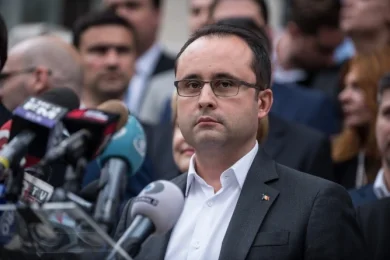
Romania supports the role of natural gas in the European energy transition and believes that the European Union needs domestic production, including offshore, to strengthen its energy security, Cristian Bușoi, Secretary of State in the Ministry of Energy, stated at the informal meeting of energy ministers in Nicosia, Cyprus.
Bușoi said that Romania has been promoting the role of natural gas in the transition since the beginning of the Neptun Deep project, although this position has been more difficult to support before 2022.
"Romania has been promoting, since the beginning of the Neptun Deep project, the role of natural gas in the transition. It was very difficult before 2022," Bușoi said.
The Secretary of State stated that, after the energy crisis triggered by Russia's war against Ukraine, Europe has better understood the need for domestic production. He argued that gas production within the European Union has two major advantages: higher environmental standards than in many exporting countries and a direct contribution to energy security.
"First of all, environmental standards are higher than those in many of the countries from which we import natural gas. Secondly, it is, of course, a matter of security if we produce our own natural gas within the European Union, onshore or offshore," Bușoi stated.
In this context, he presented Neptun Deep as a project through which Romania opens an important direction for European offshore natural gas production in the Black Sea.
Bușoi stated that Europe needs more natural gas, both for the transition period and after 2050, if carbon capture and storage technologies become sufficiently mature, scalable, and economically viable.
"We certainly need more natural gas in Europe. We need gas for the transition and even after 2050, if carbon capture and storage technologies are sufficiently mature, widely scaled, and become a concrete business case," the Secretary of State said. He specified that Romania is coordinating with Cyprus in promoting the role of natural gas in Europe.
Bușoi was also asked about the methane regulation and how it should be applied to protect European gas producers.
The Secretary of State said that European standards are higher than those in North Africa, the Middle East, or the Caspian Sea region. However, he made a distinction compared to the United States and Norway, mentioning that Norway has high environmental standards.
Regarding the methane regulation, Bușoi said that the current issue concerns the obligations imposed on importers, under conditions where it is difficult to apply European legislation and obligations outside the European Union.
He stated that importers do not always know the level of methane emissions from the countries of origin and cannot directly control these emissions.
According to Bușoi, there is a risk that poorly adapted rules could block gas imports necessary for energy security.
"There is a risk that we could block imports, and energy security is at least as important as decarbonization or environmental protection," he said.
The Secretary of State also invoked Romania's particular situation in applying the methane rules. He said that Romania is the first country in Europe to have explored and exploited natural gas and oil since the 19th century and has over 40,000 sites, many abandoned or very old.
Bușoi specified that some of these sites no longer exist as visible industrial locations, as houses, shopping centers, or other buildings have been built on the old sites, making monitoring difficult.
He called for a reasonable implementation of the rules that does not affect the competitiveness of the industry and does not create burdens or disproportionate additional costs for companies.
When asked whether the EU risks replacing dependence on Russia with dependence on liquefied natural gas from the United States, Bușoi said that the situations cannot be compared.
He described the United States as a traditional partner, with which the EU has a strong relationship and an alliance within NATO.
"The situation is very different. The United States is our traditional partner. We have a strong relationship. We are allies in NATO," Bușoi said.
The Secretary of State admitted that transatlantic relations are under tension and that there are criticisms coming from President Donald Trump, but he said that the relationship must continue and be strengthened.
He argued that Europe needs to diversify its supply sources, and the United States can be a more reliable supplier than other potential partners.
Bușoi stated that Russia will no longer be a partner in the energy sector and that REPowerEU sets clear deadlines for eliminating imports from Russia.
"Russia will no longer be a partner; the decision here is clear. REPowerEU has very clear deadlines. We are gradually eliminating imports from Russia," Bușoi stated.
For the region that Romania is part of, along with Greece and Bulgaria, the Secretary of State called the vertical corridor "of capital importance," as it could bring liquefied natural gas from the United States.
https://2eu.brussels/ro/stiri/romania-sustine-rolul-gazului-natural-in-tranzitia-energetica-a-ue
Latest News
14:48
14:41
14:37
14:34
14:29
See more news
NEWS ON THE SAME TOPICS
.webp)
.webp)