A project funded by the EU entering the industrial phase with a European hub for the reproduction of black soldier flies



Always see our news on Google
A project funded by the European Union for the development of black soldier fly reproduction technologies has moved from the research phase to industrial implementation, and FreezeM Cryogenics Ltd now operates a pan-European hub in Germany serving clients from Europe and the United Kingdom. The FreezeM project, launched in 2022 and concluding in 2024, has developed a technology that allows the delivery of ready-to-use eggs or neonates to insect protein producers.
In short
The FreezeM project, funded by the EU, was launched in 2022 for the development of black soldier fly reproduction technologies.
After the project's conclusion in 2024, FreezeM Cryogenics Ltd moved to industrial implementation and now serves clients from Europe and the United Kingdom.
The company has established the FreezeM GmbH subsidiary in Germany and operates there, together with Hermetia GmbH, a pan-European hub for black soldier fly reproduction.
FreezeM claims that its technology allows the separation of reproduction from larval growth and processing, delivering neonates with a shelf life of 21 days and a survival rate of over 90%.
The product is marketed under the name PauseM® and is delivered to insect protein producers.
The company links this model to reducing entry barriers for new producers and to leveraging organic waste streams in the circular economy.
FreezeM is already sending neonates weekly to the Hungarian company Agroloop, which completely outsources the reproduction stage.
The FreezeM project was launched in 2022 with the goal of changing black soldier fly reproduction technologies and making insect farming more sustainable, scalable, and accessible. During the project, black soldier fly eggs were cryopreserved, and a pilot production line for neonate protein was designed and operated to demonstrate that ready-to-use eggs or neonates can be supplied to farmers raising insects.
After the conclusion of European funding in 2024, FreezeM Cryogenics Ltd, the Israeli company that coordinated the project, moved to complete industrial implementation. The company now serves clients from Europe and the United Kingdom and has established the FreezeM GmbH subsidiary in Germany. There, it operates, together with Hermetia GmbH, a pan-European hub for black soldier fly reproduction. Hermetia GmbH is presented as the first company to have raised this species in Europe.
FreezeM claims that this facility is "an important milestone for the insect industry, being the first to implement a decoupled production model at a commercial scale." The model separates reproduction from the larval growth and processing stage. The company states that this is possible by temporarily suspending the life cycle of the neonates, allowing the supply chain to be organized differently from the classic integrated model.
The company claims that it can thus produce a constant and standardized flow of black soldier fly neonates, with an extended shelf life of up to 21 days and a survival rate of over 90%. The product is marketed under the PauseM® brand and is delivered in ready-to-use packages to insect protein producers. FreezeM specifies that the technology was developed from laboratory testing to the stage of commercial readiness during the EU-funded project.
FreezeM asserts that the model is biologically, logistically, and economically efficient and that it reduces market barriers for new insect producers. The company's co-founder and CEO, Yuval Gilad, states that "it has made insect-based circular economy more accessible to the EU market." The company links this evolution to circular bioeconomy solutions for leveraging organic waste streams.
The hub in Germany also functions as a European logistics and quality control center for FreezeM. The company uses it to expand partnerships and pilot programs with large companies in the feed and waste management sectors. An example given is the collaboration with the Hungarian company Agroloop. FreezeM sends neonates weekly to the Agroloop factory, and the Hungarian company, which does not have its own breeding unit, completely outsources this stage to FreezeM.
The model described by the company concentrates breeding infrastructure in a specialized hub, while producers purchase standardized neonates without having to develop the entire biological process internally. FreezeM does not publish in this material data about production volume, turnover, or the annual capacity of the facility, but specifies that the hub is fully operational and produces PauseM® at scale for supply to insect protein producers.
Yuval Gilad links this transition from concept to commercial use to European financial support. He states that "funding was essential to take our technology from the concept phase to commercialization at scale. It significantly supported the development of our core technology, as well as all relevant market entry and scaling activities."
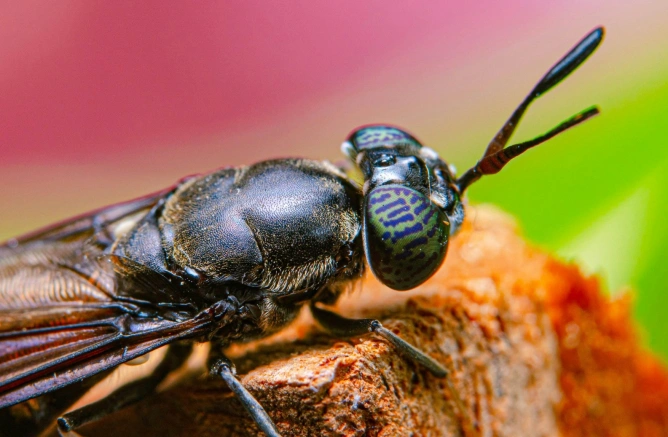
The black soldier fly is used in the insect protein sector, associated with the production of ingredients for animal feed and the valorization of organic waste in the logic of the circular economy. The FreezeM project is presented as an example of EU-funded technology that has moved from the laboratory to industrial application.
The material about FreezeM was published by CORDIS in the "Life After" series, dedicated to completed European projects and their evolution after the completion of EU funding. In this case, the focus is on the transition from research to commercial implementation and on the development in Germany of an infrastructure that serves the European and British markets.
Latest News
23:08
22:58
22:57
22:55
22:54
See more news
NEWS ON THE SAME TOPICS