European Commission selects 77 projects worth €3.4 billion; two include activities in Romania



Always see our news on Google
On 19 October 2026, the European Commission selected 77 projects from 23 countries of the European Economic Area for support of approximately €3.4 billion through the Innovation Fund. The list includes TERRA-Q, an industrial project in Romania for low-emission construction materials, and FLOW4EVE, coordinated by Robert Bosch GmbH, with activities in Hungary and Romania. The projects were invited to prepare the grant agreements; the selection does not mean that the money has already been paid or that all contracts have been signed.
In brief
The Commission selected 77 projects from 23 countries for approximately €3.4 billion through the Innovation Fund, financed from EU ETS revenues.
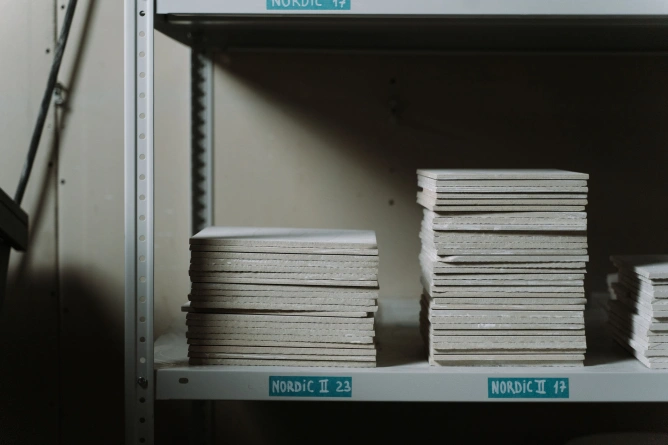
TERRA-Q, coordinated by Calamearic SRL, aims to produce mineral boards in Romania through an electrified process that eliminates traditional ceramic firing.
FLOW4EVE, coordinated by Robert Bosch GmbH, includes activities in Hungary and Romania; the extension of winter range by up to 20% is a project estimate.
The 290 million tonnes of CO₂ equivalent potentially avoided over ten years are a projection for the entire selection, not reductions already achieved.
The projects are preparing the agreements with CINEA, with results expected in the first quarter of 2027; the selection does not mean that grants have already been paid.
The Fund reinvests revenues from the auctioning of emission allowances under the EU ETS in innovative industrial technologies. The call launched in December 2025 attracted 358 applications requesting a combined €17.5 billion, compared with the initial budget of €2.9 billion. The projects are evaluated by independent experts based on emissions-reduction potential, innovation, maturity, the potential for technology replication, and cost efficiency, without a funding quota automatically reserved for each state.
TERRA-Q, coordinated by Calamearic SRL, appears in the category of small-scale projects. The official factsheet describes an industrial facility in Romania for producing mineral boards through an electrified process, with the reuse of a high proportion of mineral materials and secondary raw materials. The technology seeks to eliminate conventional firing in the ceramic kiln, which the document describes as involving temperatures of 1,200–1,400°C, in favor of a manufacturing method at lower temperatures.
According to the project factsheet, TERRA-Q could reduce greenhouse gas emissions by approximately 80% compared with the reference process and avoid around 33,000 tonnes of CO₂ over ten years. These are estimated targets, dependent on the construction and performance of the facility. The documents reviewed do not specify the exact location, total investment, or individual grant, and the funding category does not allow these amounts to be inferred.
FLOW4EVE is included under clean technology manufacturing and aims to industrialize a modular thermal-management system for electric vehicles, centered on a heat pump. The Commission’s PDF list explicitly indicates Hungary and Romania as project countries. The system should improve battery operation at different temperatures, optimize the required capacity, and support vehicle-to-home or vehicle-to-grid energy-supply applications, known as Vehicle-to-Home and Vehicle-to-Grid.
According to the project’s estimates, the technology could extend winter range by up to 20% and contribute to avoiding approximately three million tonnes of CO₂ equivalent during the first ten years of operation. These figures are not already measured commercial results and do not guarantee the same range increase for every vehicle. The sources do not establish the allocation of investment between the two countries, the activities at each site, or the amount to be spent in Romania.
At European level, the selection comprises 12 large projects for approximately €1.58 billion, 17 medium-sized projects for €458 million, and 20 small projects for €124 million. A further 12 clean technology manufacturing projects were selected for approximately €895 million, and 16 pilot projects for around €394 million. The amounts are rounded; they describe support under the European selection, not national allocations for Romania.
The projects cover industrial materials, energy storage, battery components, heat pumps and electrolyzers, alternative fuels, recycling, and carbon capture. For the first time, the selection includes a pilot project based on a small modular nuclear reactor and a project for direct capture of CO₂ from the atmosphere and permanent storage. Selection for funding does not replace the permits required to construct or operate the facilities.
Six projects concerning critical raw materials are jointly requesting approximately €314 million; five are also strategic projects under the European Critical Raw Materials Act, according to the DG CLIMA questions-and-answers document. For all 77 projects, the Commission estimates a potential to avoid approximately 290 million tonnes of CO₂ equivalent during the first decade of operation. The savings depend on implementation and do not represent reductions already recorded.
A further 84 projects passed the evaluation but did not receive funding from the available budget. These projects and the 77 selected ones will receive the STEP seal of quality, which can facilitate access to other funding. Separately, the Commission forwarded 160 proposals to the European Investment Bank for assessment of possible development assistance. The forwarding does not guarantee the granting of assistance or a subsequent grant.
The next stage for the 77 projects is to prepare the agreements with the European Climate, Infrastructure and Environment Executive Agency, CINEA. These will confirm the budgets, schedules, technical and financial objectives, and legal responsibilities. The Commission estimates that the results of the agreement preparation will be announced in the first quarter of 2027 and is preparing a new round of calls for early December 2026, including a €1 billion component for clean technology manufacturing.
For Romania, TERRA-Q and FLOW4EVE open the prospect of industrial activities in two different fields: construction materials and the energy efficiency of electric vehicles. The financial scale and local economic effects can be assessed more precisely after the agreements are finalized and implementation details are published.

Latest News
19:22
19:10
19:06
19:02
18:51
See more news
NEWS ON THE SAME TOPICS



.webp)