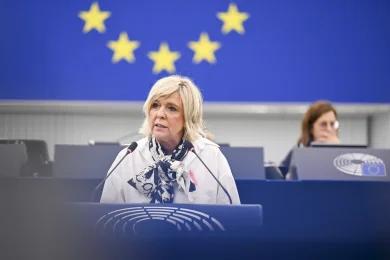
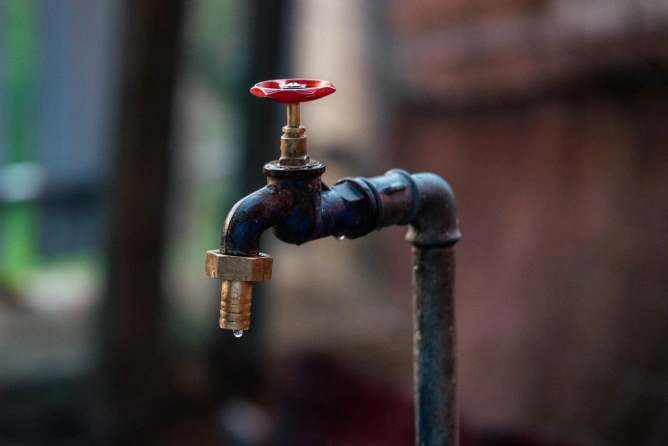
The European Parliament calls for stronger action against the use of water as a weapon of pressure and war.



Always see our news on Google
The European Parliament's Committee on Foreign Affairs calls on the European Union to strengthen its external action against the use of water as a tool for political pressure, coercion, and war.
The report adopted on Wednesday, with 47 votes in favor, 12 against, and 15 abstentions, warns that pressure on water resources is increasingly becoming an international security issue, not just a development, environmental, or infrastructure problem.
In short
The Committee on Foreign Affairs calls on the European Union to treat water as a diplomatic, strategic, and security priority.
MEPs warn that water is increasingly being used as a tool of coercion, political pressure, and war.
The report calls for stronger monitoring and early warning capabilities for water-related conflicts.
Parliamentarians call for adequate funding for water governance in the future long-term EU budget, including through Global Europe and Global Gateway.
The text insists on accountability for deliberate attacks on water infrastructure and supply in conflicts.
The report starts from a global reality with a direct impact on stability: approximately 2.2 billion people lack access to safe drinking water, 3.5 billion do not have safely managed sanitation services, and about 4 billion face severe water shortages at least one month a year.
MEPs point out that pressure on water resources is fueled by population growth, unsustainable industrial development, poor wastewater management, and unsustainable water use. These developments contribute to water scarcity, food insecurity, and conflict.
The adopted text in committee calls for better integration of water-related risks into conflict prevention and peacebuilding efforts. In this approach, water is no longer treated merely as a natural resource or humanitarian issue, but as a factor that can amplify instability, migration, violence, and regional tensions.
Rapporteur Leoluca Orlando, a Greens/EFA MEP from Italy, stated that access to water is a human right and a condition for peace and stability.
"Access to water is a human right and a prerequisite for stability and peace," said Orlando.
One of the main conclusions of the report is that transboundary water governance remains insufficient. Although 153 member states of the United Nations share transboundary waters, there are only 43 agreements in force.
MEPs call on the European Union to support partner countries in negotiating and implementing such agreements. They argue that effective transnational water governance can reduce tensions, promote regional cooperation, and support sustainable management of natural resources.
This dimension is important because rivers, lakes, watersheds, and aquifers do not follow political borders. In the absence of clear rules, pressure on water can become a source of dispute between states, communities, or regions.
The report mentions two examples of risk and instability. The first is the destruction by Russia of Ukraine's water infrastructure. The second concerns inequalities in the control of water resources in the Middle East, which affect Palestinian communities.
Through these examples, the text indicates two different forms of vulnerability: direct attacks on critical infrastructure in war and unequal control of resources in a context of prolonged conflict and political tension.
The report calls for stronger European monitoring and early warning capabilities for water-related conflicts. MEPs want these risks to be integrated into the conflict prevention system of the European External Action Service's Crisis Response Center.
This proposal would mean that attacks on water sources, damage to infrastructure, restricted access, severe drought, or tensions related to transboundary basins would be monitored as security indicators.
For the EU's foreign policy, such integration would change the way crises are assessed. A region with high water pressure, vulnerable infrastructure, and weak institutions could be treated earlier as a risk of conflict or forced displacement.
The report also calls for strengthening water diplomacy tools. The European Union should use partnerships, funding, technical assistance, and diplomatic dialogue to support agreements, regional mechanisms, and administrative capacities in partner countries.
The stakes are prevention. MEPs are not only calling for responses after conflicts break out but also for the inclusion of water in early risk analysis and in the European Union's external instruments.
The financial component is equally important. The report calls for adequate funding for water governance in the future long-term EU budget, including through the Global Europe and Global Gateway programs.
MEPs support greater EU investments and public-private partnerships for resilient water management and sanitation infrastructure to climate change.
Particular emphasis is placed on fragile and conflict-affected regions. In such areas, reliable access to water can reduce the risk of displacement, violence, and food insecurity.
This approach connects water with the broader development and security agenda of the European Union. Water infrastructure is not only presented as a technical investment but as a tool for social stabilization, climate resilience, and conflict prevention.
Through Global Gateway, the EU seeks to finance strategic infrastructure in partner countries. The report suggests that water and sanitation should occupy a more important place in this agenda, especially in regions where water stress can amplify existing tensions.
The report insists on legal accountability for deliberate attacks on infrastructure and water supply in conflict situations.
MEPs call for support for legal initiatives to ensure justice and compensation for affected communities. They emphasize the importance of strengthening international law and the role of competent criminal courts.
This wording is relevant in the context of conflicts where civilian infrastructure is attacked or blocked. If water becomes a military target or a tool of pressure on the civilian population, the issue transcends the humanitarian framework and enters the realm of accountability for serious violations of international law.
The report also emphasizes regional cooperation mechanisms, described as the main means of preventing and resolving disputes over shared water resources.
This legal and institutional dimension is essential. Without arbitration, monitoring, and enforcement mechanisms, water agreements can remain fragile, and civilian infrastructure can continue to be vulnerable in conflicts.
Leoluca Orlando stated that over half of the world's freshwater resources cross national borders, and their management is often insufficiently regulated. He pointed to over-exploitation, pollution, population growth, and climate change as factors causing severe water shortages in many regions and fueling crises, inequalities, instability, migration, and armed conflicts. "The report establishes proposals for action to prevent long-term crises and conflicts and calls for strengthening and better integrating existing external policy tools," said Orlando.
For the European Union, the report is a signal that water is increasingly entering the realm of foreign and security policy. In a world marked by climate change, urbanization, demographic pressure, and regional conflicts, control of water can influence food security, public health, migration, and political stability.
For the European Parliament, the response must combine diplomacy, investment, monitoring, international law, and support for communities. In this logic, water governance becomes part of the European Union's capacity to prevent conflicts and exert its external influence.
Latest News
16:27
16:20
16:08
15:56
15:52
See more news
NEWS ON THE SAME TOPICS

.webp)