The European Commission sends 14 cases to the EU Court in the infringement package from April


Always see our news on Google
The European executive has adopted 20 letters of formal notice, 26 reasoned opinions, and 14 referrals to the EU Court of Justice, in cases covering environment, single market, energy, justice, digital, and social rights.
The European Commission adopted the infringement package in April, with 20 letters of formal notice, 26 reasoned opinions, and 14 referrals to the Court of Justice of the European Union against member states that do not apply EU law.
In short The European Commission has adopted 20 letters of formal notice, 26 reasoned opinions, and 14 referrals to the Court of Justice of the European Union.
The package covers cases regarding environment, internal market, migration, justice, energy, taxation, transport, financial services, digital, labor, social rights, and competition.
The Commission also decided to close 70 cases in which member states have remedied violations and ensured compliance with EU law.
Among the cases referred to the EU Court are those concerning urban wastewater, the resilience of critical entities, the European arrest warrant, renewable energy, and retail taxation.
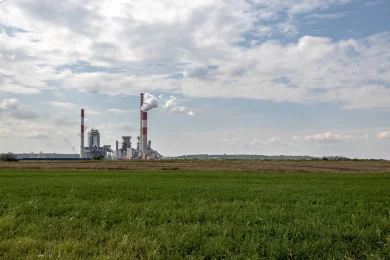
Member states concerned must respond, in most cases, within two months, before the procedures can advance. The European Commission has adopted the monthly infringement decision package, taking action against member states that do not comply with obligations under EU law. The decisions target several areas of European policy and aim to ensure the correct application of EU legislation for citizens and companies. The Commission has closed, in the same package, 70 cases in which the reported issues have been resolved by the targeted member states. In the field of the environment, the Commission has opened a procedure against Poland for the deterioration of the Oder River ecosystem. The European executive invokes Poland's obligations under the Water Framework Directive, the Industrial Emissions Directive, the Habitats Directive, and the Birds Directive.
The case is related to episodes of fish mortality in the Oder River basin, including the one in the summer of 2022, when over 360 tons of fish died over a stretch of approximately 500 kilometers. The Commission mentions high salinity and high nutrient concentrations as the main factors for the development of toxic algae.
Italy is targeted for the incorrect transposition of the Drinking Water Directive, while Ireland is targeted for the incorrect transposition of the Single-Use Plastics Directive and for not completing the Natura 2000 marine network.
The Commission has decided to refer Spain to the Court of Justice of the European Union for failing to comply with obligations regarding the collection, treatment, and monitoring of urban wastewater. The European executive considers that the efforts of the Spanish authorities have been insufficient for full compliance with the Urban Wastewater Treatment Directive.
In the field of the internal market, the Commission has opened procedures against Hungary and Slovakia for discriminatory fuel prices applied to drivers of vehicles registered abroad. In Slovakia, the price of diesel for vehicles registered outside the country is regulated weekly, while drivers of cars registered in Slovakia can benefit from a lower market price. In Hungary, protected fixed prices have been introduced for vehicles with Hungarian plates, while vehicles registered abroad must pay higher market prices.
The Commission considers that these measures may violate the rules on the free movement of goods, services, and workers, freedom of establishment, road transport, and notification obligations provided by the Single Market Transparency Directive.
France is targeted for a national scheme of certificates regarding biogas production, which the Commission considers incompatible with the free movement of goods. The scheme only recognizes biogas produced in mainland France, even if biogas produced in other member states is certified as sustainable.
Spain receives a letter of formal notice for legislation in the retail sector regarding payment deadlines. The Commission argues that payment deadlines for consumer goods can be systematically extended beyond 60 days, sometimes over 120 days, in a manner that seems incompatible with the interpretation of the EU Court of Justice. Belgium receives a reasoned opinion for systemic payment delays of municipalities in the Brussels-Capital Region to suppliers and for not paying the fixed compensation of 40 euros for overdue bills by Flemish municipalities and the Brussels-Capital Region. The Commission argues that delayed payments affect companies, especially SMEs, by reducing liquidity and limiting growth capacity.
In the field of migration and internal affairs, the Commission has opened procedures against Germany, France, and Austria for incorrect transposition of provisions from the Directive on combating money laundering through criminal law.
Hungary is targeted for legislation regarding the facilitation of unauthorized entry, transit, and stay in the EU. The Commission argues that legislative changes adopted in 2025 create the risk of systematic impunity in cases of human trafficking, by allowing the conditional suspension of proceedings against individuals suspected of such crimes.
The Commission has decided to refer Bulgaria, Spain, France, Luxembourg, the Netherlands, Poland, and Sweden to the Court of Justice of the European Union for non-transposition of the Directive on the resilience of critical entities. The Directive aims at the continuity of essential services in sectors such as energy, transport, health, water, banking, and digital infrastructure.
In the field of justice, Poland receives a letter of formal notice for incorrect transposition of rules regarding price reductions in relation to services. Greece and Croatia are targeted for incorrect transposition of EU rules regarding legal aid for suspects and accused persons.
The Commission has sent reasoned opinions to Belgium, Bulgaria, the Czech Republic, Cyprus, Latvia, Hungary, Austria, Poland, and Portugal for the incomplete transposition of the Directive on gender balance in corporate boards. The Directive sets a target of 40% for the underrepresented sex among non-executive directors and 33% among all directors for large listed companies in the EU.
Spain receives a reasoned opinion for the incomplete incorporation into national legislation of the Directive on collective actions, which allows qualified entities, such as consumer organizations, to seek compensation or other forms of remedy for groups of consumers affected by illegal commercial practices.
The Czech Republic and Hungary are referred to the Court of Justice of the European Union for incorrect transposition of rules regarding the European arrest warrant. The Commission argues that Czech legislation does not provide certain guarantees regarding the temporary transfer or hearing of the requested person, and Hungarian legislation incorrectly transposes the grounds for refusal.
In energy and climate, Croatia, Poland, and Portugal receive reasoned opinions for the non-transposition of new rules regarding the design of the electricity market. The rules aim to stabilize energy prices for consumers and reduce their dependence on fossil fuel prices.
Hungary receives a reasoned opinion for non-compliance with rules regarding intra-EU investor-state arbitration in the energy sector. The Commission invokes actions by MOL and companies controlled by it regarding arbitration decisions based on the Energy Charter Treaty.
Greece, Malta, and Portugal are referred to the Court of Justice of the European Union for the incomplete transposition of strengthened rules regarding the promotion of renewable energy. The Commission requests the Court to impose financial penalties.
In the field of taxation, Spain receives a reasoned opinion for the discriminatory taxation of non-resident taxpayers who work and usually reside in Spain. Hungary is referred to the Court of Justice of the European Union for its retail tax regime, which the Commission considers incompatible with the freedom of establishment.
In transport, the Commission has opened procedures against Belgium, France, and Portugal for failing to carry out road safety assessments at the level of the entire network, according to EU rules on road infrastructure safety management.
In financial services, Spain and Poland receive reasoned opinions for the non-transposition of amendments to the Fourth Anti-Money Laundering Directive and for not completing the implementation of measures from the Regulation on fund transfers. Spain, the Netherlands, Portugal, and Sweden receive reasoned opinions for the incomplete transposition of the Omnibus Directive regarding the Single European Access Point for corporate public information.
In the digital field, Croatia receives an additional letter of formal notice for non-compliance with the Digital Services Regulation. The Commission considers that Croatian legislation does not sufficiently empower the national coordinator for digital services and does not correctly transpose the sanctions regime provided by the DSA.
In the field of labor and social rights, Portugal receives a letter of formal notice for discriminatory employment conditions applied to fixed-term workers in the public sector. Spain receives reasoned opinions in two cases regarding less favorable conditions for fixed-term employees and the abusive use of successive fixed-term contracts in the public sector.
Belgium receives an additional reasoned opinion for incorrect transposition of the Directive on professional qualifications. The Commission argues that Belgium imposes excessive language requirements for teachers wishing to work in the French Community, limiting access for teachers from other member states.
In the field of competition, Belgium receives a reasoned opinion for its obligations regarding the recognition of certain investor-state arbitration decisions. The Commission argues that Belgium has recognized arbitration decisions that obligate Spain to pay compensation to investors before the completion of the Commission's assessment regarding state aid.
The infringement procedure is the tool through which the European Commission seeks compliance with EU law by member states. The Commission can open a procedure through a letter of formal notice, requesting the targeted member state to respond and remedy the reported issues.
If the response is not satisfactory, the Commission can send a reasoned opinion, a stage in which it explains the violation of EU law and requests compliance measures. If the member state does not remedy the situation, the Commission can refer the matter to the Court of Justice of the European Union.
The closure of the 70 cases in the April package indicates situations in which member states, in cooperation with the Commission, have remedied violations and ensured compliance with EU law, so the procedure no longer needs to continue.
https://2eu.brussels/en/news-articles/the-european-commission-refers-14-cases-to-the-eu-court-in-the-april-infringement-package
Latest News
07:18
23:08
22:58
22:57
22:55
See more news
NEWS ON THE SAME TOPICS
.webp)
.webp)