EU-funded demining enables repairs at seven electrical substations in Khartoum



Always see our news on Google
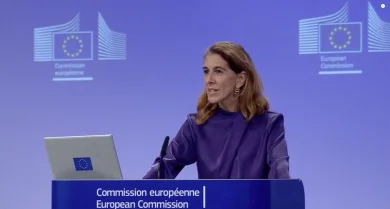
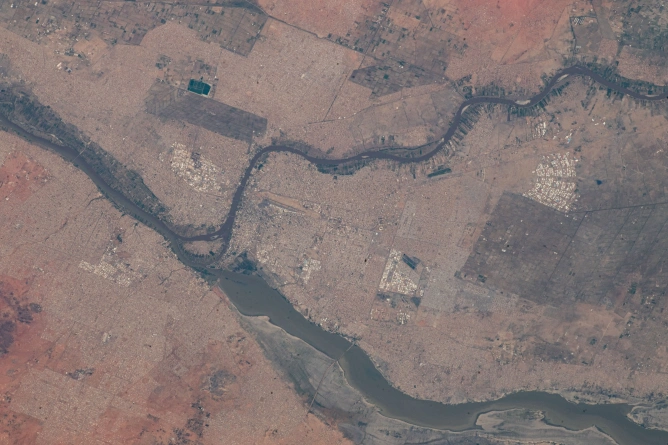
Explosive ordnance clearance teams supported by the European Union have removed explosive hazards from seven priority electrical substations in the Khartoum region, opening access for repairs in a war-devastated area. The assessment, covering the situation through August 2026, was presented on 27 October by the European External Action Service (EEAS) in an update on two €3 million projects for community safety and the restoration of basic services in Sudan.
In brief Seven of the 15 priority electrical substations in the Khartoum region had been cleared of explosive hazards by August, allowing access for repairs. The EU is funding two €3 million projects, one with UNMAS and the other with the Danish Refugee Council; the amount is not a new allocation as of 27 October. Since June, assessment and clearance operations have covered more than 156,000 m², while 456 risk education sessions reached more than 17,500 people. The project agreed in September aims to remove explosive hazards from schools and other educational spaces to support the resumption of classes. In Sudan, 108 people were reported killed or injured in 38 accidents during the first half of 2026; children accounted for 55% of victims whose age was known.
At the damaged substations, unexploded ordnance prevented engineers from assessing the destruction and repairing the facilities. The UN Mine Action Service (UNMAS), together with the Sudanese National Mine Action Centre and operational partner SafeLane Global, intervened at 15 priority sites in the metropolitan area comprising Khartoum, Omdurman and Bahri. By August, seven had been cleared, including Al-Kabashi and Al-Izergab. This outcome enables repair work; it does not amount to bringing all the facilities back into operation.
The stakes go beyond powering homes. Electricity is needed to pump water, operate hospitals and schools, and reopen workshops and local businesses. Removing ordnance allows technicians to access the infrastructure on which these services depend.
The operations are part of a €3 million UNMAS project funded through the European Commission’s Service for Foreign Policy Instruments (FPI). Announced in April 2026, the project lasts 18 months and targets accessible urban and peri-urban areas, particularly in Khartoum, where people are trying to return after the fighting. At its launch, UNMAS estimated that 700,000 people would benefit directly from the intervention and more than one million indirectly.
Since June, the capacity deployed in Khartoum has included two land assessment and clearance teams and one explosive ordnance risk education team. According to the EEAS, the cumulative area covered by assessment and clearance operations exceeds 156,000 m², in priority areas such as Dar Al Salam and Khartoum International Airport.
Informing residents accompanies the field interventions. The European Commission reports that 17,535 people received information on recognising hazards and avoiding risky behaviour, including students, teachers, community members, airport staff and construction workers. The EEAS update mentions 456 sessions and rounds the number of participants up to more than 17,500.
A second project, agreed in September 2026 with the Danish Refugee Council, also receives €3 million and focuses on schools and other educational spaces in and around Khartoum. Its aim is to remove explosive hazards to create safer conditions for children and teachers and to support the resumption of classes. The €6 million represents the combined value of these two projects, not a new allocation made on the day the assessment was published.
The scale of the risk is reflected in UNMAS national data. Between January and June 2026, 108 people were killed or injured in 38 accidents caused by explosive objects. Nearly half of the accidents were reported in Khartoum and Al Jazirah, while children accounted for 55% of victims whose age had been recorded. UNMAS warns that reporting difficulties may leave other cases unrecorded.
In its April–June 2026 fact sheet, UNMAS reports that, since April 2023, more than 4.2 million m² have been made safe for use and 30,698 explosive items have been removed. These results cover the organisation’s broader response in Sudan, not only the European-funded projects. In an ongoing war, clearing a site can enable a facility to be repaired or a building to be reoccupied, but the restoration of services also depends on the work that follows and on access to affected areas.

Latest News
22:58
22:44
22:41
22:21
22:08
See more news
NEWS ON THE SAME TOPICS