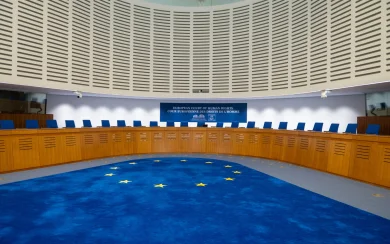
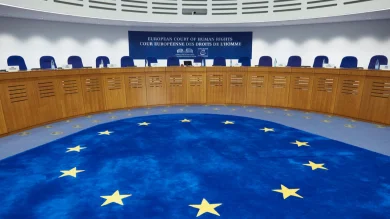
ECHR condemns Romania over ineffective investigation into Iancu Sandu’s death during the Revolution



Always see our news on Google
The European Court of Human Rights found that the main investigation into the death of Iancu Sandu, who was shot in a hospital in Brașov in 1989, was ineffective. The conviction of the serviceman who fired the shot did not remove the obligation to investigate all the circumstances. The judgment is final: his wife and two children each receive 23,000 euros in non-pecuniary damages and 500 euros in costs.
Romania was condemned on Tuesday, 27 October, by the European Court of Human Rights for the ineffective investigation into the death of Iancu Sandu, who was shot on 24 December 1989 in the Brașov hospital where he was hospitalized. In a final judgment, the judges held that punishing the serviceman who fired the shot did not remove the authorities’ obligation to investigate the other circumstances and responsibilities as well. The victim’s wife and two children will each receive 23,000 euros in non-pecuniary damages and 500 euros for the costs of the proceedings.
In brief
1. The ECHR unanimously found a violation of the obligation to investigate arising from the right to life. The judgment in Sandu and Others v. Romania is final and concerns the manner in which the investigation was conducted, without determining the criminal liability of the persons in the Revolution File.
2. Iancu Sandu was shot dead in a hospital in Brașov on 24 December 1989. The applicants are his wife, Elisabeta, his daughter Silvia-Andrada, and his son Robert-Iancu.
3. The serviceman who fired the shot was finally convicted in 2001 and sentenced to three years and four months in prison. That conviction and the compensation awarded to his wife at the time for the death did not remedy the suffering and uncertainty caused by the ineffective main investigation.
4. The Court noted the excessive length of the investigation, the lengthy periods of inactivity, the victims’ insufficient participation, and the lack of information provided to the public. The investigation should have been capable of clarifying the circumstances of the operations as well, including their planning and control, where necessary.
5. The Revolution File was returned to the military prosecutors in September 2024. An official communication from Romania dated October 2025 records the return and the death of Ion Iliescu; the execution of judgments concerning the investigations into the Revolution was discussed again with the General Prosecutor’s Office in September 2026.
6. Romania must pay each of the three applicants 23,500 euros within three months: a total of 70,500 euros, plus any taxes provided for in the judgment. The Court did not examine separately the complaint concerning the length of the proceedings under the right to a fair trial.
The judgment in Sandu and Others v. Romania stems from two distinct investigations: one concerning the shooting of Iancu Sandu in Brașov and another, broader one, concerning the deaths that occurred during the Revolution. The family argued that the second case, in which the victim’s relatives joined as civil parties, had not clarified all the responsibilities for his death.
In the first case, the Military Court of Appeal finally convicted the serviceman who fired the shot, on 22 May 2001, of particularly serious murder. The sentence was three years and four months in prison. The court found that the manner in which he had opened fire violated military rules and ordered him, jointly and severally with the Ministry of Defence, to pay the victim’s wife 75 million old lei, equivalent to approximately 3,000 euros, for the material and moral damage caused by the death.
The Government relied on that conviction and compensation to argue that the family members could no longer claim victim status before the ECHR. The Strasbourg judges rejected the argument. The serviceman’s trial and the main investigation had sufficiently different subject matters, while the 2001 compensation concerned the loss of her husband, not the suffering and uncertainty caused by the way in which the broader investigation had been conducted.
The Court explained that, in such a case, investigators must be able to examine not only the actions of the person who directly used lethal force, but also the circumstances in which it was used. Where necessary to establish whether the State had complied with its obligation to protect life, the investigation must also include the planning and control of the operations. Identifying the shooter did not, in itself, close these questions.
The main investigation had been opened ex officio in 1990 by the military prosecutors. The ECHR examined it within the limits of its temporal jurisdiction, which began on 20 June 1994, the date Romania ratified the Convention. Reiterating its findings in previous cases concerning the Revolution, the Court noted the excessive length, the long periods of inactivity, the lack of sufficient involvement by the victims, and insufficient public information about the progress of the case. Its conclusion was that the Sandu family had been deprived of a fully effective investigation.
The finding concerns the procedural obligation arising from Article 2 of the Convention, which protects the right to life. The judgment does not establish who bears all the criminal responsibility for Iancu Sandu’s death and does not replace the domestic proceedings. Following this conclusion, the judges considered it unnecessary to examine separately the complaint concerning the length of the proceedings brought under Article 6, relating to a fair trial.
The history of the main investigation is linked to the Revolution File. In the domestic proceedings, former President Ion Iliescu, former Deputy Prime Minister Gelu Voican Voiculescu, and former commander of the Military Aviation, Iosif Rus, were committed for trial. Committing someone for trial is not equivalent to a conviction. After several preliminary-chamber stages, the High Court returned the file to the military prosecutors on 20 September 2024 because of irregularities in the indictment.
A communication sent by the Romanian authorities to the Committee of Ministers of the Council of Europe on 10 October 2025 states that the indictment did not allow the subject matter and limits of the trial to be established, and that the file had returned to the Military Prosecution Service. The document also records the death of Ion Iliescu on 5 August 2025. In the Sandu judgment, the ECHR describes the 2024 return and notes that the parties had not informed it of any subsequent procedural developments.
The issue of executing the judgments concerning the investigations into the Revolution remained on the Council of Europe’s agenda. The responsible department announced on 1 October 2026 that, during a mission to Bucharest on 23–24 September, it had discussed with representatives of the General Prosecutor’s Office the cases in the Association 21 December 1989 and Others group. The information concerns supervision of the execution of European judgments and does not announce a new committal for trial in the Revolution File.
For the non-pecuniary damage caused by the ineffective investigation, the ECHR awarded Elisabeta Sandu, Silvia-Andrada Sandu, and Robert-Iancu Sandu 23,000 euros each, plus 500 euros each for costs and expenses. Romania must pay the total of 70,500 euros within three months, together with any applicable taxes. The amounts are to be converted into lei at the exchange rate applicable on the date of payment, and late payment will attract the interest specified in the judgment.
Latest News
15:15
15:14
15:05
14:59
14:57
See more news
NEWS ON THE SAME TOPICS