Court of Justice dismisses Nord Stream 2 appeal and upholds rules on third-party access to the gas pipeline



Always see our news on Google
Nord Stream 2 AG did not obtain the annulment of the derogation regime introduced in 2019 for pipelines from third countries. The Court confirms that third-party access also includes the use of transport capacity, and that the company’s corporate structure does not justify avoiding the unbundling of transmission from gas production or supply.
On 5 November, the Court of Justice of the European Union dismissed Nord Stream 2 AG’s appeal in the dispute concerning the extension of European gas market rules to pipelines between Member States and third countries. The company did not obtain the annulment of the derogation regime introduced in 2019. The judgment upholds the General Court’s decision and confirms the reasoning concerning the separation of transmission from gas production or supply, third-party access and transparency, for the section of the gas pipeline falling within the territorial scope of EU law.
In brief
1. The Court of Justice dismissed in its entirety Nord Stream 2 AG’s appeal against the General Court’s judgment of 27 November 2024. The derogation regime challenged by the company was not annulled; some grounds of appeal were rejected as inadmissible and others as unfounded.
2. The derogations introduced in 2019 concerned pipelines between a Member State and a third country completed before 23 May 2019 and were not granted automatically. Nord Stream 2 had not been completed by that date. The rules examined apply to the portion located in the territory or territorial sea of the Member State, not to the entire route outside the EU.
3. The investments and previous practice invoked by the company did not demonstrate the existence of precise assurances that the EU rules would continue not to apply to it. On that basis, the Court rejected the argument concerning a right to a transitional period or a compensation scheme.
4. Third-party access includes physical connection and the use of transport capacity under fair conditions, for existing and future requests. The low likelihood of connection requests and the company’s corporate structure do not remove the justification for the rules.
5. The judgment resolves the challenge to the framework adopted in 2019 and does not authorise the current operation of the gas pipeline. In the meantime, gas legislation was reformed by the 2024 directive, which retains the criterion of completion before 23 May 2019 for these derogations.
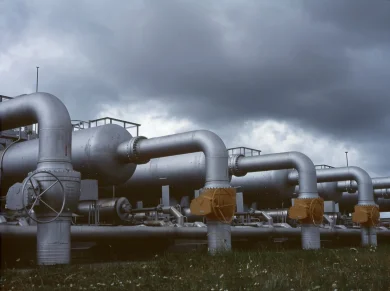
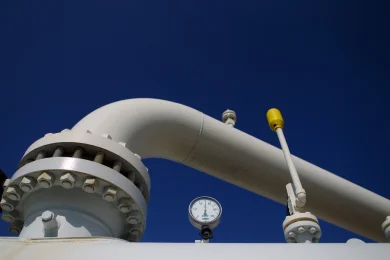
Nord Stream 2 is a gas pipeline designed to transport gas from Russia to Germany through the Baltic Sea. The company involved in the dispute, Nord Stream 2 AG, is described in the judgment as a Swiss company wholly owned by Gazprom, responsible for planning, constructing and operating the pipeline. The case now resolved concerns the European rules applicable to the infrastructure, not an application to authorise its operation.
The 2019 legislative amendment extended the internal market rules to the portion of pipelines between a Member State and a third country located in the territory or territorial sea of the Member State. It sought to eliminate regulatory differences between internal pipelines and those to or from third countries. For Nord Stream 2, the analysis includes the section in the German territorial sea.
Pipelines completed before 23 May 2019, the date on which the amending directive entered into force, could benefit from derogations decided by the state in which the first connection point to the EU network was located. These had to be objectively justified and could not adversely affect competition, the functioning of the market or security of supply. Their duration was limited to a maximum of 20 years, with the possibility of a justified renewal, and the decisions had to be adopted by 24 May 2020. Nord Stream 2 had not been completed by the 2019 deadline.
The company challenged the directive in 2019. After the action was initially dismissed as inadmissible, the Court of Justice recognised in 2022 its ability to challenge certain provisions and referred the case back to the General Court. Following the referral and the company’s clarifications, the proceedings on the merits were limited to the article concerning derogations, and the General Court dismissed the action in 2024. In its judgment of 5 November 2026, delivered in Case C-118/25 P, the Court explains that the 2022 decision concerned access to judicial review and did not find a breach of the principle of equal treatment.
A central argument of Nord Stream 2 AG was that it had made substantial and irreversible investments before the extension of the rules could have been anticipated. The company argued that previous practice concerning maritime import pipelines justified its expectation that the regime would be maintained and that it should have received a transitional period or compensation. However, the Court found that the EU institutions had not provided it with precise, unconditional and consistent assurances that European law would continue not to apply to it. On the contrary, since 2010 there had been indications and institutional positions concerning the submission of pipelines from third countries to energy market rules. The argument based on the protection of legitimate expectations was rejected.
The judges also examined the justification for separating transmission from gas production or supply, known as unbundling. When the same undertaking produces or supplies energy and controls the network through which it is transported in the EU, there is a risk of discrimination against competitors that would use the infrastructure. The Court confirmed that the obligation helps prevent abuse of a dominant position. The company cannot avoid it by invoking its own corporate structure: it is precisely common control over supply and transmission that the rule addresses. The analysis also took into account the existence of several unbundling models, which offered it possibilities for adapting the project.
Regarding third-party access, Nord Stream 2 argued that a request to connect to such a maritime pipeline was unlikely. The Court stated that access has two components: physical connection and the use of transport capacity under fair conditions. The obligation covers existing and future requests for the section subject to EU law. Therefore, the low likelihood of a connection request does not remove the justification for the requirement. The judges also confirmed the General Court’s reasoning that a lack of transparency, including in tariff matters, in the operation of pipelines may affect security of supply.
The appeal contained seven grounds and was limited to points of law. The Court rejected some criticisms as inadmissible, including where they were not sufficiently precise or sought a fresh assessment of the facts without demonstrating that they had been distorted. The complete dismissal of the appeal therefore does not mean that every argument was reconsidered on the merits. The legality of the contested act was examined in light of the factual and legal situation at the time of its adoption, in 2019.
There was no further referral to the General Court. Nord Stream 2 AG must bear its own costs and those of the European Parliament and the Council. Poland and the European Commission must bear their own costs. The result upholds the dismissal of the company’s challenge to the derogation regime.
The legislative framework evolved between the adoption of the act and this judgment. The 2024 directive on the gas and hydrogen markets replaced the 2009 directive, as amended, and retains the criterion of completion before 23 May 2019 for derogations concerning gas pipelines from third countries. The transposition deadline set for numerous new provisions was 5 August 2026. The judgment resolves the dispute concerning the 2019 act; it does not create a new derogation regime and does not constitute authorisation for the current operation of Nord Stream 2.
Latest News
14:47
14:41
14:39
14:29
14:27
See more news
NEWS ON THE SAME TOPICS

.webp)