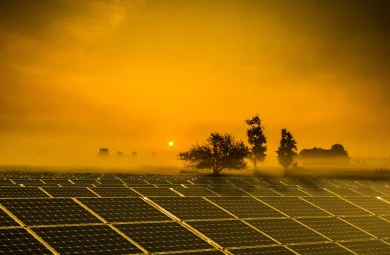
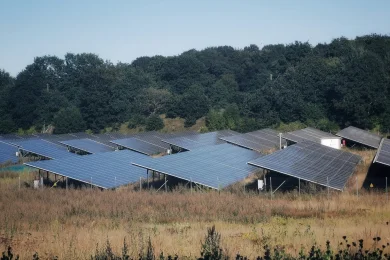
A EU-funded technology transforms the same solar light into electricity and heat without overheating the cells.




Always see our news on Google
The NANOSPLIT project has developed a fluid with nanoparticles that separates the components of sunlight before they reach the photovoltaic cells. Useful light generates electricity, while the radiation that would excessively heat the cells is captured and converted into thermal energy for hot water, building heating, or, in future developments, industrial processes.
A European project has developed a fluid with nanoparticles capable of splitting sunlight between two different uses: suitable wavelengths are sent to the photovoltaic cells for electricity production, while the radiation that generates heat is captured separately and converted into thermal energy. The NANOSPLIT technology thus aims to simultaneously produce electricity and heat, while keeping the solar cells at lower temperatures.
In short
1. NANOSPLIT has developed a spectral separator based on nanofluids for hybrid solar systems that simultaneously produce usable electricity and heat.
2. The fluid uses zinc oxide sheets and gold nanoparticles to control the different components of the solar spectrum before the light reaches the photovoltaic cells.
3. Visible light and part of the infrared are allowed to reach the solar cells, while ultraviolet and infrared radiation that carries heat are directed to the thermal part of the system.
4. The separation reduces the heating of the photovoltaic cells, which lose efficiency at high temperatures, and allows the recovery of energy that would otherwise become excess heat.
5. The EU-funded project concluded in 2023, but research continues with partners from Europe and India, including for industrial heat applications at higher temperatures.
Photovoltaic panels only convert part of the energy from sunlight into electricity. Another part is absorbed as heat, and the heating of the cells can even reduce the efficiency with which they produce electricity.
The problem is more pronounced in concentrated photovoltaic systems, where lenses or mirrors focus large amounts of light onto a relatively small area of solar cells. The intensity of the radiation increases the potential energy production, but at the same time raises the temperature of the cells.
Photovoltaic-thermal systems try to utilize both forms of energy. They produce electricity through photovoltaic cells and recover heat for other uses, instead of letting it dissipate into the surrounding environment.
NANOSPLIT started in 2021 with the goal of improving this combination in concentrated photovoltaic-thermal systems. The EU-funded project focused on a spectral separator that intervenes before the entire solar radiation reaches the cells.
The principle is to separate the different wavelengths of sunlight based on how they can be used most efficiently. The radiation favorable for electricity production is transmitted to the photovoltaic cells, while the components that mainly contribute to heating are captured for thermal energy production.
In this way, the same source of solar radiation can provide two energy products. The system obtains electricity from the part of the spectrum sent to the photovoltaic cells and heat from the radiation absorbed by the fluid.
The technology developed in the project uses hybrid nanofluids made from zinc oxide sheets and gold nanoparticles. These materials form a filter that interacts differently with various components of light.
The fluid allows visible light and part of the near-infrared radiation to pass through to the photovoltaic cells. At the same time, it absorbs ultraviolet radiation and the part of the infrared more strongly associated with heat transport.
The absorbed energy is not treated as a loss. It heats the fluid and can be transferred to the thermal component of the installation.
CORDIS indicates domestic hot water and space heating among the possible uses of this heat. Subsequent research also targets higher temperatures, which could allow the use of thermal energy in industrial processes.
Keeping the cells at a lower temperature has a separate function. The photovoltaic yield decreases when the cell temperature increases, so removing part of the radiation that would generate heat can protect electrical performance.
Lower temperatures can also help extend the lifespan of the cells by limiting the thermal stress they are exposed to during operation.
NANOSPLIT thus aims to utilize a larger proportion of the total energy of the solar spectrum, instead of exclusively maximizing the amount of electricity produced. The performance of the system must be evaluated by the combination of recovered electrical and thermal energy.
CORDIS does not provide in the published material a unique value for the final commercial efficiency of the system nor a percentage comparison that would allow for a claim of a certain increase in production compared to conventional photovoltaic panels.
The document does not specify the estimated cost of a commercial installation, the payback period, or when the technology might become widely available. NANOSPLIT remains a technology under development, and research continues after the initial funding has ended.
The project results were presented in 2024 at the international ECOS conference in Rhodes, dedicated to thermodynamics and the sustainable energy transition.
After the project concluded in 2023, the team continued collaboration with existing and new partners from Europe and India. The stated goal is to continue development up to applications in real conditions.
One of the current research directions uses carbon dot-based nanofluids. Their properties can be adjusted so that the fluid selectively interacts with certain colors or wavelengths.
The materials can be combined or structured in different configurations to improve stability, durability, and efficiency. This stage could allow the spectral separator to be adapted to different types of photovoltaic cells or thermal applications.
The development of the technology has also generated commercial activity. Solar Flow, a company spun off from Imperial College London, is working on using the concept for producing industrial heat at higher temperatures.
Industrial applications are different from heating a home. Numerous manufacturing processes require heat, and currently, this is often produced by burning gas or other fuels.
Using solar energy for some of these processes could reduce fuel consumption and associated emissions where the necessary temperature and continuity can be technically and economically ensured.
The CORDIS material does not specify the industries in which Solar Flow will implement the first commercial installation nor the maximum temperature reached by the system under development.
Another element that must be demonstrated before widespread use is the stability of the nanofluids. The particles must remain distributed and retain their optical and thermal properties in a system repeatedly exposed to high temperatures and solar radiation.
The use of gold in nanofluid also raises the issue of material costs when scaling up production. The document does not present the cost of the nanoparticles needed for an installation nor the quantity that would be required for a commercial system.
Therefore, the project outcome does not represent the launch of a new type of solar panel available to consumers. It is a demonstration of a method for managing the solar spectrum that continues to be developed for integration into photovoltaic-thermal systems.
The NANOSPLIT coordinator, Professor of Clean Energy Technologies at Imperial College London Christos Markides, described the outcome as a demonstration of how optical and thermal management can be combined in the next generation of solar technologies.
"NANOSPLIT has been successful in demonstrating how advanced optical and thermal management solutions can be used effectively to unlock the next generation of solar utilization technologies," said Markides.
NANOSPLIT is the acronym for Nanofluid Spectral Beam Splitter Assisted Hybrid CPV/T System. The project, launched in 2021 and concluded in 2023, was funded by the European Union and coordinated by Imperial College London.
CPV/T systems combine concentrated photovoltaics with thermal recovery. Mirrors or lenses concentrate light on cells, and the generated heat is captured and used instead of being completely dissipated.
CORDIS tracks EU-funded research projects and their outcomes. The material from August 2026 is part of a series that analyzes the evolution of projects after the end of European funding and describes the continued development of NANOSPLIT, without announcing the commercialization of the technology.
Latest News
07:54
07:45
07:19
07:19
22:52
See more news
NEWS ON THE SAME TOPICS