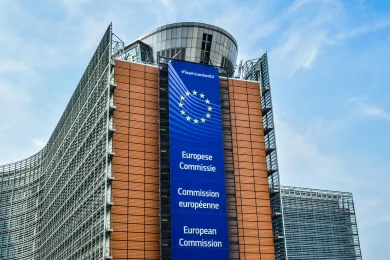
The European Commission invests over 103 million euros in seven strategic European environmental and climate projects.


.webp)

Always see our news on Google
The European Commission invests over 103 million euros in seven strategic projects across Europe, funded through the LIFE program, in a package that links environmental and climate policy to prosperity, economic stability, food systems, ecosystems, and public health, and aims, at the same time, to accelerate the implementation of European policies in member states.
In short
1. The Commission funds seven strategic LIFE projects in Finland, France, Greece, the Netherlands, Portugal, Slovakia, and Spain.
2. The projects focus on climate and water resilience, nature restoration, circular economy, and sustainable land use.
3. The investment of over 103 million euros is presented by the Commission as a tool for prosperity, economic security, independence, and a clean transition.
4. The largest project ever funded by the LIFE program is in Spain and aims to restore approximately 26,200 hectares of wetlands in 107 Natura 2000 sites.
5. The funding is part of a LIFE program with a total budget of 5.43 billion euros under the EU's multiannual budget for 2021-2027 and is already connected to the debate on the future multiannual financial framework.
The Commission presents this investment as a strategic intervention, not just as sectoral environmental funding. The formula chosen by the European executive places the prosperity of the Union, economic stability, food systems, environmental ecosystems, public health, and quality of life in the same framework. From a journalistic perspective, this is the first major angle of the story, transforming climate and environmental policy into an argument for economic security and internal resilience. The selected projects are intended to support and accelerate the implementation of the EU's environmental and climate policies and are designed to mobilize additional public and private investments at the national level.
The geographical distribution of the funding covers seven member states and seven different files, but united by the same logic of clean transition. In Finland, the ACWA LIFE project aims to restore and protect watercourses, lakes, coastal waters, watersheds, and groundwater to secure water resources and ecosystem health and will receive 16.5 million euros from the EU. In France, LIFE ADAPT EST will enhance climate resilience in the Grand Est region through increased expertise in climate, water governance, and infrastructure capable of withstanding the effects of extreme weather events, with European funding of 15.6 million euros.
In Greece, LIFE SIP GR Blue focuses on restoring marine ecosystems and reducing pollution, marine debris, and underwater noise in coastal and island areas, in an intervention that directly links ocean health to livelihoods in coastal areas. The project will receive 8.9 million euros. In the Netherlands, CEL4LIFE will support the transition of the Limburg province to a circular economy and aims to halve the use of raw materials in the chemical, manufacturing, and construction sectors by 2030, with an EU contribution of 6.9 million euros.
In Portugal, LIFE IP AGRILOOP will implement circular solutions in the Azores, in the agroforestry, agri-food, and tourism sectors, with the aim of increasing resource use efficiency on the islands, and the European funding is 15.8 million euros. In Slovakia, NatAdaptSK includes nature-based solutions for water, agriculture, forests, and biodiversity, to reduce climate risks to affected communities, and will receive 10.1 million euros.
The largest project ever funded by the LIFE program is in Spain. LIFE HumedalES aims to restore approximately 26,200 hectares of wetlands in 107 Natura 2000 sites, with explicit objectives regarding flood protection, water security, and biodiversity. The European funding allocated to this project is 29.7 million euros. This is the second strong journalistic angle of the news, the fact that the European executive uses the LIFE program for large-scale natural infrastructure projects, with simultaneous benefits for climate adaptation and ecosystem protection.
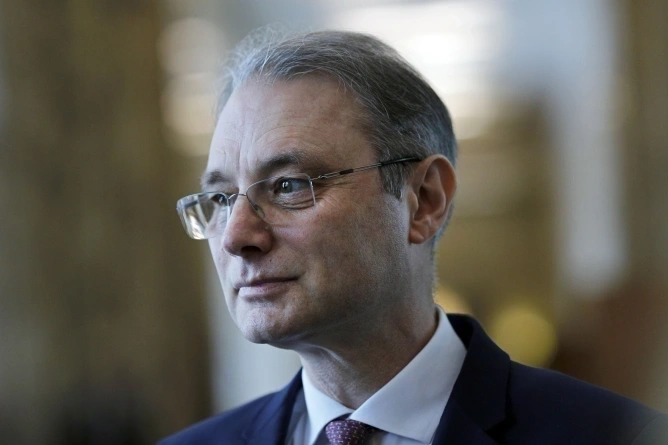
The political message of the Commission is explicitly formulated in two terms, the cost of inaction and Europe's natural infrastructure. The Commissioner for climate, net zero emissions, and clean growth, Wopke Hoekstra, stated: "The cost of inaction continues to rise. Investments in climate are not optional; they are essential for our economy, our security, and our independence. The economic argument for accelerating the clean transition is clear, and these strategic LIFE projects are investments that bring us closer to our climate goals."
The Commissioner for the environment, water resilience, and a competitive circular economy, Jessika Roswall, stated: "Long-term strategic LIFE projects are essential to provide a safe and sustainable Europe. Today's investment strengthens Europe's natural infrastructure, the foundation of our economic security, competitiveness, and resilience." In terms of the news, this is a third major angle, nature is presented not just as an environmental asset but as a strategic infrastructure for European competitiveness.
From an institutional perspective, the funding is granted through the LIFE program, the only EU funding program fully dedicated to environmental, climate, and clean energy objectives. The program has co-financed over 6,500 projects since 1992, in the Union and in associated countries. The seven projects announced now are funded from a total budget of 5.43 billion euros allocated to the LIFE program under the 2021-2027 multiannual budget. The program is managed by the European Executive Agency for Climate, Infrastructure, and Environment, CINEA.
The investment also has a strategic dimension for the next budget cycle. The Commission specifies that LIFE actions are already included in its proposals for the future multiannual financial framework, especially in the area dedicated to clean transition and decarbonization from the European Competitiveness Fund, as well as in the "EU Facility" within national and regional plans and programs. This detail shifts the news from the area of a simple one-off allocation to a broader political signal, integrating climate and environmental funding into the new architecture of European competitiveness.
The LIFE program contributes to the EU's goal of climate neutrality by 2050, as provided in the European Climate Law. At the same time, the announced strategic projects support objectives from the EU Biodiversity Strategy 2030, the Water Framework Directive, the Marine Strategy Framework Directive, and sustainable urban mobility plans, being presented as part of the clean transition.
Sources



Latest News
22:57
22:46
22:39
22:25
21:55
See more news
NEWS ON THE SAME TOPICS

.webp)