Negrescu: The EU cannot support Ukraine without an adequate budget and an agreement on frozen Russian assets.



Always see our news on Google
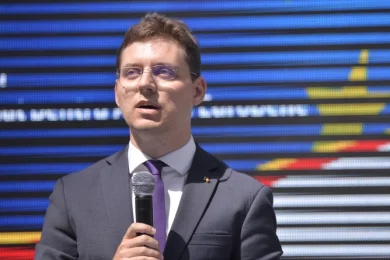
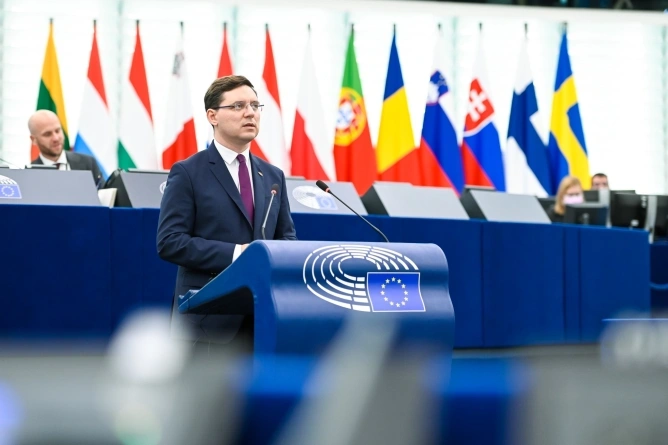
Brussels, November 13, 2025 – MEP Victor Negrescu (S&D) warned in the plenary session of the European Parliament that support for Ukraine risks remaining uncovered if the Union does not quickly reach an agreement on the use of frozen Russian assets and if the future European budget does not reflect the new realities of security and competitiveness. His intervention came during the debate dedicated to the conclusions of the European Council from October 23.
In his speech, Negrescu emphasized that the European Union is simultaneously facing economic, energy, and geopolitical pressures, and the European response must be coherent and sustainable. "We must demonstrate that European unity is not just a slogan, but a real force," he said, insisting that support for Ukraine cannot be maintained without a solid financial framework.
The MEP criticized the fact that discussions regarding the financing instruments for Ukraine are not advancing in the Council, especially due to the lack of an agreement on the use of frozen Russian assets. "Keep in mind that this also includes an agreement on frozen Russian assets," Negrescu pointed out, referring to the obligation of the Commission and member states to provide predictable financial support to Kyiv.
Negrescu linked the Ukraine file to the broader debate regarding the EU's multiannual budget, stating that the community bloc cannot deliver on priorities such as energy, industry, or competitiveness without adequate funding. He called for additional investments in industry, energy independence, and digital transition, as well as reducing bureaucracy for companies.
At the same time, the MEP highlighted the social dimension of European policies, mentioning access to housing and decent jobs as priorities for citizens, alongside support for partner states such as the Republic of Moldova and countries in the Western Balkans.
The Romanian MEP's intervention comes against the backdrop of discussions regarding the options put forward by the Commission for financing Ukraine in the period 2026–2027, including the possibility of a loan based on frozen Russian assets, as well as the need to adjust the EU budget to current economic and geopolitical pressures.
Latest News
19:20
19:16
19:04
18:57
18:51
See more news
NEWS ON THE SAME TOPICS