



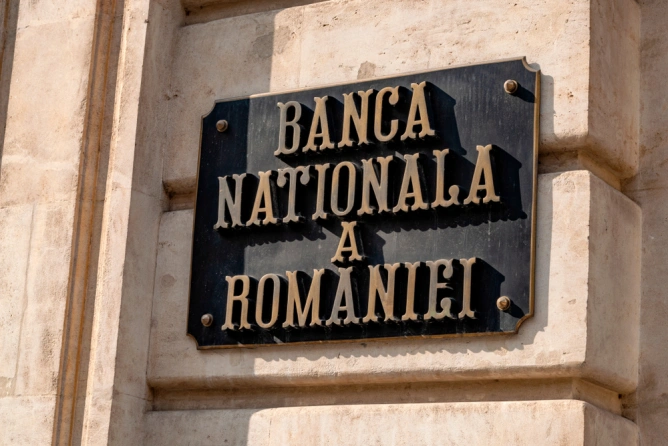
The BNR report from December 2025 highlights the systemic risks and economic fragility of Romania, with high twin deficits and modest economic growth.
Lara Maior


Economy
Victor Moussa/ Shutterstock.com

Always see our news on Google
The report on financial stability published by the BNR in December 2025 shows a tense economic landscape, with major systemic risks, including geopolitical instability and internal macroeconomic imbalances. These vulnerabilities are fueled by external and internal uncertainties, and the banking sector, although resilient, faces a volatile environment. The Romanian economy grew by only 0.3% in Q2 2025, and international forecasts suggest a slowdown in growth between 0.7% and 1% for the current year.
High twin deficits represent a significant internal risk, with a budget deficit of 102.5 billion lei (5.4% of GDP) in the first nine months of the year. Although the adopted fiscal measures will have a limited impact in 2025, the BNR emphasizes the need for fiscal adjustment to stabilize public debt, which has reached 57.2% of GDP, and to reduce external imbalances. Fiscal adjustments are essential for maintaining budgetary stability and for improving the country’s rating.
High twin deficits represent a significant internal risk, with a budget deficit of 102.5 billion lei (5.4% of GDP) in the first nine months of the year. Although the adopted fiscal measures will have a limited impact in 2025, the BNR emphasizes the need for fiscal adjustment to stabilize public debt, which has reached 57.2% of GDP, and to reduce external imbalances. Fiscal adjustments are essential for maintaining budgetary stability and for improving the country’s rating.
Sources


Latest News
15:27
Great Wall Motor opens a plant in Bulgaria and wants to produce 50,000 vehicles per year, starting in the first quarter of next year
15:27
Romania, among the EU countries with the highest road mortality in 2025: 68 deaths per one million inhabitants
15:26
Donald Trump promises to keep the name of the Mississippi River after renaming the Gulf of Mexico and Lake Ontario
15:19
EPPO has brought three people to trial accused of defrauding 237 projects for small farms and young farmers
15:12
Authorities are demolishing the upper floors of the Rahova apartment building damaged by the explosion
See more news
NEWS ON THE SAME TOPICS
.webp)



Personalized news feed, AI-powered search, and notifications in a more interactive experience.


.webp)
.webp)


