New Romanian MEPs voted against the initiative regarding abortion



Always see our news on Google
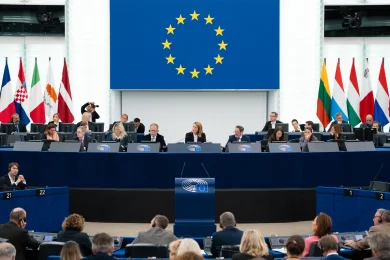
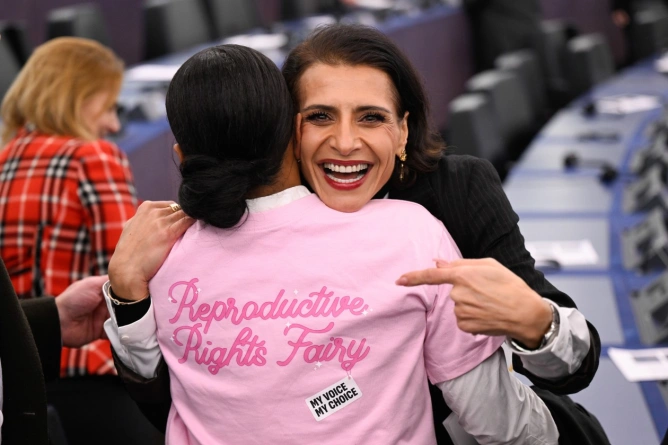
Strasbourg, December 17, 2025 - New Romanian Members of the European Parliament were among those who voted against the European Parliament resolution regarding the European Citizens' Initiative "My Voice, My Choice: For Safe and Accessible Abortion", adopted in the plenary session in Strasbourg. The nine are Adina Vălean (EPP, PNL), Mircea-Gheorghe Hava (EPP, PNL), Loránt Vincze (EPP, UDMR), Adrian-George Axinia (ECR, AUR), Gheorghe Piperea (ECR, AUR), Claudiu-Richard Târziu (ECR, Conservative Action Party), Șerban Dimitrie Sturdza (ECR, Conservative Action Party), Cristian Terheș (ECR, Romanian National Conservative Party) and Georgiana Teodorescu (ECR, AUR)
In Brief
New Romanian Members of the European Parliament voted against the European Parliament resolution supporting the Citizens' Initiative "My Voice, My Choice".
The plenary vote concluded with 358 votes in favor, 202 against, and 79 abstentions.
The initiative gathered over 1.12 million signatures and calls for a voluntary financial mechanism to support access to safe and legal abortion, without modifying national legislations.
The resolution has political, not legislative value, and sends a request for analysis to the European Commission.
The European Commission must respond by March 2026, indicating whether it will propose concrete measures or not.
The European Parliament resolution was adopted on December 17, 2025, with 358 votes in favor, 202 votes against, and 79 abstentions, according to the results of the roll-call vote. The text politically supports the European Citizens' Initiative and requests the European Commission to analyze possible actions to follow. Among the Romanian MEPs, nine voted against, coming from two different European political families, the European Conservatives and Reformists and the European People's Party. The rest of the Romanian delegation voted in favor or abstained, reflecting a clear fragmentation of political positions on this sensitive issue.
"My Voice, My Choice" is a European Citizens' Initiative, an instrument provided by the EU treaties that allows citizens to request the European Commission to propose measures or legislation, provided that at least one million validated signatures are collected from a minimum of seven member states. The initiative was officially registered by the European Commission in April 2024 and was validated in September 2025, after surpassing the threshold of 1.12 million signatures. The organizers request the creation of a voluntary European financial mechanism that would allow member states that choose to participate to support access to safe and legal abortion services for individuals who do not have access to such services in their country of residence.
The text of the initiative does not call for the harmonization of national abortion laws and does not impose obligations on member states, emphasizing the voluntary nature of any eventual proposed mechanism.
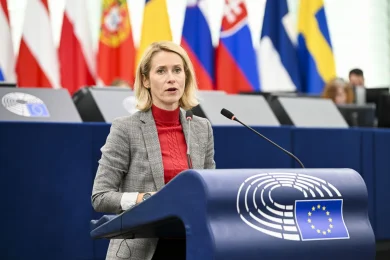
After the plenary vote, the European Parliament rapporteur, Abir Al-Sahlani (Renew Europe, Sweden), welcomed the result, stating that: "This vote is a major victory for women in Europe. The European Union has shown that sexual and reproductive health is a fundamental component of human rights. Citizens of the Union have made their voices heard, and the European Parliament has responded. The initiative shows what is possible when citizens and institutions work together."
The statement reflects the position of the parliamentary majority, which supported the initiative as an expression of European participatory democracy. According to the rules regarding European citizens' initiatives, the European Commission has until March 2026 to present an official response. The Commission can decide to propose legislative measures, non-legislative actions, or not to act, but it is obliged to justify its decision. The European Parliament cannot impose a legislative initiative on the Commission, but the adopted resolution represents a strong political signal and may influence the institutional agenda in the coming months.
Beyond the concrete content, the "My Voice, My Choice" initiative has major political relevance at the European level. It highlights the deep differences between member states regarding access to reproductive health services and the limits of the Union's competences in the health field.
From the Romanian delegation in the European Parliament, Gabriela Firea (S&D, PSD), Maria Grapini (S&D, PSD), and Diana Iovanovici Șoșoacă (Non-affiliated) spoke in the debate.
Gabriela Firea (S&D, PSD):
No one should be asked to make a woman give birth or die. In Romania, over 10,000 women died during the communist period when abortion was banned, and children with disabilities were born due to improper and risky procedures. Of course, any state is free to decide for its people, and that is normal, but we will not increase the birth rate healthily on the continent by prohibiting women's rights. We will have more and more underage mothers and abandoned children in orphanages. At the same time, the entire society, all politicians, all institutions, must unite their forces for better informing young people about sexually transmitted diseases or what a pregnancy can mean. My voice, My choice - it should not remain just an initiative signed by over 1 million European citizens. From Romania alone, there are over 67,000 supporters, ranking among the top European countries. People expect concrete and immediate actions from us.
Maria Grapini (S&D, PSD):
For me, it was a surprising debate. I saw passion, anger, insults. Esteemed colleagues, we are elected by citizens. This is a citizens' initiative. Perhaps we have forgotten why we are here. We are obliged to discuss a citizens' initiative, and there were not 100,000 people, one million, over one million signatures. Therefore, those who passionately argue now, around Christmas time, are Orthodox Christians, insulted and forgetting that women, in fact, in the European Union, still do not have access to medical care and very often end up having a pregnancy, being ill, discovering that they have an illness. The doctor forbids them to continue the pregnancy. So we need to understand, and I thank you, Madam Commissioner, for knowing that I do not often congratulate the European Commission, but you have stated very clearly: it is a national competence, and we need to see how we support, in member states, where women still do not have access to medical care. I wish you all health and do not forget why you came here.
Diana Iovanovici Șoșoacă (Non-affiliated)
Every woman can do what she wants with her body. I agree. But the body of the child she is making pieces of with a curette is the child's, not ours. Have you ever seen how a fetus is made into pieces at two months during an abortion and how it starts to escape from the curette? I studied medicine for 3 years, I know what it means, and how much blood is spilled. It is a crime that I can live with or not from a conscience point of view.
For Romania, the vote of the MEPs highlights the internal divisions of political representation in Brussels, in a file that does not change national legislation but strongly polarizes the political debate. At the European level, the initiative strengthens the role of citizens' initiatives as a tool for political pressure and a test for the balance between participatory democracy and respect for the competences of member states.
Latest News
17:42
17:33
17:31
17:22
17:06
See more news
NEWS ON THE SAME TOPICS