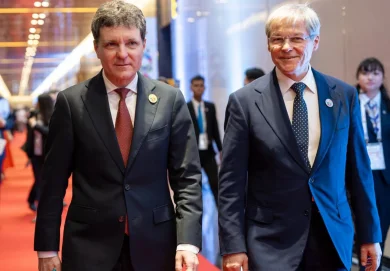
Dacian Cioloș's reaction after the elections for the leadership of the Francophonie, in which the former prime minister was also a candidate, were postponed by one year due to disagreements


Always see our news on Google
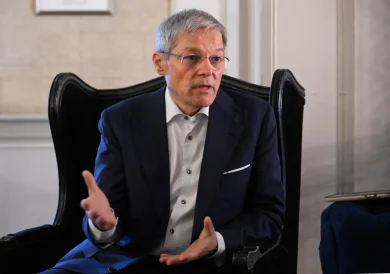
Dacian Cioloș, who was not elected to head the International Organisation of La Francophonie (OIF), due to the lack of consensus among the 53 full member states and governments, stated at the conclusion of the summit that “the number of terms for the secretary general must be limited to a maximum of two,” because the position “must serve the Francophone community as a whole, not hold it hostage.”
“Unfortunately, these days we did not discuss a vision for the future of La Francophonie, but rather how one country or another assesses a candidate’s geographical profile and, above all, how to proceed when a state does not accept losing the competition,” Dacian Cioloș reacted.
According to him, following Monday’s deadlock, the rules will have to be changed, and he proposes limiting leadership terms.
“We will have to change certain procedures and rules, but only after this electoral process has been completed. The number of terms for the secretary general must be limited to a maximum of two. Whoever takes over as secretary general must serve the Francophone community as a whole, not hold it hostage. The voting procedure must be clarified. The principle of geographical rotation must be introduced,” the Romanian also said.
Tensions within the OIF created a deadlock
Cioloș’s reaction comes in the context of the Congress being marked by tensions between Rwanda and the Democratic Republic of the Congo, which are engaged in military conflict, and accusations launched by Kinshasa against Kigali that it supports the M23 rebel group in the east of the country. On the other hand, Rwandan Foreign Minister Olivier Nduhungirehe strongly criticised the support given by the DRC to the Romanian, stressing that Africa accounts for 27 of the OIF’s 53 full members and 65% of the world’s Francophones.
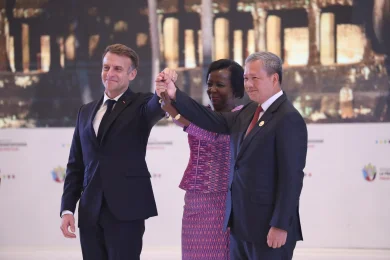
Rwandan Louise Mushikiwabo’s term will be extended by one year
As a result of the deadlock, the current secretary general, Louise Mushikiwabo of Rwanda, will remain in office for another year. An extraordinary elective summit will be organised by the end of next year, and the election of the new secretary general is scheduled for 2027. Rwanda has announced, however, that it will not put forward a candidate for next year, as a result of the disagreements.
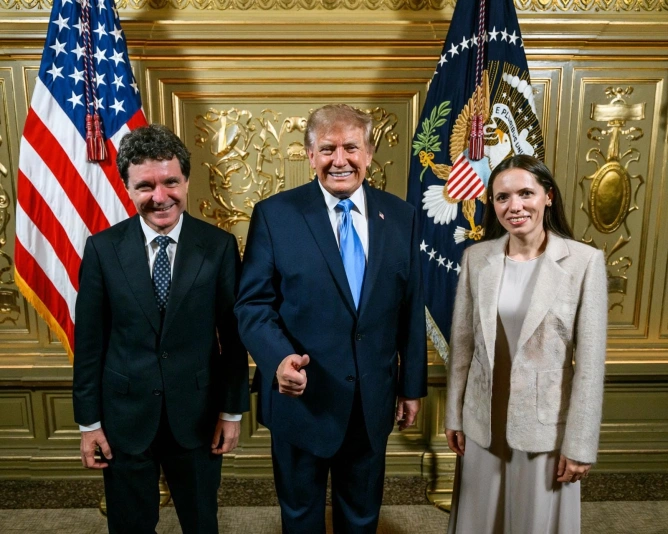
Cioloș was supported by President Nicușor Dan, who attended the summit to promote Romania’s candidacy. After the failed vote, the former prime minister accused the states of a lack of trust in one another and called for the electoral procedure to be clarified, terms to be limited, and geographical rotation to be introduced.
The competition was influenced by tensions between Rwanda and the Democratic Republic of the Congo. The four candidates were Dacian Cioloș, Louise Mushikiwabo, Juliana Lumumba and Coumba Ba. Romania submitted its candidacy in April, banking on strengthening its diplomatic and economic influence in the Francophone sphere.
Sources


Latest News
15:48
15:30
15:17
15:05
14:44
See more news
NEWS ON THE SAME TOPICS
.webp)